EasyManua.ls Logo

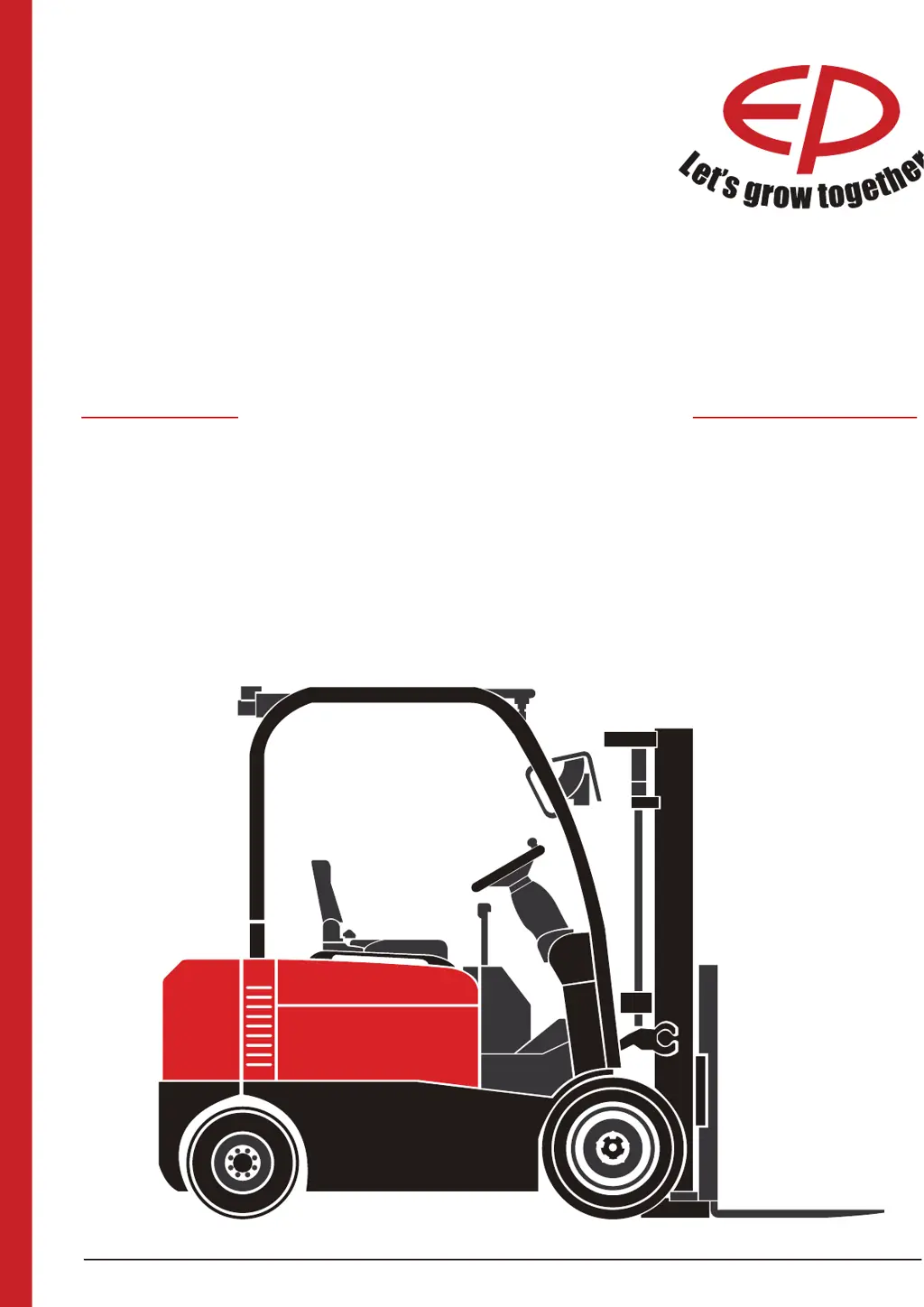
EP Equipment CPD15/18/20FVD8(-C) - User Manual

EP Equipment CPD15/18/20FVD8(-C)
127 pages
Print Icon
To Next Page IconTo Next Page
Loading...
Part No.508000004049
V3 10/2022
CPD15/18/20FVD8(-C)
CPD15/18/20/25F8/18F8-H
Operation Manual
CPD18/20FVL
Electric forklift truck

Table of Contents

Questions and Answers

  • M
    Mark GutierrezAug 17, 2025
    What to do if EP Equipment Forklifts have power supply failure?
    • C
      Christopher JacksonAug 17, 2025
      If your EP Equipment Forklifts experience a power supply failure, begin by checking the voltage of the storage battery. Next, inspect the fuses. After that, examine the key switch and its circuit, and finally, check the emergency stop switch and its circuit.
  • T
    Thomas EvansAug 19, 2025
    What to do if my EP Equipment Forklifts vehicle cannot be steered, but can travel?
    • A
      Ashley BrownAug 20, 2025
      If the steering in your EP Equipment Forklifts isn't working but the vehicle can still move, start by checking the steering potentiometer and its circuit connections. Then, ensure the mechanical connection between the steering wheel and redirector is solid. Inspect the redirector and its tubing connections, followed by the steering bridge and its tubing connections. Check the pump motor and its circuit, and then the pump itself. Finally, consider replacing the controller.
  • J
    Jeremy CollierAug 26, 2025
    Why is my EP Equipment Forklifts vehicle traveling at low speed, but not at high speed?
    • L
      Lisa NelsonAug 26, 2025
      If your EP Equipment Forklifts vehicle can only travel at low speed, there are a few possible causes. It could be due to drive motor speed encoder failure or controller failure. To troubleshoot: 1. Check if the motor rotation is normal. 2. Check the speed encoder and its connection circuit. 3. Remove the gearbox and check if the gear rotation is smooth and if there is blocking. 4. Replace the controller.
  • C
    Courtney GarciaAug 28, 2025
    What to do if EP Equipment Forklifts lights do not light?
    • R
      Robert TownsendAug 28, 2025
      If the lights on your EP Equipment Forklifts aren't working, first check the light and its circuit connection. Next, check the lighting combination switch and its connection circuit. Finally, check the fuse and its connection circuit.
  • E
    Elizabeth LuceroAug 31, 2025
    What to do if EP Equipment Forklifts vehicle cannot be lowered?
    • V
      vaughanamandaAug 31, 2025
      If your EP Equipment Forklifts vehicle is stuck and cannot be lowered, start by checking the lowering button and its connection circuit. Then, check the solenoid valve and its connection circuit. Inspect the cylinder for deformation, removing it to check if the internal assembly is normal. Clean or replace the valve. Finally, replace the explosion-proof valve.
  • J
    Justin CollinsSep 2, 2025
    What to do if my EP Equipment Forklifts vehicle has forward and reverse moving failures?
    • K
      Kimberly BeckerSep 3, 2025
      If your EP Equipment Forklifts vehicle is experiencing forward and reverse movement failures, but other functions are normal, it might be a controller issue. First, check if the parking brake switch and seat switch or the connection of its circuit is normal. Next, check the gearbox, then the travel switch and its connection circuit, and the drive motor and its connection circuit. If these are all normal, consider replacing the controller.
  • W
    weststevenSep 5, 2025
    Why is my EP Equipment Forklifts vehicle lifting slowly?
    • C
      Carol MccartySep 5, 2025
      If your EP Equipment Forklifts vehicle is lifting slower than usual, first refer to the rated capacity marked on the nameplate. Then, check the pipes and hydraulic components for any oil leaks. Finally, try washing or replacing the valve body.
  • A
    Amanda CastilloSep 8, 2025
    What to do if EP Equipment Forklifts horn does not sound?
    • R
      Ronald McculloughSep 8, 2025
      If the horn on your EP Equipment Forklifts isn't working, first check the horn button and its connection circuit. Then, check the horn and its connection circuit. Finally, check the fuse and its connection circuit.
  • A
    Angel WardSep 12, 2025
    Why is my EP Equipment Forklifts vehicle lowering slowly?
    • T
      Tommy AndersonSep 12, 2025
      If your EP Equipment Forklifts vehicle is lowering more slowly than usual, try washing or replacing the solenoid spool. If that doesn't solve the issue, wash or replace the valve body.
  • D
    Dr. Hailey PriceSep 13, 2025
    How to fix unstable lifting/lowering of EP Equipment Forklifts vehicle?
    • L
      Lori HebertSep 13, 2025
      To address unstable lifting or lowering in your EP Equipment Forklifts vehicle, start by adjusting the chain tension. Then, check if the steel channel grease is normal; clean and re-lubricate the steel channel and rollers. Finally, adjust the side roller spacing using the roller screw, or replace the roller if necessary.

Summary

Foreword

Safety Notices and Text Mark-ups

Explains safety instructions and important explanations indicated by graphics.

Declaration

A Introduction

Intended Use and Safety

Defines intended use, duties of the user, and safety considerations for truck operation.

Attachments and Modifications

Covers mounting of attachments and consequences of unauthorized modifications.

Improper Use and Handover

Lists prohibited uses and procedures for truck handover upon delivery.

B Truck Description

Application and Features

Describes the truck's application, features, and operating environment.

Truck Assemblies Overview

Identifies major components of the truck.

Display System Overview

Details the functions and indicators of the truck's display unit.

1.2 Controls

Steering, Key Switch, and Hand Brake

Explains the operation of steering, key switch, and hand brake lever.

Driving Controls

Covers horn, travel combination switch, and combination light switch operations.

Operator Interface Controls

Details light switch, emergency stop, steering column adjustment, and pedals.

Lever Controls

Describes the function of lift, tilt, side shifter, and attachment levers.

1.2.3 Components

Major Truck Components

Identifies and describes key parts like fork stopper, overhead guard, chassis, and headlights.

Load Backrest and Fork Adjustments

Explains the importance of load backrest and procedures for fork adjustment/replacement.

Caution Light and Safety Features

Covers caution light, safety steps, handrails, and rear lights.

1.2.4 Cover and Seat

Battery Hood and Mirrors

Procedures for opening/closing battery hood and adjusting rearview mirrors.

Seat Adjustment and Safety Belt

Details seat adjustment and safety belt usage and checks.

1.3 Standard Version Specifications

Performance Data

Provides technical specifications for truck performance.

Dimensions

Lists detailed dimensions of the truck models.

1.4 Identification points

1.5 Truck data plate

1.6 The load capability chart

C Safety

Before Operation and General Safety

Covers pre-operation checks and general safety regulations for forklift operation.

Truck Familiarization and Permissions

Emphasizes knowing the truck and authorized operation.

Safe Operation Practices

Details safe driving, turning, load handling, and rider prohibition.

Work Area Safety and Load Handling

Safe working environment, attachments, and bridge plate operation.

Protective Guards and Mast Safety

Discusses overhead guards, load backrests, and mast safety.

Load Positioning and Tilting

Guidelines on off-center loads and safe mast tilting procedures.

Maneuvering and Parking Safety

Safety tips for turning, cornering, ramp operation, and parking.

Lighting and Environmental Safety

Importance of adequate lighting and avoiding hazardous conditions.

Load Stability and Handling Precautions

Addresses load instability factors and safe handling practices.

Tip-Over Safety Procedures

Instructions to follow in case of a truck tip-over.

Work Area and Load Safety

Checks for work area, load carrying, fire safety, and hydraulic risks.

Risk Assessment and Braking

Covers residual risks, braking distance, and gradient considerations.

Battery Safety Precautions

Essential safety guidelines for handling lead-acid batteries.

Safety Standards and EMC

Compliance with safety instructions, standards, and electromagnetic compatibility.

D Transport and Commissioning

Truck Transport Procedures

Guidelines for safely transporting the forklift truck.

Using Hoists for Lifting

Procedures and safety for lifting the truck with a hoist.

Towing Regulations and Procedures

Rules and steps for safely towing the forklift.

1.3 The structure and stability of truck

Truck Structure and Load Stability

Explains basic truck structure, load center, and wind load effects on stability.

Gravity Center and Stability Zone

Details how gravity center affects truck stability and defines the stability zone.

1.4 First-Time Truck Operation

Using the Truck for the First Time

Instructions for initial use after delivery.

During Running-In Period

Guidelines for the break-in period of new forklifts.

E Operation

Pre-Operation Checks and Brake Test

Daily checks and testing the service brake before operating the truck.

Truck Start-up and Driving Basics

Covers switching on the truck and basic driving, steering, and braking procedures.

Steering, Braking, and Parking

Explains steering mechanics, braking types, and safe parking procedures.

Loading and Lifting Loads

Details fork spacing, safe load lifting, and maneuvering.

Transporting Loads and Parking

Guidelines for transporting loads and securely parking the truck.

Gradient Operation Safety

Safety measures for driving on ascending and descending gradients.

Operator Daily Checklist

A checklist for daily inspection of the truck's condition and functions.

F Battery Maintenance & Charging & Replacement

Battery Type and Dimension Details

Table listing battery types, capacities, dimensions, and chargers.

Battery Level Check and Charging

Procedure to check battery level and detailed charging instructions.

Battery Removal and Installation

Instructions for safely removing and installing truck batteries.

G Truck Maintenance

Safety and Environmental Protection

Guidelines for safe maintenance operations and environmental responsibility.

Maintenance Safety Regulations

Rules for personnel, lifting, cleaning, and electrical system work.

Servicing and Inspection Intervals

Explains service intervals and the importance of regular servicing.

Maintenance Checklist Overview

Provides a checklist for routine maintenance tasks.

Lubrication Points

Identifies lubrication points and specifies lubricant types.

Wheel Removal and Installation

Procedures for removing and installing steer and drive wheels.

Fluid Level Checks

Instructions for checking gear oil, drive axle oil, and hydraulic oil levels.

Electrical Fuses Check

Instructions for checking and replacing electrical fuses.

Decommissioning and Disposal

Steps for taking the truck out of service and its proper disposal.

H Troubleshooting

Power Supply Failures

Identifies causes and solutions for vehicle power outage issues.

Travel Function Failures

Addresses issues with forward/reverse movement and speed.

Hydraulic System Failures

Troubleshooting for lift and lower function failures.

Lift and Lowering Issues

Addresses slow lifting/lowering and unstable lifting/lowering of loads.

Steering System Failures

Troubleshooting guide for problems related to vehicle steering.

Other Failures

Covers issues with lights not working and the horn not sounding.

APPENDIX 1

Lead-acid battery operating instructions

Guidelines for safe use and maintenance of lead-acid batteries.

Battery Safety and Warnings

Essential safety precautions when operating or handling batteries.

Battery Use and Charging

Covers pre-use checks, discharging, and charging procedures for batteries.

Battery Temperature and Maintenance

Details temperature effects and daily/weekly maintenance tasks.

Battery Condition and Specific Gravity

How to check battery condition, electrolyte level, and specific gravity.

Monthly Maintenance and Battery Health

Procedures for monthly checks and identifying normal battery function.

Battery Care, Storage, and Troubleshooting

Guidelines for cleaning, storing, troubleshooting, and analyzing battery faults.

APPENDIX 2

Lithium-ion battery operating instructions

Guidelines for safe use and maintenance of lithium-ion batteries.

Lithium Battery Use and Safety Rules

Covers safe usage, intended use, and foreseeable misuse of lithium batteries.

Lithium Battery Safety and Warnings

Provides critical safety warnings and operational instructions for lithium batteries.

Hazard of Faulty or Discarded Battery

Addresses risks associated with damaged batteries and proper disposal procedures.

Battery Instructions and Indicators

General instructions for lithium batteries and explanation of battery indicators.

Lithium Battery Nameplate

Information provided on the lithium battery nameplate.

Charging Lithium Batteries

Procedures and safety precautions for charging lithium batteries.

Battery Storage and Transportation

Guidelines for storing and transporting lithium-ion batteries safely.

Disposal and Recycling Requirements

Procedures for disposing of and recycling lithium-ion batteries.

Common Lithium Battery Problems and Solutions

Troubleshooting common issues with lithium-ion battery systems.

1.9 Service

Daily Maintenance Procedures

Routine maintenance tasks to be performed daily for the battery system.

EP Equipment CPD15/18/20FVD8(-C) Specifications

General IconGeneral
BrandEP Equipment
ModelCPD15/18/20FVD8(-C)
CategoryForklifts
LanguageEnglish

Related product manuals