EasyManua.ls Logo

ESAB Sentinel A60 - Page 7

ESAB Sentinel A60
15 pages
To Next Page IconTo Next Page
To Previous Page IconTo Previous Page
Loading...
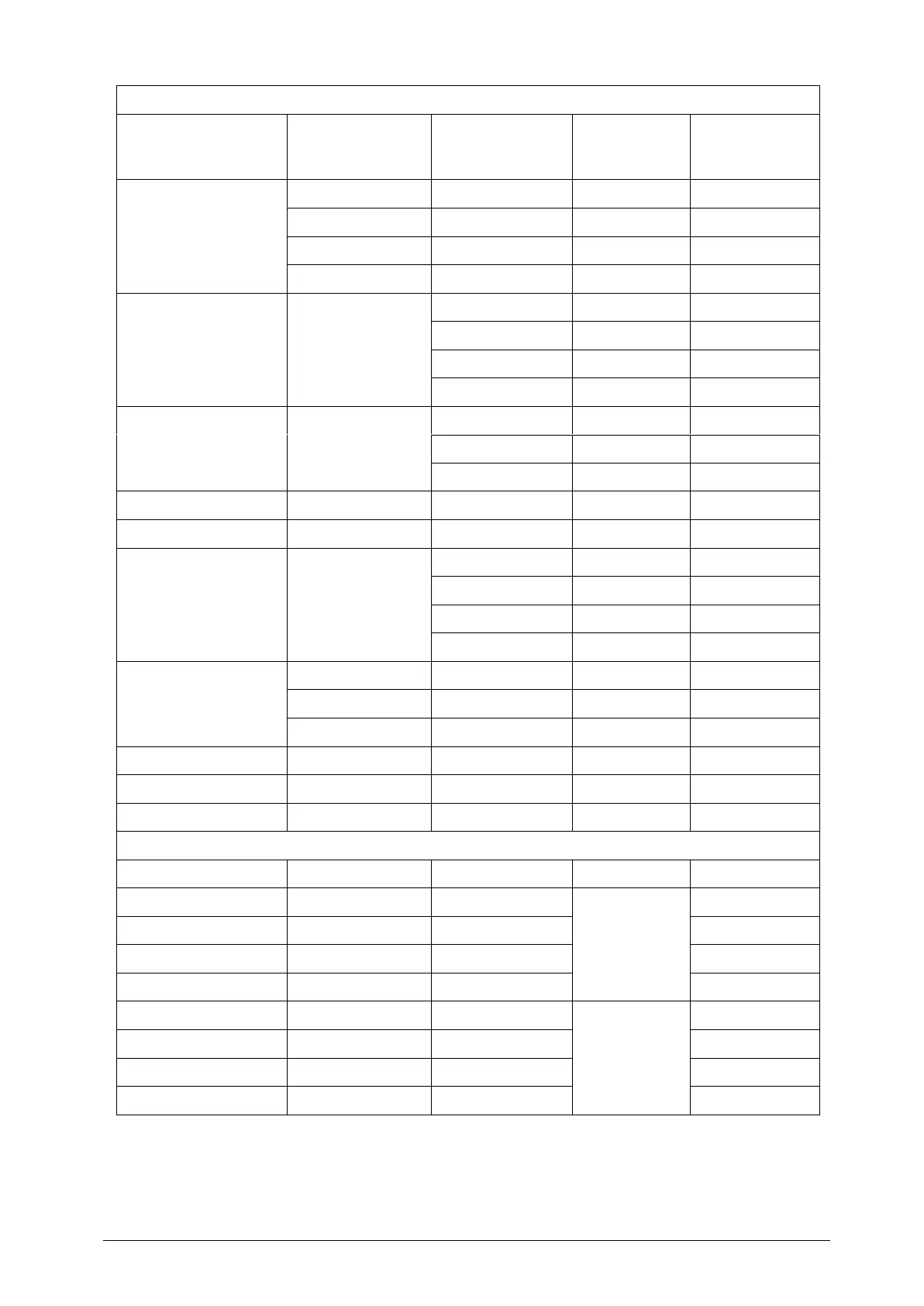
Guide for shade numbers
Operation
Electrode size
1/32 in. (mm)
Arc current (A)
Minimum
protective
shade
Suggested
(1)
shade No.
(comfort)
Shielded metal arc
welding
Less than 3 (2.5)
Less than 60
7
3-5 (2.54)
60-160
8
10
5-8 (46.4)
160-250
10
12
More than 8 (6.4)
250-550
11
14
Gas metal arc
welding and ux
Cored arc welding
Less than 60
7
60-160
10
11
160-250
10
12
250-500
10
14
Gas tungsten arc
welding
Less than 50
8
10
50-150
8
12
150-500
10
14
Air carbon
(Light)
Less than
10
12
Arc cutting
(Heavy)
500
11
14
Plasma arc welding
Less than 20
6
6 to 8
20-100
8
10
100-400
10
12
400-800
11
14
Plasma arc cutting
(Light)
(2)
Less than
8
8
(Medium)
(2)
300
9
12
(Heavy)
(2)
300-400
10
14
Torch brazing
3 to 4
Torch soldering
2
Carbon arc welding
14
Plate thickness
in.
mm
Gas welding
Light
Under 1/8
Under 3.2
4 or 5
Medium
1/8 to 1/2
3.2 to 12.7
5 or 6
Heavy
Over 1/2
Over 12.7
6 or 8
Oxygen cutting
Light
Under 1
Under 25
3 or 4
Medium
1 to 6
25 to 150
4 or 5
Heavy
Over 6
Over 150
5 or 6
(1) As a rule of thumb, start with a shade that is too dark, then go to a lighter shade which gives a sufficient view of the weld zone without
going below the minimum. In oxyfuel gas welding or cutting where the torch produces a high yellow light, it is desirable to use a filter
lens that absorbs the yellow or sodium line the visible light of the (spectrum) operation.
(2) These values apply where the actual arc is seen. Experience has shown that lighter filters may be used when the arc is hidden by the
workpiece.
Data from ANSI Z49.1-2005

Related product manuals