18 | Page
Interface
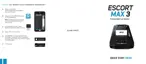
Mode 1 – Select when using Escort ZR5 or ZW5 with MAX 3
Mode 2 – Select when using an aftermarket vehicle interface with MAX 3
UNDERSTANDING RADAR AND LASER
RADAR SPEED MONITORING SYSTEMS
Three band frequencies have been approved by the Federal Communications Commission (FCC)
for use by speed monitoring radar equipment:
X band 10.525 GHz
K band 24.150 GHz
Ka band 33.400 – 36.00 GHz
LIDAR (LASER)
The correct name for the technology that most people refer to as laser is actually LIDAR, which
stands for Light Detection and Ranging. LIDAR operates much like radar. Its signal spreads out
like a radar signal, though not as widely.
Unlike radar, LIDAR must have a clear line of sight to its target vehicle throughout the entire
measurement interval. Obstructions such as signposts, utility poles, tree branches, etc., will
prevent valid speed measurement.
Some common questions about LIDAR include:
Does weather have any effect on LIDAR?
Yes. Rain, snow, smoke, fog or airborne dust particles will reduce the effective range of LIDAR
and can, if dense enough, prevent its operation.
Can LIDAR operate through glass?
Yes. Newer LIDAR guns can obtain readings through most types of glass. However, the laser
pulse also can be received through glass to trigger an alarm by your detector.
Can LIDAR operate while in motion?
No. Because LIDAR operates by line of sight, the person using it cannot drive the vehicle, aim
and operate the gun all at the same time.
Is it legal for police to use LIDAR?
Yes, LIDAR is allowed to be used in all 50 States by police. Your detector detects LIDAR (laser).


 To Next Page