Need help?
Do you have a question about the Ethnicraft Spindle Bed and is the answer not in the manual?
List of all hardware components included in the package for bed assembly.
Identification of necessary tools for assembling the bed frame.
List of major bed components that need to be assembled.
Important notes and symbols to be aware of during assembly.
Connect the siderail to the headboard using dowels, bolts, and washers.
Attach the center leg to the center support using screws.
Install the center support structure to the bed frame using brackets and screws.
Fix slat supports to the bed frame at the same level as the center support.
Install screws on the middle and sides of the bed head, without fully tightening initially.
Fully tighten all previously installed screws for structural integrity.
Position and fasten the bed slats to the frame using screws and washers.
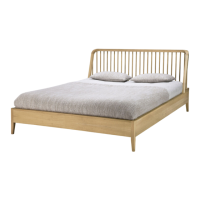
This manual describes the assembly and installation of the Ethnicraft Teak Spindle Bed, Queen Size, with Slats. This bed is designed for residential use and provides a sturdy and aesthetically pleasing sleeping solution. The assembly process is broken down into several distinct steps, ensuring a systematic and secure construction of the bed frame.
The bed's primary function is to provide a stable and comfortable platform for a mattress, supporting the user during sleep. Its design incorporates a spindle headboard and footboard, contributing to a classic yet modern aesthetic that can complement various bedroom decors. The use of teak wood suggests durability and a natural finish, which typically ages gracefully over time.
The assembly instructions highlight several key usage features through the installation process. The bed frame is designed to be robust, with multiple connection points and various types of fasteners to ensure structural integrity.
Headboard and Footboard Connection: The initial steps involve connecting the siderails to the headboard and footboard. This is a critical structural connection, utilizing dowels, halfmoon bolts, and halfmoon washers. The instruction to "TIGHTEN FULLY" at this stage emphasizes the importance of a secure and rigid frame from the outset. The use of dowels helps align the components and provides additional shear strength to the joints, preventing twisting or shifting of the frame. The halfmoon bolts, often used in furniture assembly, allow for strong, concealed connections.
Center Support System: A significant feature of this bed is its robust center support system. This system is crucial for preventing mattress sagging and distributing weight evenly across the bed frame. The manual details the installation of a center support beam, which is then reinforced with L brackets, JCBC screws, JF screws, washers, and nuts. The instruction "TO ADJUST HEIGHT" for the center support indicates a customizable feature, allowing the user to fine-tune the support level or accommodate slight variations in floor or frame level. This adjustability ensures optimal mattress support and longevity. The center support is designed to be installed at the same level as the slat supports, creating a unified and level surface for the mattress.
Slat Support System: The bed incorporates a slat support system, which is essential for mattress ventilation and support. The manual specifies the installation of multiple slat supports, again using L brackets, various screws, washers, and nuts. The instruction to install these supports "AT THE SAME LEVEL WITH CENTER SUPPORT" reinforces the goal of creating a perfectly flat and stable surface for the mattress. The slats themselves are numbered (1, 6, and 13 are mentioned as examples), suggesting a specific order or placement for optimal performance and fit. This system allows air to circulate around the mattress, which is beneficial for hygiene and extending mattress life, especially for foam or latex mattresses.
Bed Head Installation: The installation of the bed head involves a two-part process: first, installing screws on the middle side, and then on the other side. This sequential approach likely helps in aligning the headboard correctly and distributing tension during tightening. The use of JCBC screws, washers, spring washers, and long nuts indicates a strong and secure attachment for the headboard, which often bears weight when a user leans against it. The instruction "DO NOT FULLY TIGHTEN" initially for the bed head screws suggests a need for flexibility during assembly, allowing for minor adjustments before final tightening to ensure everything is perfectly aligned. This is a common practice in furniture assembly to prevent stripping screws or misaligning components.
Final Tightening: A crucial step in the assembly process is the final re-tightening of all screws. This step, explicitly highlighted as "RE-TIGHTEN THE SCREWS" and "TIGHTEN FULLY ALL SCREWS," ensures that all connections are secure and the bed frame is stable and free from wobbling. This is a standard best practice for furniture assembly, as components can settle or shift slightly after initial assembly.
While the manual primarily focuses on assembly, some aspects imply maintenance considerations:
Durable Materials: The mention of "Teak Spindle Bed" suggests the use of teak wood, which is known for its durability, natural resistance to moisture, and pests. This inherent quality of the material contributes to the bed's longevity and reduces the need for frequent maintenance related to material degradation. Teak wood often requires minimal maintenance, typically just occasional cleaning and perhaps oiling to maintain its luster over many years.
Robust Fasteners: The extensive use of various screws, bolts, washers, and nuts indicates a design intended for long-term stability. These fasteners, when properly tightened, are designed to hold the components together securely, minimizing the likelihood of loosening over time. However, as with any furniture, periodic checks of these fasteners are a good maintenance practice to ensure continued stability. The final re-tightening step during assembly is a proactive measure to ensure this initial stability.
Adjustable Components: The adjustable height feature of the center support allows for minor adjustments over the bed's lifespan, which can be a maintenance benefit. If a mattress starts to sag slightly in the middle, or if the floor is uneven, this adjustability can help restore proper support without needing to disassemble the entire bed.
Slat System for Mattress Health: The slat system, while an assembly feature, also contributes to mattress maintenance. By allowing air circulation, it helps prevent moisture buildup and mildew, which can degrade a mattress over time. This passive maintenance feature extends the life and hygiene of the mattress placed on the bed.
In summary, the Ethnicraft Teak Spindle Bed is designed for straightforward assembly, focusing on structural integrity and long-term stability. Its features, such as the robust center and slat support systems, adjustable components, and durable materials, contribute to both its functional use as a comfortable sleeping platform and its ease of maintenance over its lifespan. The detailed instructions and emphasis on proper tightening ensure a secure and lasting piece of furniture.
 General
| Category | Indoor Furnishing |
|---|---|
| Brand | Ethnicraft |
| Model | Spindle Bed |
| Material | Solid Oak |
| Color | Natural Oak |
| Headboard Style | Spindle |
| Finish | Oiled |
| Assembly Required | Yes |
| Bed Size | King, Queen |
| Footboard Style | Spindle |

 To Next Page