9
After Sales Support
(AU) 1300 886 649 (NZ) 0800 836 761 | info@tempo.org
Connection
• Insert the power plug into an appropriate electrical outlet nearby and switch
on the power at the outlet. Always use a separate socket that has no other
high wattage appliances connected at the same time – do not plug it into a
power board or socket adaptor; do not use an extension cord.
Operation
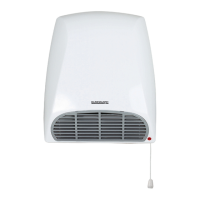
This wall fan heater is equipped with a pull cord for easy operation.
• Pull the cord once, gently, to switch on the fan heater. The pilot light will
illuminate and the fan heater will start with low (1000W) heat output.
• Pull the cord a second time to select high (2000W) heat output.
• Pull the cord a third time to switch off the heater.
WARNING: Do not pull the cord too hard, otherwise it may break.
Overheat protection
This heater is equipped with an overheat protection device, which will turn the
heater off in the event of overheating. The heater will automatically reset when
it has cooled down.
When the overheat protection device has been triggered and the appliance
stops working, turn the heater off, disconnect it and let it cool down. Inspect
the air outlet and intake grilles at the front and back of the unit and remove any
obstructions and blockages. Wait at least 10 minutes for the protection system
to reset before attempting to restart the heater.
If the overheat protection device keeps switching the heater off and you cannot
restart it, please contact our after sales support centre for advice.
Instructions
IMPORTANT!
• A common cause of overheating is deposits of dust and fluff entering
the heater. Ensure these deposits are removed regularly by unplugging
the heater, allowing it to cool and cleaning it (see page 10).
• Also make sure that the appliance can sufficiently dissipate the heat
generated. This is particularly important in case the overheat protection
has been triggered. Ensure there is sufficient room all around the heater,
and nothing is covering or obstructing the air outlet at the front or air
intake grille at the back of the unit.



 To Next Page