EasyManua.ls Logo

evertz 7825DSK2-LG-HD - User Manual

evertz 7825DSK2-LG-HD
176 pages
Print Icon
To Next Page IconTo Next Page
Loading...
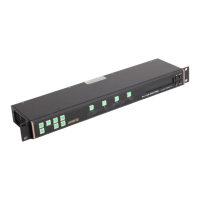
7825DSK2-LG-HD & 7825DSK2-LG-3G
Logo Inserters
Instruction Manual
© Copyright 2006 - 2017
EVERTZ MICROSYSTEMS LTD.
5288 John Lucas Drive,
Burlington, Ontario, Canada
L7L 5Z9
Phone: +1 905-335-3700
Sales Fax: +1 905-335-3573
Tech Support Phone: +1 905-335-7570
Tech Support Fax: +1 905-335-7571
Internet: Sales: sales@evertz.com
Tech Support: service@evertz.com
Web Page: http://www.evertz.com
Version 2.0, May 2017
The material contained in this manual consists of information that is the property of Evertz Microsystems and is
intended solely for the use of purchasers of the 7825DSK2-LG Series Logo Inserter and Downstream Keyer.
Evertz Microsystems expressly prohibits the use of this manual for any purpose other than the operation of the
device.
All rights reserved. No part of this publication may be reproduced without the express written permission of Evertz
Microsystems Ltd. Copies of this guide can be ordered from your Evertz products dealer or from Evertz
Microsystems.

Table of Contents

Question and Answer IconNeed help?

Do you have a question about the evertz 7825DSK2-LG-HD and is the answer not in the manual?

Summary

IMPORTANT SAFETY INSTRUCTIONS

1. OVERVIEW

1.1. SUMMARY

Provides a concise overview of the 7825DSK2-LG-HD and 7825DSK2-LG-3G Dual Downstream Keyer and Logo Inserter.

1.2. HOW TO USE THIS MANUAL

Explains the manual's organization, structure, and how to navigate its content effectively.

1.3. DEFINITIONS

Defines technical terms and acronyms used throughout the manual for clarity and understanding.

2. INSTALLATION

2.1. REAR PANEL OVERVIEW

Details the physical connectors and ports located on the rear panel of the 7825DSK2-LG(-HD)(-3G) modules.

2.2. MOUNTING

Describes the procedure and specifications for physically mounting the remote control panel into a rack.

2.3. POWER REQUIREMENTS

Outlines the electrical power specifications, including voltage, supply, and cord requirements for the unit.

2.4. CONNECTING THE REMOTE CONTROL PANEL

Provides instructions on how to connect the remote control panel to the keyer unit using serial communication.

2.5. CONNECTING THE VIDEO

Explains how to connect video sources and reference signals to the unit's input and output connectors.

2.6. CONNECTING THE LINEAR TIME CODE

Details how to connect a linear time code source for time information and logo insertion.

2.7. CONNECTING TO AN ETHERNET NETWORK

Guides the user on establishing an Ethernet network connection for firmware upgrades and file transfers.

2.8. CONNECTING THE GENERAL PURPOSE INPUTS AND OUTPUTS

Describes how to connect general-purpose inputs and outputs (GPIO) for control and status feedback.

2.9. CONNECTING THE OPTIONAL TEMPERATURE PROBE

Explains the connection procedure for the optional temperature probe used for temperature logos.

2.10. MODULE CONFIGURATION

Lists the tools and methods available for configuring the module's features and parameters.

2.11. CONFIGURING THE MODULE USING THE CARD EDGE SERIAL PORT

Details the process of configuring the module's network settings via the card edge serial port using a terminal program.

2.12. HOW TO INCORPORATE A ROUTER

Explains how to integrate and control upstream routers with the downstream keyer unit.

3. STATUS INDICATORS

LOCAL STATUS

Describes the function of the LOCAL STATUS LED, indicating module health and power fault conditions.

FPGA STATUS

Explains the FPGA STATUS Green LED, which indicates proper module boot-up status.

CARD ACTIVITY

Describes the function of the four CARD ACTIVITY LEDs, which indicate card activity during operation.

4. HOW TO OPERATE THE DOWNSTREAM KEYER USING VISTALINK PRO

4.1. WHAT IS VISTALINK?

Introduces VistaLINK®, Evertz's remote monitoring and configuration platform using SNMP.

4.2. VIDEO TAB

Covers settings related to video connections, including standard, reference type, and output timing.

4.3. TIME TAB

Details parameters for setting and displaying the unit's real-time clock, UTC, and local time.

4.4. NETWORK TAB

Allows viewing and configuring network settings such as IP address, subnet mask, and gateway.

4.5. GENERAL TAB

Provides access to port configuration, firmware information, AFD, and MCP control settings.

4.6. DSK TAB

Used to configure the downstream keyer functions, including key type, gain, and thresholds for both DSK layers.

4.7. MATTE TAB

Configures the black overlay matte attributes, including aspect ratio and position for letterbox effects.

4.8. GPI;GPO CONTROL TAB

Enables configuration of General Purpose Inputs and Outputs for control and triggering functions.

4.9. TEMPERATURE TAB

Configures parameters for logos that display the current local temperature, including source and format.

4.10. TRANSITION TAB

Allows configuration of transition types, rates, pause modes, and program bus changes between video sources.

4.11. EAS TAB

Configures parameters for Emergency Alert System (EAS) messages, including crawl display settings.

4.12. PRESETS TAB

Manages user presets for storing and recalling configurations of matte, transition, and DSK settings.

4.13. MEDIA TAB

Controls parameters for individual logos and media items, including positioning, fading, and animation.

4.14. AUDIO CONTROL TAB

Manages audio parameters for embedded audio, including gain, ducking, and source selection.

6. PLAYLIST COMMANDS

Command Description

Lists various playlist commands and provides a description of their respective functions for script building.

7. HTML AUDIO SETUP PAGE

7.1. HTML SETUP PAGE

Describes how to access and configure audio settings and METAR data via an HTML setup page.

7.1.1. Main Index Page

Explains the initial Index page accessed via the HTML setup, providing links to other configuration sections.

7.1.2. WAV FILE PLAYOUT

Details the requirements and configuration for playing WAV files as audio clips through the unit.

7.1.3. METAR Setup Page

Covers configuration for acquiring meteorological data (METAR) for temperature logos from airports.

7.1.4. Set Time Page

Allows manual setting of the system's date and time through the HTML setup page.

7.1.5. SNMP Trap Dest Page

Configures IP addresses for SNMP Trap destinations to receive alerts from the unit.

7.1.6. Proxy Setup Page

Configures proxy and DNS server settings for Internet access, potentially needed for data feeds.

7.1.7. Reboot Page

Provides functionality to remotely reboot the 7825DSK2-LG(-HD)(-3G) unit via the HTML interface.

8. TECHNICAL DESCRIPTION

8.1. SPECIFICATIONS

Lists the detailed technical specifications for video input/output, reference, LTC, control, and GPIO interfaces.

8.1.1. Serial Digital Video Input

Details the standards, number of inputs, connector types, equalization, and return loss for serial digital video input.

8.1.2. Serial Digital Video Outputs

Specifies the standards, number of outputs, connectors, signal levels, and timing characteristics for serial digital video output.

8.1.3. Video Reference

Describes the type, connectors, termination, and frame genlock settings for video reference signals.

8.1.4. LTC Reader (on breakout cable)

Details the standard, frame rate, connectors, and level for the LTC reader on the breakout cable.

8.1.5. Control (on breakout cable)

Specifies the port type, protocol, and baud rate for the remote panel control interface.

8.1.6. General Purpose Inputs and Outputs

Lists the number of inputs/outputs, type, connector, and signal level for the GPIO interface.

8.1.7. Electrical

Provides electrical specifications including voltage, power consumption, and EMI/RFI compliance.

8.1.8. Physical

Outlines the physical dimensions or slot requirements for the unit within its frame.

9. UPGRADING THE FIRMWARE

9.1. OVERVIEW

Introduces the firmware upgrade process, its necessity, and the recommended methods.

9.2. FIRMWARE UPGRADE VIA OVERTURE APPLICATION (RECOMMENDED PROCEDURE)

Details the recommended firmware upgrade procedure using the Overture application via Ethernet.

9.3. FIRMWARE UPGRADE VIA TERMINAL PROGRAM

Explains the two-step process for upgrading firmware using a terminal program and serial connection.

10. APPENDIX A

10.1. GPI SCRIPTING

Explains how to create and use GPI script files for controlling unit functions via GPI triggers.

10.1.1. Scripting Object Syntax

Defines the syntax for scripting objects, types, and properties used in GPI scripting.

10.1.2. Scenario Samples SAP Programming

Provides example GPI scripts for configuring audio and mapping sources using SAP programming.

10.1.3. Bring Up a Trouble Slide Called “trouble”

Illustrates GPI scripts to invoke a trouble slide or fade out media and audio clips.

Summary

IMPORTANT SAFETY INSTRUCTIONS

1. OVERVIEW

1.1. SUMMARY

Provides a concise overview of the 7825DSK2-LG-HD and 7825DSK2-LG-3G Dual Downstream Keyer and Logo Inserter.

1.2. HOW TO USE THIS MANUAL

Explains the manual's organization, structure, and how to navigate its content effectively.

1.3. DEFINITIONS

Defines technical terms and acronyms used throughout the manual for clarity and understanding.

2. INSTALLATION

2.1. REAR PANEL OVERVIEW

Details the physical connectors and ports located on the rear panel of the 7825DSK2-LG(-HD)(-3G) modules.

2.2. MOUNTING

Describes the procedure and specifications for physically mounting the remote control panel into a rack.

2.3. POWER REQUIREMENTS

Outlines the electrical power specifications, including voltage, supply, and cord requirements for the unit.

2.4. CONNECTING THE REMOTE CONTROL PANEL

Provides instructions on how to connect the remote control panel to the keyer unit using serial communication.

2.5. CONNECTING THE VIDEO

Explains how to connect video sources and reference signals to the unit's input and output connectors.

2.6. CONNECTING THE LINEAR TIME CODE

Details how to connect a linear time code source for time information and logo insertion.

2.7. CONNECTING TO AN ETHERNET NETWORK

Guides the user on establishing an Ethernet network connection for firmware upgrades and file transfers.

2.8. CONNECTING THE GENERAL PURPOSE INPUTS AND OUTPUTS

Describes how to connect general-purpose inputs and outputs (GPIO) for control and status feedback.

2.9. CONNECTING THE OPTIONAL TEMPERATURE PROBE

Explains the connection procedure for the optional temperature probe used for temperature logos.

2.10. MODULE CONFIGURATION

Lists the tools and methods available for configuring the module's features and parameters.

2.11. CONFIGURING THE MODULE USING THE CARD EDGE SERIAL PORT

Details the process of configuring the module's network settings via the card edge serial port using a terminal program.

2.12. HOW TO INCORPORATE A ROUTER

Explains how to integrate and control upstream routers with the downstream keyer unit.

3. STATUS INDICATORS

LOCAL STATUS

Describes the function of the LOCAL STATUS LED, indicating module health and power fault conditions.

FPGA STATUS

Explains the FPGA STATUS Green LED, which indicates proper module boot-up status.

CARD ACTIVITY

Describes the function of the four CARD ACTIVITY LEDs, which indicate card activity during operation.

4. HOW TO OPERATE THE DOWNSTREAM KEYER USING VISTALINK PRO

4.1. WHAT IS VISTALINK?

Introduces VistaLINK®, Evertz's remote monitoring and configuration platform using SNMP.

4.2. VIDEO TAB

Covers settings related to video connections, including standard, reference type, and output timing.

4.3. TIME TAB

Details parameters for setting and displaying the unit's real-time clock, UTC, and local time.

4.4. NETWORK TAB

Allows viewing and configuring network settings such as IP address, subnet mask, and gateway.

4.5. GENERAL TAB

Provides access to port configuration, firmware information, AFD, and MCP control settings.

4.6. DSK TAB

Used to configure the downstream keyer functions, including key type, gain, and thresholds for both DSK layers.

4.7. MATTE TAB

Configures the black overlay matte attributes, including aspect ratio and position for letterbox effects.

4.8. GPI;GPO CONTROL TAB

Enables configuration of General Purpose Inputs and Outputs for control and triggering functions.

4.9. TEMPERATURE TAB

Configures parameters for logos that display the current local temperature, including source and format.

4.10. TRANSITION TAB

Allows configuration of transition types, rates, pause modes, and program bus changes between video sources.

4.11. EAS TAB

Configures parameters for Emergency Alert System (EAS) messages, including crawl display settings.

4.12. PRESETS TAB

Manages user presets for storing and recalling configurations of matte, transition, and DSK settings.

4.13. MEDIA TAB

Controls parameters for individual logos and media items, including positioning, fading, and animation.

4.14. AUDIO CONTROL TAB

Manages audio parameters for embedded audio, including gain, ducking, and source selection.

6. PLAYLIST COMMANDS

Command Description

Lists various playlist commands and provides a description of their respective functions for script building.

7. HTML AUDIO SETUP PAGE

7.1. HTML SETUP PAGE

Describes how to access and configure audio settings and METAR data via an HTML setup page.

7.1.1. Main Index Page

Explains the initial Index page accessed via the HTML setup, providing links to other configuration sections.

7.1.2. WAV FILE PLAYOUT

Details the requirements and configuration for playing WAV files as audio clips through the unit.

7.1.3. METAR Setup Page

Covers configuration for acquiring meteorological data (METAR) for temperature logos from airports.

7.1.4. Set Time Page

Allows manual setting of the system's date and time through the HTML setup page.

7.1.5. SNMP Trap Dest Page

Configures IP addresses for SNMP Trap destinations to receive alerts from the unit.

7.1.6. Proxy Setup Page

Configures proxy and DNS server settings for Internet access, potentially needed for data feeds.

7.1.7. Reboot Page

Provides functionality to remotely reboot the 7825DSK2-LG(-HD)(-3G) unit via the HTML interface.

8. TECHNICAL DESCRIPTION

8.1. SPECIFICATIONS

Lists the detailed technical specifications for video input/output, reference, LTC, control, and GPIO interfaces.

8.1.1. Serial Digital Video Input

Details the standards, number of inputs, connector types, equalization, and return loss for serial digital video input.

8.1.2. Serial Digital Video Outputs

Specifies the standards, number of outputs, connectors, signal levels, and timing characteristics for serial digital video output.

8.1.3. Video Reference

Describes the type, connectors, termination, and frame genlock settings for video reference signals.

8.1.4. LTC Reader (on breakout cable)

Details the standard, frame rate, connectors, and level for the LTC reader on the breakout cable.

8.1.5. Control (on breakout cable)

Specifies the port type, protocol, and baud rate for the remote panel control interface.

8.1.6. General Purpose Inputs and Outputs

Lists the number of inputs/outputs, type, connector, and signal level for the GPIO interface.

8.1.7. Electrical

Provides electrical specifications including voltage, power consumption, and EMI/RFI compliance.

8.1.8. Physical

Outlines the physical dimensions or slot requirements for the unit within its frame.

9. UPGRADING THE FIRMWARE

9.1. OVERVIEW

Introduces the firmware upgrade process, its necessity, and the recommended methods.

9.2. FIRMWARE UPGRADE VIA OVERTURE APPLICATION (RECOMMENDED PROCEDURE)

Details the recommended firmware upgrade procedure using the Overture application via Ethernet.

9.3. FIRMWARE UPGRADE VIA TERMINAL PROGRAM

Explains the two-step process for upgrading firmware using a terminal program and serial connection.

10. APPENDIX A

10.1. GPI SCRIPTING

Explains how to create and use GPI script files for controlling unit functions via GPI triggers.

10.1.1. Scripting Object Syntax

Defines the syntax for scripting objects, types, and properties used in GPI scripting.

10.1.2. Scenario Samples SAP Programming

Provides example GPI scripts for configuring audio and mapping sources using SAP programming.

10.1.3. Bring Up a Trouble Slide Called “trouble”

Illustrates GPI scripts to invoke a trouble slide or fade out media and audio clips.

evertz 7825DSK2-LG-HD Specifications

General IconGeneral
Brandevertz
Model7825DSK2-LG-HD
CategoryComputer Hardware
LanguageEnglish

Related product manuals