EasyManua.ls Logo

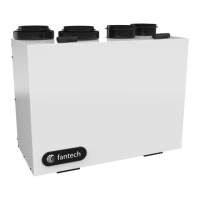
Fantech VHR 2005 R - User Manual

Fantech VHR 2005 R
28 pages
Print Icon
To Next Page IconTo Next Page
Loading...
SHR 1504 SHR 1505 R(D) SHR 2004 SHR 2005 R(D) SHR 3005 R SHR 3205RD
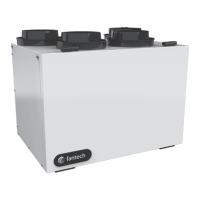
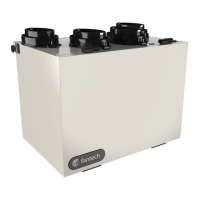
VHR 1404 VHR 1405 R VHR 2004 VHR 2005 R VHR 704
*Leave with Homeowner
Heat Recovery Ventilator Operation Manual
For use with Models

Questions and Answers

  • L
    Luke WilliamsSep 4, 2025
    How to fix air that is too dry with my Fantech VHR 2005 R Fan?
    • M
      Melanie JohnsonSep 4, 2025
      To resolve air that is too dry with your Fantech Fan, increase the desired humidity level and change the ventilation mode from continuous to standby. If the issue remains, have a contractor balance the HRV airflows.
  • N
    Nicole JuarezSep 18, 2025
    What to do if LED is flashing on Fantech VHR 2005 R Fan?
    • J
      Jacqueline RaySep 18, 2025
      If the LED on your Fantech Fan is flashing, it indicates that no power is being transmitted to the control board. First, make sure the unit is plugged in. If it is, the transformer may need replacing.
  • W
    wesparzaSep 16, 2025
    Why is Fantech VHR 2005 R air too dry?
    • R
      Robert BerrySep 16, 2025
      If the air from your Fantech Fan is too dry, it may be because the dehumidistat control is set too low. Increase the desired level of humidity and change the ventilation mode from continuous mode to standby.
  • T
    Timothy JonesSep 14, 2025
    How to fix condensation or ice build up in insulated duct to the outside of Fantech Fan?
    • D
      David CoxSep 15, 2025
      If you notice condensation or ice build-up in the insulated duct to the outside of your Fantech Fan, it might be caused by an incomplete vapor barrier around the insulated duct. In this case, tape and seal all joints. Another cause can be a hole or tear in the outer duct covering, tape any holes or tears made in the outer duct covering and ensure that the vapor barrier is completely sealed.
  • D
    Daniel WoodsSep 12, 2025
    What to do if Fantech Fan HRV and/or Ducts frosting up?
    • E
      Eric DavisSep 13, 2025
      If your Fantech Fan's HRV and/or ducts are frosting up, it could be due to improperly balanced HRV air flows, have an HVAC contractor balance the HRV airflow. Note that minimal frost build-up is expected on cores before unit initiates defrost cycle functions.
  • W
    Wendy MitchellSep 12, 2025
    Why is my Fantech Fan supply air feels cold?
    • N
      nathanrodriguezSep 12, 2025
      If the supply air from your Fantech Fan feels cold, it could be due to the location of the supply grilles. Locate the grilles high on the walls or under the baseboards, install ceiling-mounted diffuser or grilles so as not to directly spill the supply air on the occupant. You can also turn down the HRV supply speed. If the outdoor temperature is extremely cold, and the supply air is ducted into the furnace return, the furnace fan may need to run continuously to distribute ventilation air comfortably.
  • R
    rhowardSep 9, 2025
    What to do if Fantech VHR 2005 R has persistent condensation on window?
    • H
      Heather LucasSep 9, 2025
      If you notice persistent condensation on your window when using the Fantech Fan, it could be due to a few reasons. Try reducing the desired level of humidity, combining this step with the use of continuous exchange mode. Also, ensure good air circulation near windows by opening curtains or blinds. If the issue continues, have a contractor balance the HRV.
  • D
    Diana UnderwoodSep 7, 2025
    Why is my Fantech VHR 2005 R Fan air too humid?
    • K
      krystalhensonSep 7, 2025
      Several factors can cause your Fantech Fan to produce air that is too humid. First, reduce the desired level of humidity if the dehumidistat control is set too high and combine this with the use of continuous exchange mode. If there has been a sudden change in temperature, wait until the outside temperature stabilizes. Ensure that you store a majority of your wood outside. Check that the dryer vent is exhausting outside and that there is good air circulation near windows (open curtains or blinds). If you have a well-sealed basement door, open it or install a grill on the door. Finally, a failed damper system may be stuck in recirculation mode, so have a contractor verify the damper system.
  • A
    Amy StewartSep 5, 2025
    What to do if Fantech VHR 2005 R has poor air flows?
    • J
      Jean RoweSep 6, 2025
      If your Fantech Fan has poor air flows, several factors could be responsible. Start by cleaning the exterior hoods or vents if the 1/4" (6mm) mesh on the outside hoods is plugged. Also, remove and clean the filter and core. Ensure indoor grilles are open and not blocked. If these steps don't resolve the issue, have an electrician check the power supply voltage. Check the duct installation and increase the speed of the HRV. If the problem persists, have a contractor balance the HRV airflow or reconnect any ducting that has fallen down or been disconnected from the HRV.
  • J
    Jessica AllenAug 21, 2025
    What to do if Fantech VHR 2005 R Fan air is too humid?
    • M
      Mandy JohnsonAug 21, 2025
      If the air from your Fantech Fan is too humid, it might be due to several reasons, including the dehumidistat control being set too high, a sudden change in temperature, storing too much wood inside, a dryer vent exhausting inside, poor air circulation near windows, an out-of-balance HRV, or a closed well-sealed basement door. To address this, reduce the desired level of humidity and use continuous exchange mode. Wait for the outside temperature to stabilize, and consider heating to improve the situation. Store most of your wood outside, arrange an outside vent for the dryer, open curtains or blinds, balance HRV airflows, and open the basement door or install a grill.

Summary

Understanding Heat Recovery Ventilators (HRVs)

What are HRVs?

Definition and basic function of Heat Recovery Ventilators.

How HRVs Work

Explanation of the heat recovery process and unit operation.

Fantech Model Numbering

Guide to understanding Fantech HRV model nomenclature.

HRV Port Configurations

Overview of different port configurations available in HRVs.

Operation and Modes of HRVs

Seasonal Operation Considerations

Guidance on operating HRVs during different seasons (Winter, Spring, Summer, Fall).

Continuous Ventilation Mode

Details on operating the HRV for constant air exchange.

Intermittent;Standby Mode

Explanation of standby and intermittent operation for specific HRV models.

Defrost Modes

Description of defrost cycles for 5-port and 4-port HRV models.

Optional Remote Controls

MDEH1 Dehumidistat Control

Wall-mount control for indoor humidity monitoring and adjustment.

MDEH2 Dehumidistat Control

Enhanced wall-mount control with off/on and humidity features.

RTS3 Boost Timer

Timer control for activating high-speed ventilation for set periods.

EDF1;EDF1 R Timer Controls

Simple controls for timed or continuous operation modes.

RTS2 Remote Timer

Timer control for short-duration high-speed ventilation boosts.

EDF5 Multi-Function Wall Control

Comprehensive control for humidity, speed, and cycle settings.

HRV Maintenance and Care

Filter Maintenance

Instructions for checking, cleaning, and replacing air filters.

Heat Recovery Core Cleaning

Procedure for cleaning the heat recovery core.

Unit, Fan, and Drain Maintenance

Guidelines for cleaning the unit, fan, and drain system.

Outside Hoods and Ductwork Inspection

Recommendations for checking and maintaining exterior components.

Scheduled Maintenance Tasks

Table outlining required maintenance and recommended frequencies.

Product Limited Warranty Details

Information regarding the HRV's warranty terms and conditions.

Troubleshooting Guide

Common Airflow and Humidity Issues

Solutions for problems related to air dryness, humidity, and flow.

Condensation, Frosting, and Duct Issues

Troubleshooting for condensation, ice build-up, and duct integrity.

Control Board Error Indicators

Understanding LED light codes on the control board for diagnostics.

Determining Airflow Requirements

Calculating Required Airflow

Method for calculating the necessary airflow for whole-house ventilation.

Alternate Airflow Calculation Method

Room-by-room method for determining ventilation airflow rates.

Technical Specifications and Performance Data

SHR Model Dimensions and Airflow

Physical dimensions and airflow path for SHR series.

SHR Series Performance Data

Sensible effectiveness and power consumption for SHR models.

VHR Model Dimensions and Airflow

Physical dimensions and airflow path for VHR series.

VHR Series Performance Data

Sensible effectiveness and power consumption for VHR models.

HRV Installation Procedures

Selecting the Installation Location

Guidelines for choosing an appropriate location for the HRV unit.

Unit Mounting and Drain Line Setup

Steps for physically mounting the HRV and installing the condensate drain.

Exterior Ducting Installation

Weatherhood Placement and Duct Connection

Instructions for locating and connecting exterior air intake/exhaust hoods.

Interior Ducting Installation

General Ducting Tips and Grille Placement

Best practices for interior ductwork and grille positioning.

Ducting for 5 th Port Units

Specific guidance for connecting the fifth port on certain HRV models.

HRV Installation Examples

Fully Dedicated System Installation

Diagram and notes for a recommended new construction installation.

Partially Dedicated System Installation

Example of connecting the HRV to a furnace's cold air return.

Simplified Installation - Option 1

Diagram for connecting HRV supply/exhaust to furnace return.

Simplified Installation - Option 2

Diagram for connecting HRV to furnace return and supply sides.

Startup and Airflow Balancing

Unit Startup Procedure

Steps for initial power-up and unit self-diagnostic.

Airflow Balancing Principles

Importance and purpose of balancing supply and return airflows.

Adjusting and Measuring Airflow

Methods for adjusting dampers and measuring airflow velocity.

Low Voltage Control System Options

EDF Series Timer Controls

Controls for timed operation, recirculation, and continuous modes.

MDEH Series Dehumidistats

Controls for monitoring and managing indoor humidity levels.

RTS Series Timers

Controls for activating high-speed ventilation for specific durations.

Electrical Connections and Wiring Diagrams

HRV Unit Wiring Diagram

Overview of internal wiring connections for the HRV unit.

Accessory Control Wiring

Diagrams for connecting various low-voltage accessory controls.

Furnace and Cooling System Interlock

Wiring configurations for connecting the HRV to HVAC systems.

Fantech VHR 2005 R Specifications

General IconGeneral
BrandFantech
ModelVHR 2005 R
CategoryFan
LanguageEnglish

Related product manuals