5
Technical data
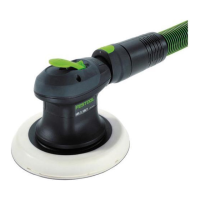
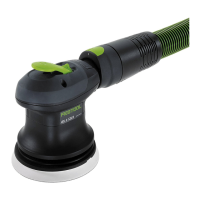
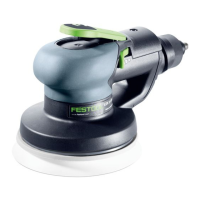
Sanding pad diameter: - LEX 2 150 150 mm / 6”
- LEX 2 185 185 mm / 7”
Drive Compressed-air vane motor
Operating pressure (fl ow pressure) 87 psi
No load speed 6,500 - 8,000 rpm
Orbits per minute 13,000 - 16,000 opm
Sanding stroke: - LEX 2 150/3 3 mm
- LEX 2 150/7, LEX 2 185/7 7 mm
Air consumption at nominal load 14 cfm
Weight: - LEX 2 150 1.3 kg / 2.8 lbs
- LEX 2 185 1.4 kg / 3 lbs
Symbols
Warning of general danger
Read the Operating Instructions/Notes!
n
0
no load speed (revolutions)
rpm revolutions per minute
opm orbits per minute
Use for intended purpose
As specified, the machines are designed for
sanding wood, plastic, metal, stone, composite,
paintwork, fi ller and similar materials. Material
containing asbestos must not be processed with
these tools.
The user is liable for any damage
and injury resulting from incorrect usage!
Functional description
Connection and start-up
Make sure that the pneumatic tool
is switched off when you connect the compressed-
air supply.
Compressed-air treatment
The Festool service unit should always be used
to ensure that Festool pneumatic tools function
correctly. Consisting of a fi lter, control unit, con-
densation drain and lubricator, the service unit
cleans and lubricates the compressed air and
keeps it free of condensation.
For thios tool, the lubricator should be set so that
a drop is applied to the compressed air approx.
every 7-10 minutes.
Damage that occurs as a result of incorrect
compressed-air treatment is excluded from war-
ranty claims.
We recommend a service unit with a 3/8” con-
nector for up to two Festool pneumatic tools. The
compressor used to supply the compressed air
should supply at 20 cfm and an operating pressure
TO REDUCE THE RISK OF INJURY,
USER MUST READ INSTRUCTION MANUAL.
Various dust created by power sanding, sawing,
grinding, drilling and other construction activities
contains chemicals known (to the State of Califor-
nia) to cause cancer, birth defects or other repro-
ductive harm. Some examples of these chemicals
are:
• lead from lead-based paints,
• crystalline silica from bricks and cement and
other masonry products, and
• arsenic and chromium from chemically-treated
lumber.
The risk from these exposures varies, depending
on how often you do this type of work.
To reduce your exposure to these chemicals:
Work in a well ventilated area, and
work with approved safety equip-
ment, such as dust masks that are
specially designed to filter out
microscopic particles.






 To Next Page