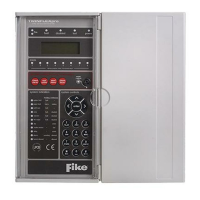
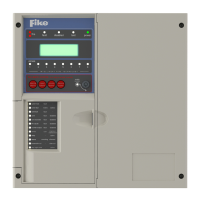
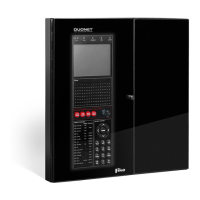
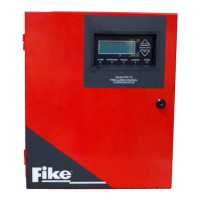
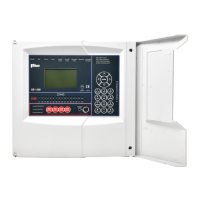
The CIE-A-200 is an addressable intelligent fire detection and alarm system designed to provide comprehensive fire protection. Unlike traditional addressable analogue sensor systems where the control panel makes fire decisions based on data from sensors, the CIE-A-200 features independent distributed intelligence. This means that signal processing and fire/fault decisions are made within the detectors themselves, significantly reducing the complexity of the control panel and data traffic, and improving overall system efficiency.
Function Description:
The CIE-A-200 system operates as a fire detection and alarm control panel. It is capable of identifying fire alarms, faults, and other abnormal conditions within a building. The system is designed to interface with building services, such as air conditioning, which may be shut down when an alarm sounds. It provides both audible and visual indications of system status, including fire alarms, faults, and disabled conditions. The system's addressing is automatic upon initialization from the control panel, eliminating the need for manual programming at each device. Each device in the system has a built-in isolator, which helps in identifying and isolating faults on the loop. The panel also checks for addressable spurs for backward compatibility with older systems.
Important Technical Specifications:
- System Type: Addressable Intelligent Detector System / Addressable Fire Detection and Alarm System with Independent Distributed Intelligence.
- Zone Capacity: Up to 32 zones per control panel. Multiple panels can be used for larger premises.
- Power Supply: Mains supply with a standby battery for at least 48 hours of operation during mains failure.
- Device Addressing: Automatic upon initialization.
- Device Isolation: Each device includes a built-in isolator.
- Event Log Capacity: Up to 1000 historic events.
- Access Levels: Four access levels (0-NORM, 1-USER, 2-SUPR, ENGR) with corresponding codes and key switch operation for enhanced security and control.
- Default Access Codes:
- User (Access Level 1): 8737
- Supervisor (Access Level 2): 7877
- Display: LCD display screen for showing system status, event messages, and menu navigation.
- LED Indicators: Various LEDs for power, test, delay, fault, system fault, power fault, sounder fault, disabled, sounder disabled, fire output fault, fire output disabled, fault output disabled, alarm confirmation, fire, and zone indications.
- Outputs: Supports fire outputs, fault outputs, and sounder outputs.
- Diagnostics: Includes Loop Diagnostics, LED Diagnostics, PSU Diagnostics, and Peripheral Bus Diagnostics, accessible via a User USB port on the back board for PC-based diagnostic software.
Usage Features:
- Control Panel Interface: Features a clear control panel with an information window, zonal indication LEDs, general indication & system indication LEDs, fire alarm controls (silence alarms, reset system, sound alarms, silence buzzer), and system controls (keypad for menu navigation).
- Menu Navigation: A context-driven highlighted-selection menu system allows users to navigate options using UP/DOWN keys and ENTER, or by entering option numbers. The ESC key exits to the previous menu.
- Alarm Handling:
- When a fire alarm occurs, the alarms sound, fire LEDs illuminate, the buzzer pulses quickly, and the display shows the alarm location and type.
- Alarms can be silenced by enabling controls and pressing 'SILENCE ALARMS'.
- The system can be reset by enabling controls and pressing 'RESET SYSTEM' after the cause of the alarm has been cleared.
- Alarms can be manually sounded by enabling controls and pressing 'SOUND ALARMS'.
- Access Levels: The system employs different access levels to restrict functionality:
- Access Level 0 (Normal): Controls disabled, 'Controls Enabled' LED off.
- Access Level 1 (User): Controls enabled (via key or code 8737), 'Controls Enabled' LED on. Allows viewing current events and test modes.
- Access Level 2 (Supervisor): Controls enabled (via code 7877), 'Controls Enabled' LED flashing slowly. Provides access to more advanced functions like viewing logs, delay on/off, enable/disable, time & date settings, find device, diagnostics, and access levels.
- Engineer Level (ENGR): Accessed via an Engineer code for advanced configuration and maintenance.
- Delay Override: A manual call point (MCP) can be used to override delayed outputs, complying with EN54-2 Clause 7.11.1d.
- Test Modes: Includes 'Test Controls & Display' (illuminates LEDs, blackens LCD, sounds buzzer, tests keypad), 'Silent Test Mode' (tests zones without sounding alarms), 'Local Audible Test' (tests zones with local sounder activation), and 'System Test' (tests zones with assigned sounders operating for 10 seconds and panel indicating alarm).
- Event Logging: The system logs all events (fire, fault, disablements, panel, test, warnings) for review, aiding in troubleshooting and maintenance.
- Enable/Disable Functions: Allows disabling/enabling of detection zones, individual devices, all detection zones, all devices, sounders, fire outputs, fault outputs, and groups of outputs.
- Time & Date Settings: Allows adjustment of system time and date, including Daylight Saving Time settings.
- Find Device: Helps locate devices on the loop by switching on their LED and sounder (if present).
Maintenance Features:
- Routine Testing:
- Daily: Check for normal operation and recorded faults.
- Weekly: Operate at least one detector or call point to test alarm reception and sounder operation. A different device should be tested each time, ensuring all zones are tested within a 13-week period.
- Annual: Comprehensive checks by a competent fire alarm service organization, including visual inspection and functional tests of all devices within a 12-month period.
- Log Book: A dedicated section for recording all fire and fault events, actions taken, and initials, whether an engineer was called or not. This is crucial for compliance with BS5839.
- Troubleshooting Guide: Provides a table of common problems, possible causes, and remedial actions, such as inability to silence alarms, inability to reset the system, panel buzzer sounding with various LED indications, and general abnormal behavior.
- Diagnostics: Offers detailed diagnostic tools for the loop, LEDs, PSU, and peripheral bus, which can be used with PC-based diagnostic software to monitor system health and identify issues.
- Fault Indication: Fault LEDs illuminate and the internal buzzer sounds for fault conditions. The buzzer can be silenced, and faults should be investigated and rectified by competent persons.
- Post-Fire/False Alarm Actions: Guidelines for users to record illuminated indicators, messages, activated devices, and any concurrent incidents to assist service companies in tracing the cause.
- Installation Details Section: To be completed by the commissioning engineer at handover, including responsible person's details, installation address, installer details, equipment specifications (version, zones, total devices, detectors, call points, sounders, interfaces, loop continuity/resistance values), and emergency contact information.


 To Next Page


 General