F5 Power Amplifier (As printed in AudioXpress, May 08)
Nelson Pass 1/31/08
Intro
As many of you may know, First Watt is dedicated to exploring the performance quality of
small simple power amplifiers. Over the past four years, five such amplifiers have been
designed as concept pieces and produced in limited quantities.
The F1 and F2 explored the possibilities of current source operation with single-stage Class
A circuits and no feedback. The Aleph J used JFET devices for the front end of a two stage
single-ended Class A amplifier. The F3 achieved very low distortion using power JFETs in
a single-stage, single-ended Class A circuit. The F4 demonstrated that an amplifier did not
necessarily require voltage gain to be useful.
You can follow the progression at www.firstwatt.com
Here is the F5. We want to further push the performance boundaries of simple little
amplifiers with a FET two-stage Class A push-pull design.
A Quickie Tutorial on FET Amplifiers
One of the aims of these articles is to get people to build amplifiers, so here is some tutorial
material to get beginners going. I have written up some of this material before (“The A75”,
Audio Amateur 4/1992), but that was 15 years ago, and maybe it will be helpful to repeat
bits of it. All 31 years worth can be found at www.passdiy.com and related links.
I’m assuming that you understand the concepts of voltage, current, and resistance. If you
already know how a FET works, you can skip ahead.
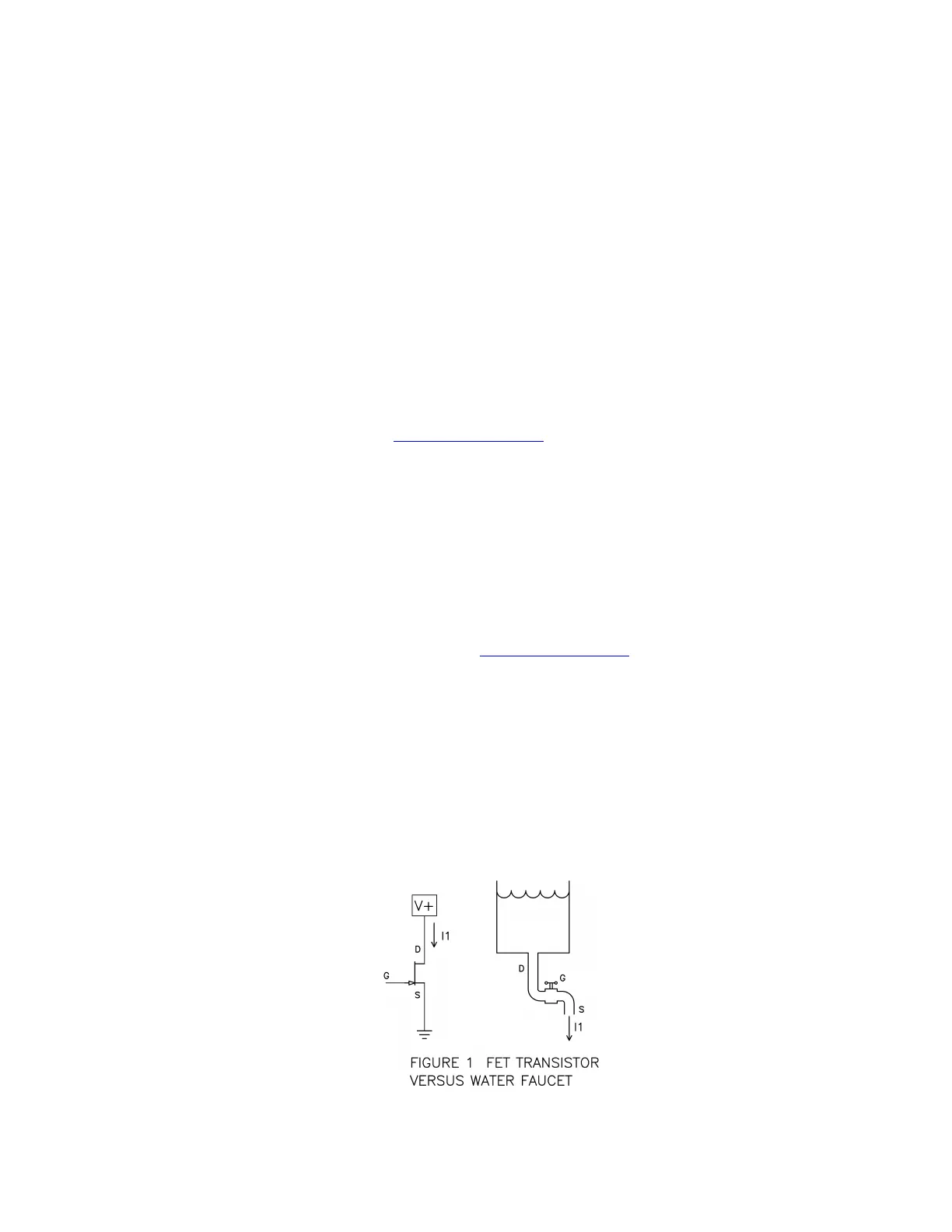
Figure 1 shows an N channel FET, a quantum mechanical black box with three connections.
This device is meant to function as a valve, a little bit like a water faucet. In this picture, the
Drain (D) of the FET is attached to an electrical power supply, analogous to the pressurized
water supply on the other side of the faucet. You can imagine the pipe as wire, and the tank
of water as a battery or even a charged-up capacitor.



 To Next Page