18
it when you are opening and inspecting your beehive.
You can read more about using your smoker safely in the
Accredited First Aid Beekeeping Safety pamphlet.
Hive tool
The hive tool is a multi functional tool made of steel. It is
used to lever and remove frames, to lever apart boxes, as
well as scrape and remove burr comb from the hive.
10
WHERE TO LOCATE YOUR FLOW HIVE
It is important to consider the location of your new beehive prior to installing
your bees. You can’t move a beehive around your paddock, yard or rooftop
easily. Bees have highly developed navigational skills. If the hive is moved they
become confused and will return to the original site. For advice on moving
a bee hive once the bees are housed consult a beekeeping book, forum.
honeyflow.com or your local beekeepers’ association.
There are three important things to consider when selecting a site for your
new hive – your bees, your neighbours and yourself.
The location of your beehive will aect the overall strength of your colony.
Choose a sheltered position. In cool climates look for a dry sunny position, in
hot climates the hive will benefit from some shade, particularly in summer. Face
the hive entrance away from the prevailing winds. Ideally, face the entrance in a
southerly direction if you’re in the northern hemisphere and northerly direction
for the southern hemisphere.
You should also read the Accredited First Aid Safety Pamphlet for an
introduction to some important safety considerations to keep in mind when
locating your hive.
Other considerations
• Bees excrete waste to a distance of about 15 metres from the hive. This
appears as little orange dots that can stain washing and soil light coloured
cars. Situate your hive to avoid this. It’s a good idea to place your hive so
that the flight path is over an area of your yard or roof which has little use.
• The hive should sit firmly, without any wobble on a stable base with clear
access for when you are working with the colony. Placing the hive on a stand
prevents rotting of base timbers and improves accessibility (options include
bricks, concrete blocks, steel posts etc).
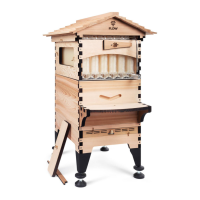
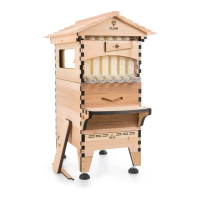
• During harvest the hive should have a 3° slope towards the honey outlets (a
tilt of about 15mm (1/2") is enough). Our optional leg kit provides a handy


 To Next Page