Need help?
Do you have a question about the Flow Hive and is the answer not in the manual?
Set up brood box, frames, inner cover, and roof. Ensure brood box is active before adding Flow Super.
Add Flow Super with frames once colony is strong. Place queen excluder between brood box and Flow Super.
Insert Flow Key into the LOWER slot and turn 90 degrees to open honeycomb cells for honey extraction.
Reset frames by closing cells with the Flow Key in the UPPER slot and replace the key access cap.
Inspect honey trough, clear leak-back gap, and clean trough if necessary with brush or cloth.
Clean frames with warm water, set cells to 'open', dry thoroughly, and store in a cool, dry, dark location away from light.
Learn about sterilisation methods like irradiation for diseases and avoid high doses that damage frames.
Wear a protective beekeeping suit, hat, veil, and gloves for safety when working with bees.
Needed for Flow Hybrid packages to fill the super and prevent burr comb formation.
A mesh panel to prevent the queen from laying eggs in the honey super.
Reduces defensive bee behaviour when the hive is disturbed.
Learn basic first aid, how to light/extinguish a smoker, and how to open/inspect/close a hive.
Focus on identifying/managing pests/diseases, swarm control, requeening, and moving a hive.
Troubleshoot problems with fitting Flow Frames side-by-side or between hive walls.
Address bees being slow to colonise Flow Frames by concentrating bees or adding beeswax.
Learn how to remove caps from key access or honey troughs if they are stuck.
Learn how to turn the Flow Key when it is stiff or difficult to operate.
Troubleshoot honey not flowing after opening the frame or if it has crystallised.
Resolve issues with the cap not fitting correctly on the key access slot.
Manage ants attracted to frames and address honey in the trough between harvests.
Troubleshoot honey leakage during harvest and repair or reassemble damaged frames.
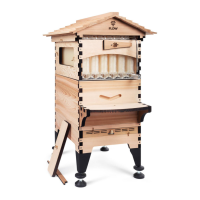
The Flow Hive is an innovative beekeeping system designed to simplify honey harvesting without disturbing the bees. It consists of a Flow Hive and Flow Frames, which introduce a new method of extracting honey.
The core function of the Flow Hive is to provide a habitat for honey bees while enabling a less intrusive and more convenient honey harvesting process. The hive is structured like a traditional beehive but incorporates specialized Flow Frames in the honey super. These frames are made of partly formed honeycomb cells. Bees complete these cells with their wax, fill them with honey, and then cap them. When the frames are full and ready for harvest, a special Flow Key is inserted into a slot, which causes the honeycomb cells to split vertically, creating channels for the honey to flow downwards. The honey then drains through a honey trough at the base of the frame, out of the hive, and into a collection jar, all without opening the hive or disturbing the bees. After harvesting, the Flow Key is reinserted into a different slot and turned to reset the cells, allowing the bees to repair and refill them.
Easy Honey Harvesting: The primary feature is the ability to harvest honey directly from the hive by simply turning a key, eliminating the need for traditional extraction methods like uncapping, centrifuging, and filtering. This significantly reduces the labor and mess associated with honey collection.
Minimal Bee Disturbance: The design allows honey to be harvested without opening the hive, smoking the bees, or removing frames. This keeps the bees calm and reduces stress on the colony, making beekeeping more accessible and less intimidating for beginners.
Observation Windows: The Flow Super includes observation windows, allowing beekeepers to visually monitor the frames and see when the honey cells are full and capped, indicating they are ready for harvest. This helps in understanding the colony's activity and honey production without intrusive inspections.
Modular Design: The Flow Hive is designed to be compatible with standard Langstroth hive components. It typically includes a base, brood box (for the queen and young bees), a queen excluder (to prevent the queen from laying eggs in the honey super), a Flow Super with Flow Frames, an inner cover, and a roof. This modularity allows for customization and expansion as the colony grows.
Adjustable Flow Frames: Before installation, Flow Frames can be adjusted to fit snugly within the Flow Super, ensuring proper alignment and preventing bees from escaping through gaps. This also ensures the frames form a flat "window" at the rear for observation.
Sloped Hive Design: For optimal honey drainage, the hive should be positioned with a slight slope (2.5 to 5 degrees) towards the honey outlets. The Flow Hive Classic has a built-in slope in its baseboard, while the Flow Hive 2 base incorporates spirit levels to aid in achieving the correct angle.
Honey Leak-Back Gap: The honey trough design includes a leak-back gap, allowing any residual honey after harvest to drip back into the hive for the bees to clean up, minimizing waste.
Protective Attire and Smoker Recommended: While the Flow Hive aims to reduce bee disturbance, beekeepers are still advised to wear protective gear (suit, hat, veil, gloves) and have a smoker on hand when working with the hive, especially during initial setup, inspections, or if bees become agitated.
Additional Equipment: For a complete setup, additional equipment such as a hive tool (for prying apart boxes and frames), and potentially extra Langstroth frames for hybrid packages, are recommended.
Frame Cleaning: Flow Frames generally do not require cleaning if they remain in the hive, as bees will keep them clean. However, if frames are removed for storage, they can be cleaned with warm water (up to 65°C/150°F) with the cells in the 'open' position to allow water to flow through.
Storage Recommendations: When storing Flow Frames outside the hive, it's important to keep them away from direct sunlight, as they are UV sensitive. They should be stored in a cool, dry, dark location. To prevent wax moth damage, frames can be frozen for 48 hours before storage in sealed containers.
Honey Trough Maintenance: Regular inspection and clearing of the honey trough and leak-back gap are recommended to ensure proper drainage and prevent blockages by bees or debris. A long-handled bottle brush or the Flow Key handle can be used for cleaning.
Sterilization: In cases of certain bee diseases, such as American foulbrood, sterilization of equipment may be necessary. Irradiation is one method, but high or repeated doses of gamma irradiation can damage Flow Frames. Beekeepers should consult specific guidelines for sterilization options.
Troubleshooting: The manual provides guidance for common issues such as frames not fitting correctly, bees being slow to colonize, honey not flowing, or crystallized honey. This includes adjusting frame screws, pressing beeswax onto frames to encourage colonization, and gently warming frames with crystallized honey.
Pest and Disease Management: The Flow Hive simplifies harvesting but does not eliminate the need for regular hive health monitoring. Beekeepers must still inspect the brood box for healthy brood, manage pests and diseases, and perform swarm control, consulting local beekeeping clubs or authorities for region-specific advice.
Ant Deterrence: To prevent ants from being attracted to spilled honey, cleaning up spills immediately, using cinnamon powder behind window covers, or placing hive legs in water are suggested methods.
Frame Reassembly: In the event a Flow Frame falls apart or its blades become misaligned, instructions or video resources are available for reassembly.
General Precautions: The manual emphasizes the importance of education for beekeepers, adherence to local regulations, and understanding the risks associated with bee stings. It also highlights the need for responsible beekeeping practices to ensure the safety and health of bees, humans, and pets.
 General
| Category | Farm Equipment |
|---|---|
| Type | Beehive |
| Super Included | Yes |
| Foundation Type | Plastic |
| Weight | Varies by size |
| Dimensions | Varies by size |
| Harvesting Method | Flow harvesting |

 To Next Page