3
Physical Characteristics
Physical Characteristics
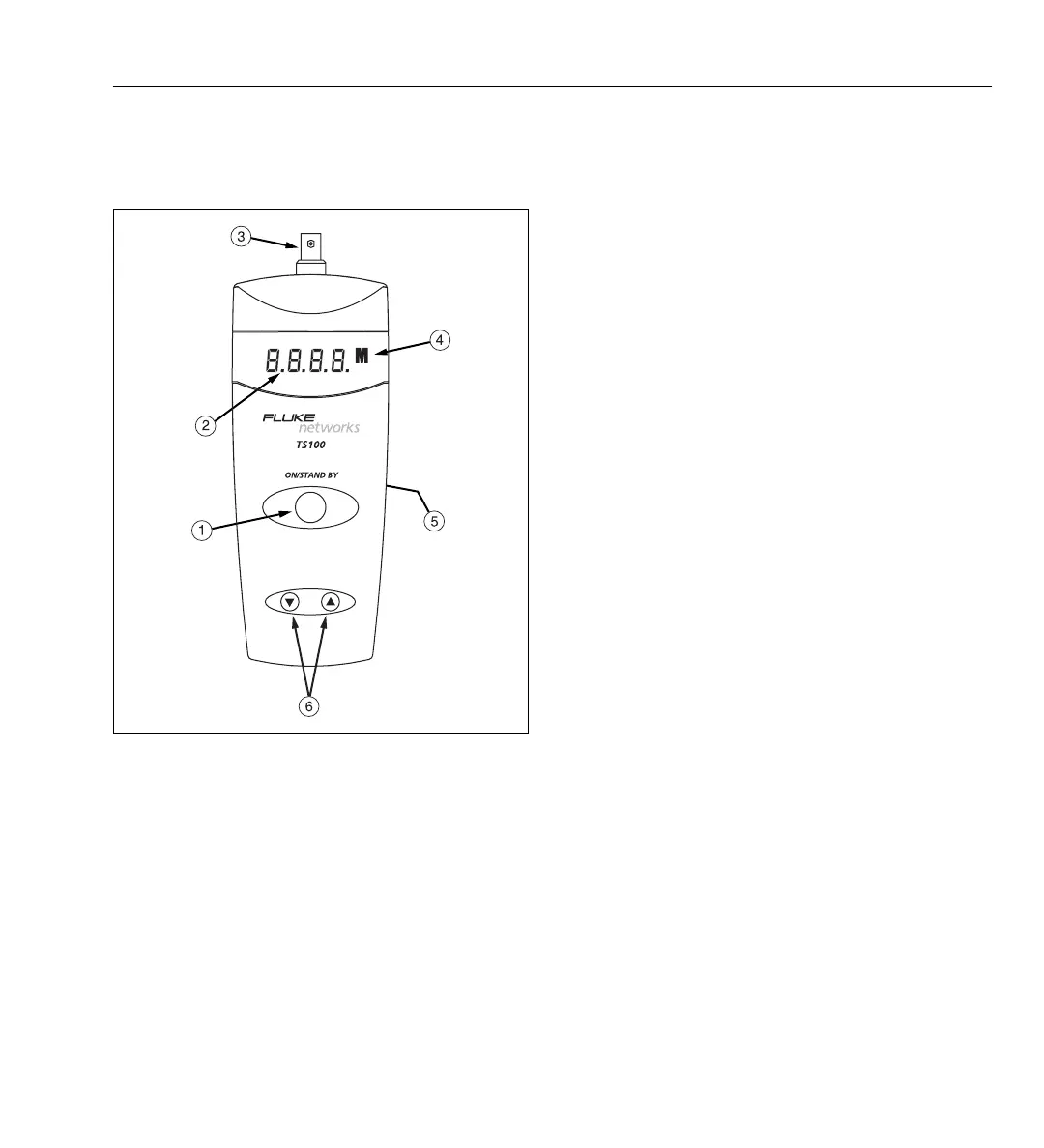
See Figure 1.
bfz01.eps
Figure 1. Physical Characteristics
A
Power button, which turns the tester on and off.
B
Low battery LED.
C
Female BNC (British Naval Connector).
D
LCD display with units indication in feet (FT) or
meters (M).
E
The battery compartment is on the back of the
tester. The battery cover includes a label showing
some common velocity of propagation (VOP)
values.
F
The two smaller buttons are used to adjust the
tester’s VOP up or down. See “Velocity of
Propagation” on page 6.
Line Cords and Accessories
Use only line cords (test leads) approved by Fluke
Networks. Other cords may cause incorrect
measurements. For information on availability of
additional line cords and accessories, contact your
local Fluke Networks authorized distributor.
Operation
WXWarning
DO NOT USE the tester to test cables that
may have hazardous voltages present.
When the tester indicates
the presence of
high ac voltages, CAREFULLY DISCONNECT
IMMEDIATELY to prevent any personal
injury. Hazardous dc voltages can be present
on any cable at any time. The tester does
NOT detect or indicate the presence of dc
voltages. Use care when connecting to
cables.
Do not use the test set if it is damaged.
Before you use the test set, inspect the case.
Look for cracks or missing plastic. Pay
particular attention to the insulation
surrounding the connectors.
Always handle the clip leads and the cables
by their insulation, NEVER directly by the
conductive wire. Use only the insulated clips
provided to connect to any wire or cable.



 To Next Page