ENGLISH
16
KITE CARE
11 KITE CARE
FLYSURFER kites are very durable and very UV and saltwater re-
sistant. With proper care, your kite may last even longer. Even-
tual color changes of the cloth can be caused by environmental
causes, UV-exposure, mechanical strain as well as it getting dir-
ty. A color change has no influence on the flight characteristics
whatsoever and is not covered by warranty.
Drying
If a kite is packed away wet and left for a long period of time it
can develop ugly mildew spots, rust on the metal parts or color
bleeding of the cloth. This does not eect how the kite performs,
but will reduce the value of your kite. In extreme cases the kite
may get mouldy. To dry, simply continue to fly the kite until the
canopy is dry.
Tip:
Drying of the kite can be accelerated when the kite if flown
with an open air drainage valve on land. Otherwise a fan or
hair-blower can help, but please never use hot air!
Rinsing
Rinse your kite from time to time with clear water, after using
it in salt water, and leave it to dry in the shade. Do not use any
detergents. The warranty will be void after the use of detergents
on the cloth.
Check
Check all parts of the kite before each use. Especially parts that
can wear out. Material failure on those parts can lead to further
damages, or put the kiter at risk.
12 MAINTENANCE
The main parts that wear on the VMG are the LCLs, bridle lines,
rods, and rollers. Depending on use, other components must also
be serviced over the lifespan of the kite. If you do not service
these parts, it can lead to damage and will void the warranty.
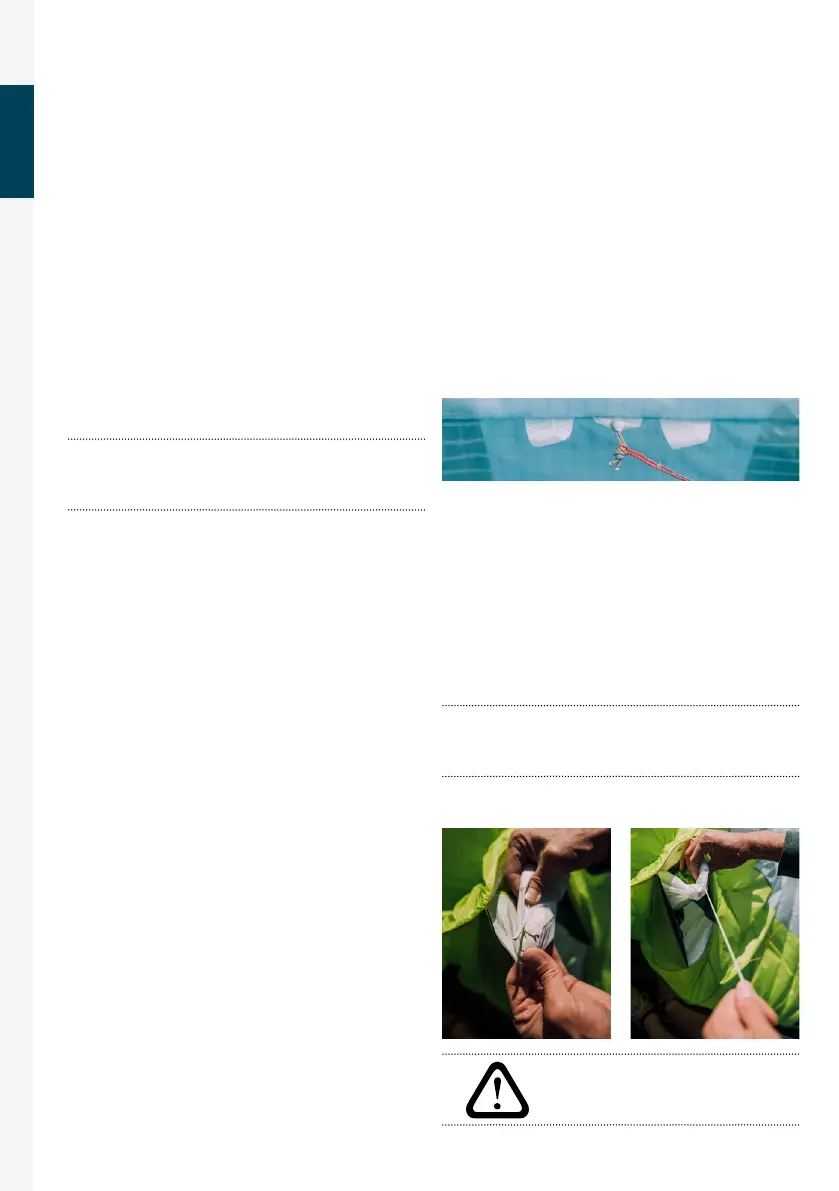
12.01 Check the LCL before starting
The Little Connection Lines (LCL) are integrated predetermined
breaking points. The Kevlar-bridle of the VMG eciently cuts
through the Dynemma LCLs to prevent the attachment points
from being torn out. Check your LCLs after a kite crash and re-
place them if they are damaged.
12.02 Replacement of the fiberglass rods
After a crash, check the sewn-in rod pockets at the front and
rear for damage before you fly it again. If the pocket of the fi-
berglass rod is damaged, it must be repaired by a professional.
If the fiberglass rod is damaged, it has to be replaced, it can’t be
repaired. To do this, reach into the air intake on the leading edge
and do a visual check of the stitching, then carefully pull the
rods out of the pocket.
Tip:
To replace a broken rod, we recommend a helper who holds
the trailing edge to prevent the pocket from being damaged from
the broken fiberglass rod.
Carefully insert the new fiberglass rods.
Attention:
The fiberglass rods must not be kinked too
much. The rod can break!


 To Next Page