ENGLISH
6
HANDLING
03 HANDLING
A kite needs to be secured properly even if
the wind is light. A runaway kite can be a se-
rious danger to people or animals downwind.
To ensure a long lifespan of your kite, we re-
commend that you do not leave the kite flap-
ping in the wind and sun for long periods.
03.01 Setting Up a Foilkite
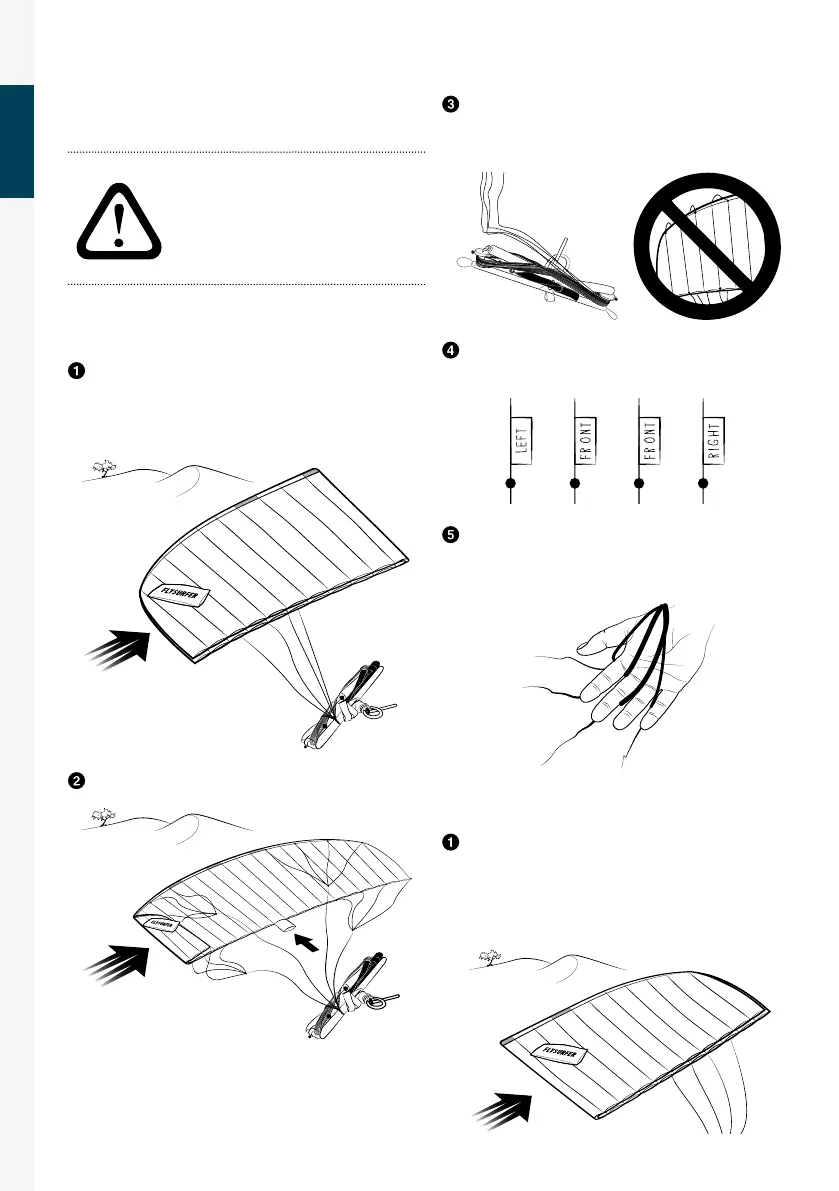
Place the kite in front of you and roll it out leewards. First
hold the tips and secure them with a weight adapted to the wind
strength at the front edge (e.g. a sandbag). Place the bridle lines
and the bar towards the rear edge away from the kite.
Open the kite and if necessary, close the deflate valves.
Check your bridle for tangles. Make sure that the bridle lines
are firmly attached to the LCL‘s, that no damage has occured and
none of the lines are caught around the leading edge of the kite.
When the bridle is sorted out, lay the front lines to the inside
and the steering lines to the outside.
Ensure your flying lines are connected correctly and clear
of any potential hazards. Check for any damage or knots. Attach
the front lines and steering lines of your control bar to the kite.
03.02 Securing a Foilkite
Fold your kite in the middle and let the tips flow out down-
wind. The bottom sail and the bridle will be facing inwards.
Weigh down the kite in the front third and on the tips of the top-
sail. This method prevents the tips from flapping in the wind.
Opening the deflate valve(s) can also help.


 To Next Page