zero and the primary relief valve will open almost
immediately after fueling, allowing excess LNG vapor
to escape. If fueling is stopped when the ullage tank
is empty (i.e., the fuel tank has sufficient vapor space
to accommodate fuel expansion due to temperature
increase), the vehicle will have approximately one
week of standby time before venting will occur.
Use the following steps to fuel an LNG vehicle.
1.
Shut down the engine and apply the parking
brake.
IMPORTANT: Close all windows and doors dur-
ing the fueling process. Keeping windows and
doors closed allows for easier leak detection
inside the cab after fueling.
WARNING
Liquefied natural gas is a cryogenic liquid stored
at approximately -259°F (-162°C). Cryogenic
burns can be caused by coming into contact with
the pressurized liquid stream, or by coming into
contact with fuel system components that have
been cooled to cryogenic temperatures. Always
wear gloves and a face shield, and cover ex-
posed skin when fueling.
2.
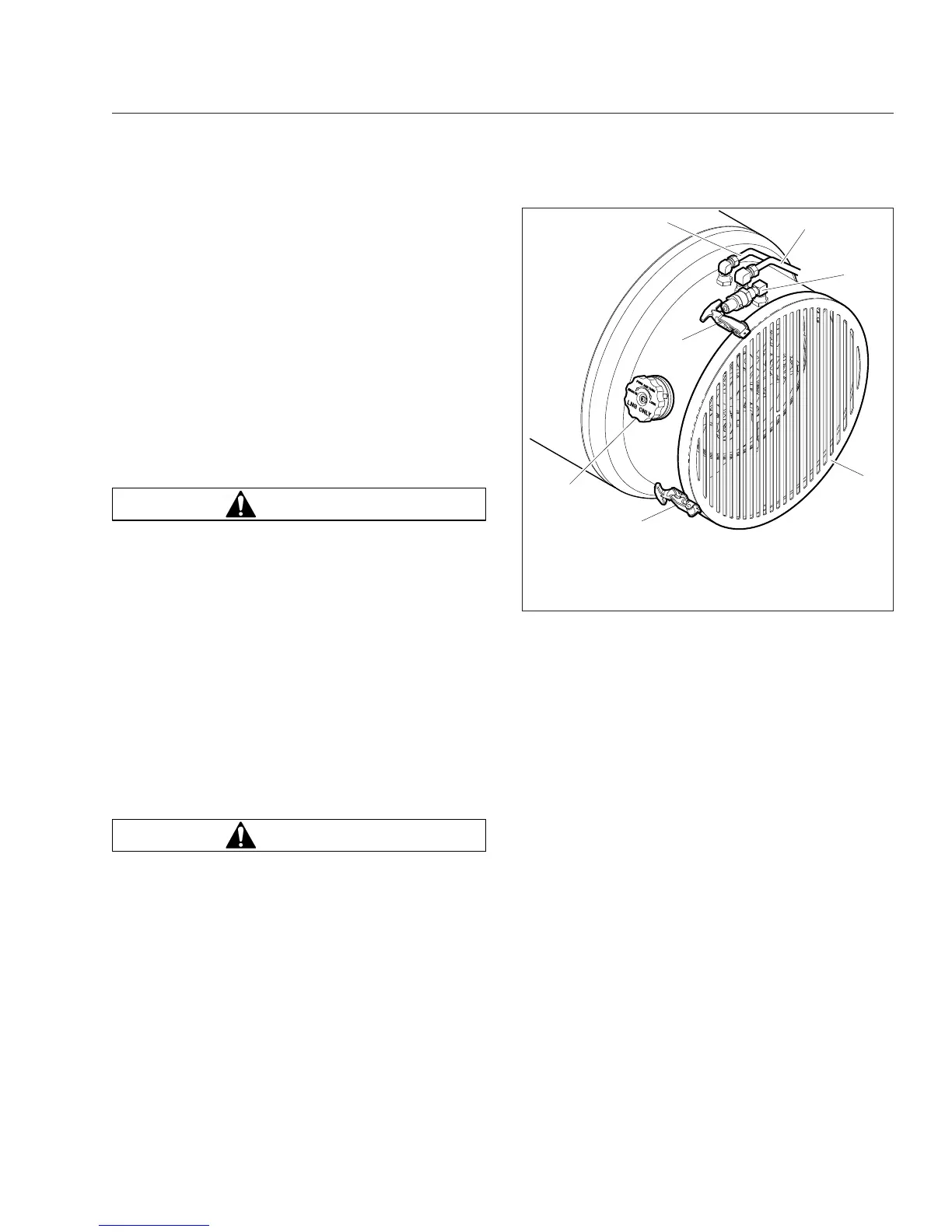
Remove the fuel fill fitting dust cap. See
Fig. 19.2.
3.
Using compressed air, remove any dirt, debris, or
water that may have collected in the fuel fill fit-
ting and the station dispensing nozzle. Contami-
nants in the fuel system can cause drivability
problems.
WARNING
Natural gas fuel tanks, lines, and valves are al-
ways pressurized. Always observe safety precau-
tions. Failure to do so could lead to loss of con-
trol over a filling hose or to ignition of the natural
gas, which could cause serious bodily injury,
death, or severe property damage.
4.
Connect the station fueling nozzle to the tank
fuel fill fitting.
5.
Connect an electrical ground clamp and cable to
the fuel tank.
IMPORTANT: An LNG tank which is first in-
stalled, or is on a vehicle that has not been op-
erated in approximately ten days, is considered
to be a hot tank. When fueling a hot tank, LNG
entering the tank will immediately vaporize,
causing tank pressure to spike above 250 psi
(1724 kPa) and automatically shutting down the
station fuel pump. To prevent the pump from
shutting down, connect a vent line to the fill vent
fitting on the LNG tank to capture escaping
vapor, then open the shroud cover and open the
vapor shutoff valve (
Fig. 19.3, Item 2).
6.
Open the station’s fill valve, if equipped, and
start fueling. Monitor the flow or line pressure as
filling progresses. When filling begins, line pres-
sure will spike quickly until the vehicle tank cools
down. The flow and pressure will then remain
stable during the remainder of the filling
procedure.
IMPORTANT: When fueling a hot tank, initially
put 5 to 10 gallons (19 to 37 liters) of LNG in
the tank and manually stop the fueling process.
Drive the vehicle for 15 to 20 minutes to cool
the tank and reduce tank pressure, then con-
tinue fueling the tank to full.
05/29/2009 f470534
1
2
3
4
6
5
6
1. Fuel Fill Fitting
2. Fuel Outlet Line
3. Primary Relief Vent
Line
4. Fill Vent Fitting
5. Shroud Cover
6. Shroud Cover Latches
Fig. 19.2, LNG Fuel Tank
Natural Gas Vehicle
19.4


 To Next Page