EasyManua.ls Logo

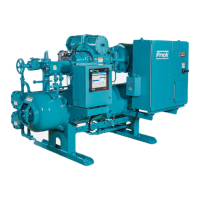
Frick RWF 316 - User Manual

Frick RWF 316
56 pages
Print Icon
To Next Page IconTo Next Page
Loading...
Installation - Operation - Maintenance
ROTARY SCREW COMPRESSOR UNITS
ALL REFRIGERANTS
MODELS
100 through 480
THIS MANUAL CONTAINS RIGGING, ASSEMBLY, START-UP, AND
MAINTENANCE INSTRUCTIONS. READ THOROUGHLY BEFORE
BEGINNING INSTALLATION. FAILURE TO FOLLOW THESE IN-
STRUCTIONS COULD RESULT IN DAMAGE OR IMPROPER OPERA-
TION OF THE UNIT.
S70-600 IOM/MAY 2001
File: SERVICE MANUAL - Section 70
Replaces: S70-600 IOM/MAR 2000
Dist: 3, 3a, 3b, 3c
RWF

Table of Contents

Questions and Answers

  • R
    ronaldmontgomeryAug 15, 2025
    What to do if my Frick Air Compressor pump does not pump?
    • L
      lisa35Aug 15, 2025
      If your Frick Air Compressor pump isn't pumping, several factors could be at play. First, check for air leaks and ensure the liquid level in the tank is sufficient, as loss of prime is a common cause. Verify that the pump is rotating in the correct direction and that the motor reaches full speed. Make sure both suction and discharge valves are open, and the strainer isn't clogged. Also, the relief valve might be set too low or stuck open. In addition, worn-out pump components could be the reason, so consider replacing the pump. Finally, review any recent changes to the liquid system or operational procedures that might explain the issue, and adjust the end clearance and head position if necessary.
  • R
    Roy RichardsonAug 18, 2025
    Why is my Frick RWF 316 Air Compressor pump not up to capacity?
    • A
      Amy JacksonAug 18, 2025
      If your Frick Air Compressor pump isn't reaching its full capacity, it could be due to several reasons. The pump might be starving or cavitating, so increase the suction pipe size or reduce its length. A partially clogged strainer can also restrict flow, so clean it thoroughly. Check for any air leaks in the suction piping or along the pump shaft and repair them. Ensure the motor is running at the correct speed and is wired properly. The relief valve might be set too low or stuck open, requiring adjustment or repair. If the pump is worn out, replacing worn parts is necessary. Finally, adjust the end clearance and head position.
  • S
    Sheila MoyerAug 21, 2025
    How to fix a noisy Frick RWF 316 pump?
    • L
      lisaeatonAug 21, 2025
      If your Frick Air Compressor pump is excessively noisy, several factors could be contributing. The pump might be starved, meaning heavy liquid isn't reaching it quickly enough, so increase the suction pipe size or reduce its length. Cavitation, where liquid vaporizes in the suction line, can also cause noise; address this by increasing the suction pipe size or raising the liquid level closer to the pump. Ensure proper alignment of the pump. A bent shaft or rotor tooth could be the culprit, requiring straightening or replacement. Lastly, foreign objects entering the pump through the suction port can create noise, so remove any obstructions.
  • D
    Daniel ClarkAug 25, 2025
    Why does my Frick Air Compressor pump take too much power?
    • K
      Kathy RiveraAug 25, 2025
      If your Frick Air Compressor pump is consuming excessive power, several factors could be responsible. Ensure the motor specifications are correct. If the liquid is more viscous than the unit is designed to handle, consider heating the liquid, increasing the pipe size, slowing down the pump, or using a larger motor. Verify the discharge pressure and adjust it accordingly if it's higher than calculated. Realign the pump if it's misaligned. Also, check and adjust the clearance on pumping elements to ensure it is sufficient for operating conditions.
  • J
    Julia DavisAug 27, 2025
    What to do if Frick RWF 316 pump starts, then loses its prime?
    • H
      heather88Aug 27, 2025
      If your Frick Air Compressor pump starts but then loses its prime, several issues could be the cause. Ensure the tank has an adequate liquid level by refilling it. Liquid vaporizing in the suction line can also lead to prime loss, so reduce the temperature or pressure to prevent vaporization. Inspect the suction line and seals for air leaks or air pockets. Finally, worn parts can contribute to this problem, so consider replacing them.
  • J
    jonesandrewAug 30, 2025
    Why is there a high reading on pressure gauge in discharge port of my Frick RWF 316 Air Compressor?
    • A
      Angela CochranAug 30, 2025
      A high-pressure reading on the discharge port of your Frick Air Compressor could stem from several causes. High viscosity combined with a small or long discharge line can increase pressure; reduce viscosity or enlarge/shorten the line. Make sure the gate valve is fully open. A plugged filter will restrict flow, so clean or replace it. Adjust for high specific gravity if the vertical head wasn't considered. Clean the inside of the discharge pipe if buildup is present. Ensure the liquid is at the correct temperature, and address any chemical reactions causing solidification. Finally, adjust the relief valve setting if it's too high.
  • M
    Matthew DennisSep 2, 2025
    What causes a low reading on pressure gauge in discharge port of Frick RWF 316?
    • C
      Christina ScottSep 3, 2025
      A low-pressure reading on the discharge port of your Frick Air Compressor could be due to several factors. The relief valve might be set too low, so adjust the relief valve setting. Inspect and fix the relief valve poppet if it's not seating properly. Reduce extra clearance if there is too much. If the pump is worn, replace worn parts.
  • P
    Paul McgeeSep 5, 2025
    How to troubleshoot a high vacuum gauge reading in the suction port of a Frick RWF 316?
    • R
      Richard GoodmanSep 5, 2025
      A high reading on the vacuum gauge in the suction port of your Frick Air Compressor can be caused by several issues. Check for blockages in the suction line, such as a stuck foot valve, closed gate valve, or plugged strainer. If the liquid is too viscous, reduce its viscosity. Adjust the lift if it's too high. If the line is too small, increase the size of the suction line.
  • R
    robertthompsonSep 8, 2025
    What to do if vacuum gauge reading is erratic on Frick RWF 316?
    • G
      Gregory SmithSep 8, 2025
      An erratic reading on the vacuum gauge in the suction port of your Frick Air Compressor can arise from a few issues. If the liquid is vaporizing, reduce the temperature or pressure to prevent it. Ensure a continuous liquid supply to the pump, as inconsistent supply can cause erratic readings. Check for cavitation, misalignment, or damaged parts, as vibrations can affect the gauge.
  • S
    Stephanie RhodesSep 12, 2025
    Why is the vacuum gauge reading low on my Frick RWF 316 Air Compressor?
    • K
      kimberlyweberSep 12, 2025
      A low vacuum gauge reading in the suction port of your Frick Air Compressor may indicate a few potential problems. Inspect and repair any air leaks in the suction line. Ensure the end of the pipe is submerged in liquid. If the pump is worn, replace worn pump parts. Prime the pump if it is dry.

Summary

Installation, Operation, and Maintenance

Safety Precaution Definitions

Foundation and Installation Requirements

Motor and Compressor Rotation Checks

Thermosyphon Oil Cooler System

Liquid Injection Oil Cooling System

Details the optional liquid injection oil cooling system.

Economizer System Operation

Economizer - High Stage Operation

Explains the function and operation of the optional high-stage economizer.

Electrical System Overview

Motor Starter Package Details

Details on the motor starter package and its components.

Electrical System Components and Configuration

Operation and Start-Up Procedures

Compressor Lubrication System Functions

Explains the functions of the compressor lubrication system.

Cold Start and Demand Pump Systems

Cold Start System Operation

Details the operation of the special cold start discharge check valve.

Demand Pump Oil System

Explains the demand pump oil system for lubrication.

Compressor Oil Separation System

Describes the function of the oil separation system.

Compressor Hydraulic System Controls

Volumizer Volume Ratio Control

How the Volumizer system controls volume ratio.

Compressor Oil Cooling Systems

Single and Dual-Port Liquid Injection

Details the single and dual-port liquid injection oil cooling systems.

Liquid Injection Adjustment Procedure

Step-by-step guide for adjusting the liquid injection system.

Initial Start-Up Procedures

Initial Start-Up Procedure Details

Detailed steps for the initial start-up of the compressor unit.

Normal Start-Up and Restart Procedures

Standard start-up and restart procedures after power interruption.

General Maintenance Information

Normal Maintenance Operations and Safety

Essential safety precautions for performing maintenance.

General Maintenance Practices

Critical areas for ensuring good compressor operation and longevity.

Compressor Shutdown and Start-Up Procedure

Procedure for seasonal or prolonged unit shutdowns.

Replacing Compressor Unit Components

Oil Filter (OF-1) Replacement Procedure

Procedure for changing the main oil filter element.

Strainer and Coalescer Filter Maintenance

Changing Compressor Oil Procedure

Procedure for changing the compressor oil and related filters.

Demand Pump System Maintenance

Demand Pump Disassembly Steps

Step-by-step instructions for disassembling the demand pump.

Demand Pump Troubleshooting

Recommended Maintenance Program

Operating Log and Maintenance Schedule

Troubleshooting Guide and Pressure Transducer Testing

Abnormal Operation Analysis and Correction

Four logical steps for analyzing and correcting operational issues.

Pressure Transducer Replacement

Potentiometer and Transmitter Adjustments

Volumizer and Oil Level Transmitter Replacement

Troubleshooting Compressor and Oil Separation Systems

Troubleshooting Hydraulic and Oil Cooling Systems

Troubleshooting the Demand Pump System

Motor and Compressor Replacement

P & I Diagram

P & I Diagrams: Liquid Injection Systems

Wiring Harness: External Transducers

Wiring Harness: AC to Heaters and Valves

Wiring Harness: Internal Analog Board and Conduit

Proper Installation of Electronic Equipment

Grounding and Wiring Practices

Grounding Practices for Controls

Importance and methods of proper grounding for electronic controls.

Electronic Equipment Installation Precautions

Screw Compressor Operating Log Sheet

RWF Compressor Prestart Checklist

Safety Setpoints and Drive Train Alignment

Frick RWF 316 Specifications

General IconGeneral
BrandFrick
ModelRWF 316
CategoryAir Compressor
LanguageEnglish

Related product manuals