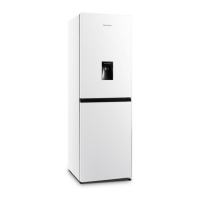
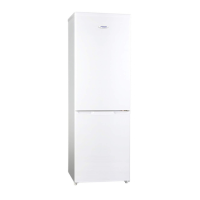
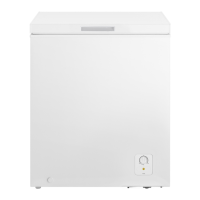
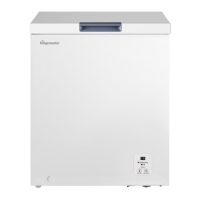
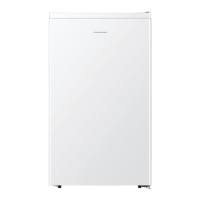
This document is a user manual for a Fridgemaster fridge freezer, covering models MC55251MDB, MC55251MDS, and MC55251MD. It provides comprehensive instructions on how to use, maintain, and troubleshoot the appliance, along with important safety information.
Function Description
The Fridgemaster fridge freezer is designed for household use to store food and beverages. It features separate compartments for refrigeration and freezing, allowing for optimal preservation of different food types. The appliance utilizes isobutene (R600a) as a refrigerant, a natural gas known for its environmental compatibility.
Usage Features
Installation and Leveling:
Before initial use, the appliance requires proper installation and ventilation. It's recommended to maintain specific clear spaces around the refrigerator (50-70mm at the back, 100mm at the top, and 100mm at the sides) to ensure efficient cooling and energy saving. The bottom feet can be manually adjusted with a spanner to level the appliance and allow the doors to self-close by tilting the top backwards by about 10mm. The appliance is designed to operate effectively within specific climate classes (SN, N, ST, T), indicating suitable ambient temperature ranges. It should be placed in a dry location, away from direct sunlight, rain, frost, and heat sources like stoves or heaters.
Door Reversing:
The door opening side can be changed from right to left if desired. This process involves removing the upper and lower hinge parts, transferring them to the reversed side, and securing them. It's crucial to ensure the appliance is unplugged from the mains before attempting this procedure. The manual provides detailed steps for disassembling and reassembling the door components, including instructions for handling the upper and lower doors, hinges, and screw hole covers.
Internal Components:
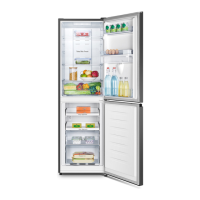
The appliance includes various internal components such as an upper hinge cover, LED light, wind channel covers, refrigerator shelves, a temperature controller, vegetable drawer cover and drawer, freezer tray, middle and lower freezer drawers, adjustable bottom feet, fridge and freezer doors, upper, middle, and lower door shelves, an egg tray, a water tank, fridge and freezer door seals, and a bottle rack. For increased freezer space, some drawers (except the bottom freezer drawer) and the ice tray can be removed.
Movable Shelves/Trays:
The refrigerator walls are equipped with runners, allowing for flexible positioning of glass or plastic storage shelves and wire trays to accommodate different food items.
Water Dispenser (Applicable to specific models):
Certain models feature a water dispenser located in the fridge door for storing and dispensing chilled drinking water without opening the refrigerator. The manual provides instructions for assembling, filling, and receiving water from the dispenser. It advises filling the tank with up to 2.5L of potable water, avoiding other beverages, and not filling with hot water. Users are warned not to push the dispenser lever without a cup to prevent water leakage.
Temperature Control:
The refrigerator chamber's temperature is regulated by a temperature controller. Users can adjust the setting to "colder" for insufficient refrigeration or "Mid" for normal use. It's advised against setting the knob to "colder" or "cold" in normal conditions, especially during high ambient temperatures, as this can cause the compressor to run continuously.
Food Storage Guidelines:
The manual provides detailed recommendations for storing various food types in different compartments and at specific temperatures to prevent contamination and ensure freshness. This includes guidelines for raw meat, fish, cooked food, fruits, vegetables, dairy products, and frozen items. It also specifies the suitability of one-, two-, and three-star compartments for freezing fresh food.
Energy Saving Tips:
To save energy, users are advised to avoid keeping the door open for extended periods, keep the appliance away from heat sources, set the temperature appropriately, avoid storing warm food or evaporating liquids, ensure good ventilation, and maintain the designed combination of drawers, crisper, and shelves.
Hints for Freezing:
When starting up or after a period of disuse, the appliance should run for at least 2 hours on higher settings before food is placed in the compartment. Food should be prepared in small portions, wrapped in airtight aluminum foil or polyethylene, and fresh food should not touch already frozen food. Frozen products should be labeled and dated.
Switching Off the Appliance:
For extended periods of non-use, the appliance should be switched off, defrosted, cleaned, and dried. The doors should be left slightly open to allow air circulation and prevent mold development.
Maintenance Features
General Cleaning:
For hygienic reasons, the appliance (including exterior and interior accessories) should be cleaned regularly, at least every two months. Before cleaning, the appliance must be switched off and unplugged from the mains socket to prevent electrical shock.
Exterior Cleaning:
The control panel should be wiped with a clean, soft cloth, and water should be sprayed onto the cloth rather than directly onto the appliance surface. Doors, handles, and cabinet surfaces should be cleaned with a mild detergent and wiped dry with a soft cloth. Users are warned against using sharp objects, thinners, car detergents, bleach, ethereal oil, abrasive cleansers, or organic solvents, as these can damage the surface or cause fire.
Interior Cleaning:
The interior should be cleaned regularly with a weak solution of bicarbonate of soda, rinsed with warm water using a wrung-out sponge or cloth, and completely dried before replacing shelves and baskets.
Defrosting:
Although the appliance automatically defrosts, frost may accumulate in the freezer compartment if the door is frequently opened or kept open too long. If frost becomes too thick, users should remove existing food and accessories, unplug the appliance, leave the doors open to accelerate thawing, and then clean the freezer as described for interior cleaning. Sharp objects should not be used to remove frost.
Door Seals Cleaning:
Door seals should be kept clean to prevent sticky food and drinks from causing them to stick to the cabinet and tear. They should be washed with a mild detergent and warm water, rinsed, and thoroughly dried before the appliance is powered on again.
Replacing the LED Light:
The LED light should only be replaced by a competent person. If damaged, the customer helpline should be contacted for assistance. The manual provides steps for unplugging the appliance, removing the light cover, detaching the LED light, and replacing it.
Water Dispenser Cleaning:
For water dispenser products, water tanks should be cleaned if not used for 48 hours, and the water system flushed if water has not been drawn for 5 days.
Troubleshooting:
The manual includes a troubleshooting section to help users identify and resolve common issues such as the appliance not working, odors, noise, continuous motor operation, frost accumulation, incorrect temperatures, and doors not closing easily. It advises checking the power cord, fuse, ambient temperature, and door seals. For water drips, it suggests checking the water pan and draining spout. If the light is not working, it may need replacement. Users are warned not to attempt repairs themselves and to contact a qualified electrician or authorized service engineer if problems persist.
Disposal of the Appliance:
The appliance should not be disposed of as household waste. Packaging materials are recyclable and should be placed in a suitable collection container. Before disposing of the appliance, the mains plug should be pulled out, and the power cord cut off. Refrigerant and insulation gases must be disposed of professionally to prevent eye injuries or ignition, and the refrigerant circuit tubing should not be damaged. The product's symbol indicates it should be taken to an appropriate waste collection point for recycling electrical and electronic equipment.


 To Next Page
 General