sources, incl luding cigarette smoking, should be kept sufficiently far away from
the site of installation, repairing, removing and disposal,during which refrigerant
can possibly be rel leased to the surrounding space. Prior to work taking pl ace,
the area around the equipment shall be surveyed to make sure that there are no
flammable hazards or ignition risks.“No Smoking" signs shall be displ layed.
Checking for presence of refrigerant, The area shall be checked with an
appropriate refrigerant detector prior to and during work, to ensure the technician
is aware of potentially toxic or fl lammable atmospheres. Ensure that the leak
detection equipment being used is suitable for use with all applicable refrigerants,
i.e., nonsparking, adequately sealed, or intrinsically safe.
Ensure that the area is in the open or that it is adequately ventilated before
breaking into the system or conducting any hot work. A degree of ventil lation
shall continue during the period that the work is carried out. The ventilation should
safely disperse any rel leased refrigerant and preferably expel it externally into the
atmosphere.
Where electrical components are being changed, they shall be fit for the purpose
and to the correct specification. At all times, the manufacturer's maintenance and
service guidelines shall be followed. If in doubt, consult the manufacturer's
technical department for assistance.
Detection of flammable refrigerants: Under no circumstances shall potential
sources of ignition be used in the searching for or detection of refrigerant leaks. A
halide torch (or any other detector using a naked flame) shall not be used.
MANUAL DEFROSTING INSTRUCTIONS
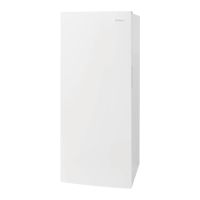
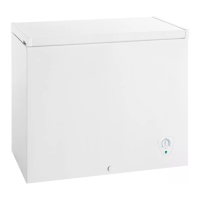
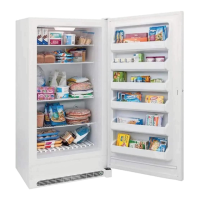
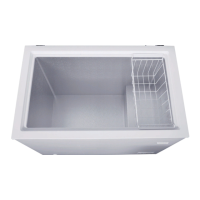
Manual Defrost Freezer models must be defrosted manually. For best operation, the
freezer should be defrosted when the frost accumulation becomes 1/4 to 1/2 inch
thick. Below are the instructions for manually defrosting your Freezer.
Defrosting Instructions for your Freezer:
Turn the temperature control to OFF and unplug the freezer.
Remove all food and place in corrugated boxes, insulated bags, picniccoolers, etc.
Use towels and newspapers for insulation, as needed.
Remove the drain plug (on models so equipped).
With the door open, use pans of hot water to speed the loosening of frost.
Remove large pieces of frost before they melt.
Sponge the excess water from the bottom of the freezer as it collects to prevent
overflowing.
After defrosting, clean the inside of the freezer by wiping down with a baking soda
and water solution. Rinse and dry.
Be sure to replace drain cap (on models so equipped). Return the drain tubeto its
position and replace the grille.
Plug the freezer in, return the temperature control to the normal position andreturn
food to the freezer.



 To Next Page