
 Need help?
Do you have a question about the FrSky TANDEM Series and is the answer not in the manual?
Enabling the internal RF, setting binding mode, and performing registration and automatic binding (Smart Match).
Procedure for conducting a pre-flight range check to ensure signal integrity, with expected RSSI values.
Configuring failsafe modes (No Pulse, Hold, Custom) for loss of signal and handling SBUS port limitations.
Essential warnings for safe operation, including regular maintenance and battery management.
Correct sequence for powering the transmitter and receiver to prevent damage and ensure safety.
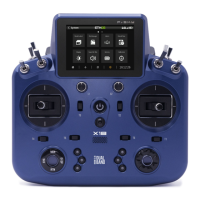
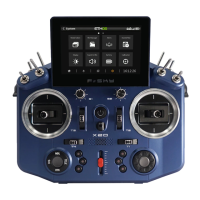
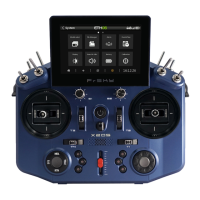
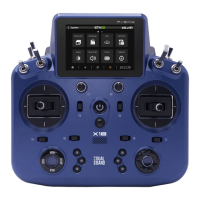
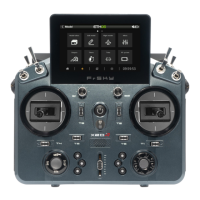
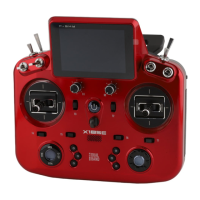
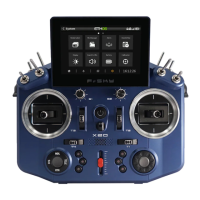
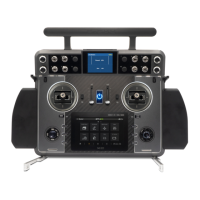
The FrSky TANDEM XE is a sophisticated tray radio designed for RC enthusiasts, building upon the TANDEM series' simultaneous 2.4G and 900M dual-band technologies. This radio is the largest form factor in the TANDEM series, catering to users who prefer a tray radio design combined with extensive switch inputs and flexibility. Its premium build quality and aesthetics make it a significant upgrade for those familiar with the TARANIS X9E.
A key feature of the TANDEM XE is its dual-screen color display. The main screen is a 4.3-inch color touch-screen, primarily used for operating ETHOS, FrSky's operating system, and for model configuration. Complementing this, a smaller 2.4-inch color screen is positioned at the top of the radio, providing additional information that can be customized by the user, including through Lua scripts. This allows for personalized data display, enhancing the user experience by providing critical information at a glance without cluttering the main screen.
The TANDEM XE boasts a highly modular design, emphasizing flexibility. It offers multiple switch input slots, allowing users to expand control options as needed. Furthermore, it features customizable switch blocks that can be replaced with alternative blocks offering more input slots. This adaptability extends to specialized RC applications; for instance, controlling forward and reverse movement in RC crawlers can be achieved by customizing the side All CNC metal levers with an optional self-centering accessory. Similarly, optional 3-axis extenders mounted on the gimbals open up numerous possibilities for RC ground vehicles. The radio also includes a foldable stand/frame integrated into the bottom of the body, which not only provides a stable base but also facilitates attaching a tray radio strap for comfortable carrying.
For storage and power, the TANDEM XE comes with a built-in 1024MB (8Gbit) flash storage, offering ample space for files and high data transmission speeds. It also features a large battery bay designed to accommodate bigger battery packs than the included 4000mAh Li-Po battery, catering to users who require extended operating times. The radio supports a recharge system for 2S Li-ion batteries via a USB-C port. When charging, a green LED indicator shows the charging status: solid for charging, off for end of charge, and flashing for a charge fault. It's recommended to charge the battery with a USB adapter providing 5V+0.2V and >2.0A current. The battery compartment is sized at 84x41.5x20mm (LWH).
Navigation of the ETHOS system is intuitive, utilizing both left and right navigation controls and the touch screen. The left controls handle functions like RTN, SYS, MDL, DISP, and Page UP/Down, while the right controls manage scrolling and entering selections. This dual input method ensures ease of use and quick access to various settings.
Maintenance and updates are streamlined through the Ethos Suite. This application allows users to update the radio's bootloader, firmware, SD card, and flash memory, as well as convert image and audio formats. To use the Ethos Suite, the radio's bootloader must be version 1.2.0 or newer. FrSky continuously provides updates and improvements, which can be downloaded from their website via the USB Port or Micro SD card.
Safety is paramount, and the manual emphasizes several flying safety precautions. Users are advised to perform regular maintenance on their radio system, including annual check-ups at a FrSky Service Center. It's crucial to use a fully charged battery (DC 6.5~8.4V) and to stop flying long before batteries become over-discharged, relying on the radio's low battery warning systems only as a precaution. Before each flight, both transmitter and receiver batteries should be checked. Flying at recognized model airplane fields is recommended, paying attention to field rules, spectators, wind direction, and obstacles. Avoiding areas near power lines, tall buildings, or communication facilities is advised due to potential radio interference.
Proper power-on and power-off sequences are critical to prevent damage. The throttle stick should be in the idle position or the motor/engine disarmed. The transmitter should be turned on first, allowing it to reach the home screen, and the correct model memory confirmed. Then, the receiver power should be turned on, and all controls tested. Only after these checks should the engine be started and a full range check completed. After flying, the throttle stick should be returned to idle, and any kill switches engaged or the motor/engine disarmed. Failure to follow these sequences can lead to damage to servos or control surfaces, or unexpected engine activation, potentially causing severe injury.
The TANDEM XE also features a high-speed PARA Wireless Training System, enhancing its utility for both experienced pilots and those learning to fly. The internal RF module, TD-ISRM, supports 24 channels and offers multiple RF power options (10mw, 25mW, 100mW, 200mW, 500mW) to achieve different controlling ranges. The channel range is configurable, and the system automatically assigns a model ID for each new model created.
A pre-flight range check is essential before every flight to prevent signal loss due to reflections from metal objects or shading from buildings or trees. The model should be placed at least 60 cm (2 feet) above non-metal ground, with the receiving antenna in a vertical position. In Range Check mode, the effective distance is reduced to 1/30, and the RSSI at 150m should be around 45-50.
Failsafe settings are crucial for safety and offer three modes: No Pulse, Hold, and Custom. No Pulses mode means the receiver produces no pulses on any channel upon signal loss. Hold mode maintains the last positions before signal loss. Custom mode allows users to pre-set specific positions for each channel in case of signal loss. It's important to set failsafe to prevent potential damage, as an unset failsafe will cause the model to continue with the last working status before signal loss. If failsafe is disabled on the RF module side, the receiver's failsafe settings will apply. The SBUS port does not support No Pulses mode and always outputs a signal, so Hold or Custom mode should be used for SBUS.
 General
| Telemetry | Yes |
|---|---|
| Operating Voltage | 6.5 ~ 8.4V (2S Li-battery) |
| Compatibility | ACCST D16 |
| Display | Color LCD |
| Gimbals | Hall sensor |
| Battery | 2S Lithium Battery |
| Operating Temperature | -10°C to 60°C |
| Module Bay | Yes |
| Charging | Yes |




 To Next Page