EasyManua.ls Logo

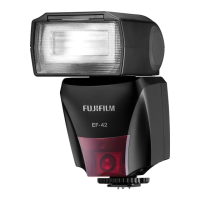
FujiFilm EF-42 - Battery Handling and Care; Battery Cautions; Rechargeable Ni-MH Battery Use; Battery Disposal

FujiFilm EF-42
18 pages
Print Icon
To Next Page IconTo Next Page
To Previous Page IconTo Previous Page
Loading...
I
Batteries
Note:
Check
the
type
of
batteries
used
in
your
flash
and
read
the
ap-
propriate
sections.
The
following
describes
the
proper
use
of
batteries
and
how
to
prolong
their
life.
Incorrect
use
can
shorten
battery
life
or
cause
leakage,
over-
heating,
fire,
or
explosion.
Cautions:
Handling
the
Batteries
Do
not
expose
to
name,
or
heat.
Do
not transport
or
store
with
metal
objects
such
as
neckl
aces
or
hairpins
.
Do
not
use
batteries
that
are
leaking,
deformed,
discolored,
or
with
other
abnormal
states.
Do
not
mix
old
and
new
batteries,
batteries
with different c
harge
lev
-
els,
or
batteries
of different
types
.
If
the
nash
will
not
be
used
for
an
extended
period,
remove
the
bat
-
teries.
Note
that
various
se
ttings of
the
na
sh
will
be
reset.
The
batteries
may
be
warm
to
the
touch
immediately
after
use
.
Turn
the
flash
off
and
allow
the
batteries
to
cool
before
handling.
Battery
capacity
tends
to
decrease
at
low
temperatures
below
10
oc
(50
oF).
Keep
spare
batteries
in
a
pocket
or
other
warm
place
and
ex-
change
as
necessary.
Cold
batteries
may
recover
some
of their
charge
when
warmed.
Fingerprints
and
other
stains
on
the
battery
terminals
can
affect
a
number of
flash
firing. Thoroughly
clean
the
terminals
with a
soft,
dry
cloth
before
inserting
batteries
in
the
nash.
Rechargeable
AA
Ni-MH
Batteries
The
capacity
of
Ni
-
MH
batteries
may
be
temporarily
reduced
when
new,
after
long
periods
of
disuse,
or
if they
are
repeatedly
recharged
before
being
fully
discharged.
This
is
normal
and
does
not
indicate
a malfunction.
The
nash
draws
a
small
amount
of current
even
when
off.
Ni-MH
bat-
teries
that
have
been
left
in
the
flash
for
an
extended
period
may
be
drawn
down
to
the
point that
they
no
longer
hold
a
charge
.
Batteries
that
no
longer
hold
a
charge
even
after
repeatedly
being
discharged
and
recharged
have
reached
the
end
of their
service
life
and
must
be
replaced
.
Ni-MH
batteries
can
be
recharged
in
a battery
charger
(sold
separately).
Batteries
may
become
warm
to
the
touch
after
charging.
Refer
to
the
instructions
provided
with
the
charger
for
more
information.
Use
the
charger
with compatible
batteries
only.
Ni-MH
batteries
gradually
lose
their
charge
when
not
in
use.
Disposal
Dispose
of
used
batteries
in
accord
with
local
regulations.
& Environmental
disposal
of batteries
is
advisable.
&
Th
e
apparatus
is
premised
on
use
in
wa
rm
c
limates
.
Liquid
Crystal
In
the
event
that
the
LCD
panel
is
damaged,
care
should
be
taken
to
avoid
contact with liquid
crystal.
Take
the
urgent
action
indi
ca
ted
should
any
of
the
following
situations
arise:
·
If
liquid
crystal
comes
in
contact
with
your
skin,
clean
the
area
with a
cloth
and
then
wash
thoroughly with
soap
and
running
water.
·
If
liquid
crystal
enters
your
eyes,
flush
the
affected
eye
with
clean
wa-
ter
for
at
least
15
minutes
and
then
seek
medical
assistance.
If
liquid
crystal
is
swallowed,
rinse
your
mouth thoroughly with
water
.
Drink
large
quantities of
water
and
induce
vomiting,
then
seek
medi-
cal
assistance.
Although
the
display
is
manufactured
using
extremely
high
-
precision
technology,
it
may
contain
pixels
that
are
always
lit
or
that
do
not
light.
This
is
not a malfunction,
and
images
recorded
with
the
product
are
unaffected.
ENGLISH
Caring
for
the
Flash
To
en
s
ur
e continued enjoyment of
the
product,
observe
the
following
precautions.
Storage
and
Use
If
the
nash
will
not
be
used
for
an
extended
period,
remove
batteries.
Do
not
store
or
use
the
nash
in
location
s that
are:
exposed
to
rain,
s
team
,
or
smoke
very
humid
or
extremely
dusty
ex
posed
to
direct sunlight
or
very
high
temperatures,
su
ch
as
in
a
closed
vehicle
on
a
sunny
day
extremely
cold
subject
to
strong
vibration
exposed
to
strong
magnetic
field
s,
such
as
near
a
broadcasting
an-
tenna,
power
line,
radar
emitter, motor,
transformer,
or
magnet
in
contact with volatile
chemicals
s
uch
as
pesticides
next
to
rubber
or
vinyl
products
Water
and
Sand
Expo
s
ure
to
water
and
sand
can
also
damage
the
flash
and
its
internal
circuitry
and
mechanisms
.
When
using
the
flash
at
the
beach
or
sea-
s
ide,
avoid
exposing
the
flash
to
water
or
sand.
Do
not
place
the
flash
on
a
wet
surface.
Condensation
Sudden
increases
in
temperature,
such
as
occur
when
entering a
heat-
ed
building
on
a
cold
day,
can
cause
condensation
inside
the
nash.
If
this
occurs,
turn
the
fl
as
h off
and
wait
for
droplets
to
evaporate.
EN-2

Related product manuals