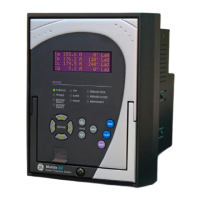
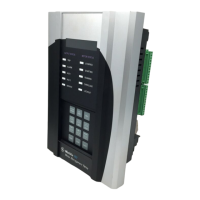
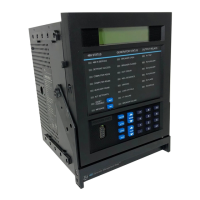
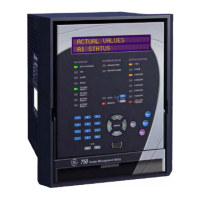
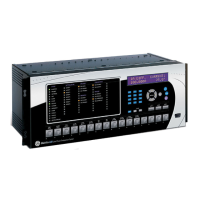
The General Electric Type ACR11 Reclosing Relay is an automatic timing device designed to initiate reclosing impulses to a circuit breaker after it has been tripped by its protective relay. It is available in three main types: ACR11B, ACR11C, and ACR11E, each with specific characteristics.
Function Description:
The relay consists of a synchronous motor, a gear train, a cam shaft with a reset spring, a crown-gear clutch with a magnetic clutch release, a series of cam-operated switches, an auxiliary unit, and an interlocking unit. It can be configured for various reclosing cycles, including an immediate initial reclosure followed by up to three delayed reclosures, or a delayed initial reclosure followed by one or two additional delayed reclosures. The relay automatically resets a short interval after any successful reclosure or from its lockout position following a successful manual reclosure.
The ACR11C relay is similar to the ACR11B but features single-ended adjustable cams, which allows for the elimination of the definite time automatic reset feature after successful reclosures. Reset is then accomplished by a flat-ended pawl after successful manual reclosures. The ACR11E is similar to the ACR11B but includes a dual-rated motor circuit.
A D-C stepping relay Type NLA can be integrated to provide an alarm after a specified number of reclosures and a lockout after a subsequent specified number of reclosures.
Important Technical Specifications:
Motor Ratings:
The driving motor operates on A-C only and is continuously rated at the voltage and frequency indicated on the nameplate. Its burden is approximately 5 volt-amperes (3.5 watts) at rated voltage for either 50 or 60 cycles.
Auxiliary Unit Ratings:
The interlocking unit (179E), anti-pump unit (179Z), and clutch release unit (179R) can be used with either A-C or D-C control supplies. The interlocking and clutch release units are rated for intermittent duty only, while the anti-pump unit is continuously rated.
- Interlocking Unit (179E): 31 Watts (D-C), 165 V-A (60 Cycles)
- Clutch Release Unit (179R): 48 Watts (D-C), 240 V-A (60 Cycles)
- Anti-Pump Unit (179Z) Burden:
- 250 D-C: 8.6 Watts
- 125 D-C: 4.8 Watts
- 48 D-C: 4.6 Watts
- 24 D-C: 4.6 Watts
- 240 A-C (60 Hz): 13.5 V-A, 8 Watts
- 120 A-C (60 Hz): 13.5 V-A, 8 Watts
(*Note: 250 D-C includes a series resistor.)
- Inductive (ABC - GHI / RS):
- 24 D-C: 6A / 2.4A
- 48 D-C: 1A / 0.6A
- 125 D-C: 0.2A / 0.2A
- 250 D-C: 0.1A / 0.1A
- Non-Inductive (ABC - GHI / RS):
- 24 D-C: 10A / 3A
- 48 D-C: 1.5A / 0.7A
- 125 D-C: 0.2A / 0.2A
- 250 D-C: 0.1A / 0.1A
All cam-operated switches can carry 30 amps for tripping duty.
- Make: Up to 10 Amperes
- Carry: 1.0 Ampere continuously
- Interruption Ratings (Inductive / Non-Inductive):
- 250 D-C: 0.10A / 0.20A
- 125 D-C: 0.30A / 0.75A
- 48 D-C: 1.20A / 3.50A
- 230 A-C: 1.0A / 2.0A
- 115 A-C: 2.0A / 4.0A
Total Time Cycle:
The relay has a total operating time cycle of three minutes, measured from motor start to lockout, after which the relay resets.
Usage Features:
- Mounting: Suitable for either surface or semi-flush panel mounting. The case has studs or screw connections for external connections.
- Cam Adjustments: Cams can be arranged for immediate or delayed reclosures. Changes in cam settings are made by loosening three screws on the dial knob and turning the cam plates. Spacers allow individual cam adjustment without affecting others.
- Immediate Initial Reclosure: Achieved by setting a single-ended "E" cam to operate the "AB-BC" actuator in the reset position, ensuring the "AB" contact is closed.
- Delayed Initial Reclosure: Configured by connecting the internal jumper between terminals 13 and 12, and adjusting "D" cams for desired intervals.
- Minimum Delayed Reclosure: Can be set for approximately 2.5 seconds, though actual time may vary up to 0.75 seconds due to clutch re-engagement.
- Changing Initial Reclosure: Easily switched between immediate and delayed initial reclosure by repositioning an internal jumper (brightly colored for identification) between terminals 13-17 or 12-13.
- Omission of Quick Reset: Possible by adjusting and coordinating protective relays to account for longer fault clearing times than the ACR's reset interval.
- Blocking Instantaneous Trip Circuit: Contact 4 of the 179E interlocking unit can be used to block instantaneous tripping during reclosures, allowing branch fuses to clear faults.
- Selective Reclosing: Can be configured to provide immediate reclosure for instantaneous relay trips but delayed reclosure for time-delay relay trips.
- Single-Shot Reclosing: Achieved by connecting the "RS" contact in series with the reclosing circuit, blocking delayed reclosures.
- Load-Ratio Control Blocking: The "RS" contact can block automatic load-ratio control during the reclosing cycle.
- Reset After Lockout: After lockout, a successful manual reclosure restarts the motor, and the "MN" switch operates after approximately 5 seconds to initiate relay reset.
Maintenance Features:
- Receiving and Handling: Relays are shipped in protective cartons. Inspect for damage upon receipt and store in a moisture- and dust-free environment if not immediately installed.
- Inspection: Prior to installation, with the cradle removed, manually operate the dial hub to check free movement of the gear train, cam operation, and lockout/alarm contacts. Verify clutch release unit operation and seal-in switch.
- Periodic Inspection: Recommended every six months. Manually cycle the relay, check auxiliary switch sequences, and ensure proper reset.
- Periodic Testing (Time Checks): Test connections (Fig. 9) allow for checking reset intervals, first/second/third delayed reclosures, and interval between delayed reclosure and reset.
- Operation Checks: Test circuit can be used to check operating points of the interlocking unit (179E), clutch release unit (179R), motor, and anti-pump unit (179Z) at reduced voltages (80% for motor/179E/179R, 60% for 179Z).
- Renewal Parts: Instructions are provided for replacing switches, clutch release unit, and motor. Specific steps are detailed for disassembly and reassembly, including alignment marks and contact adjustments.
- Adjustments: Factory-set adjustments should generally not be disturbed, except for front dial cams to set reclosing intervals. Detailed instructions are provided for adjusting "AB-BC" and "MN" switches, auxiliary switches ("DE", "GH-HI", "JK", "RS"), and the clutch release unit.

 Need help?

 To Next Page
 General