PROBLEM
SPOTS AND
FILMING ON
GLASSES AND
FLATWARE
CLOUDINESS ON
GLASSWARE
POSSIBLE CAUSE AND REMEDY
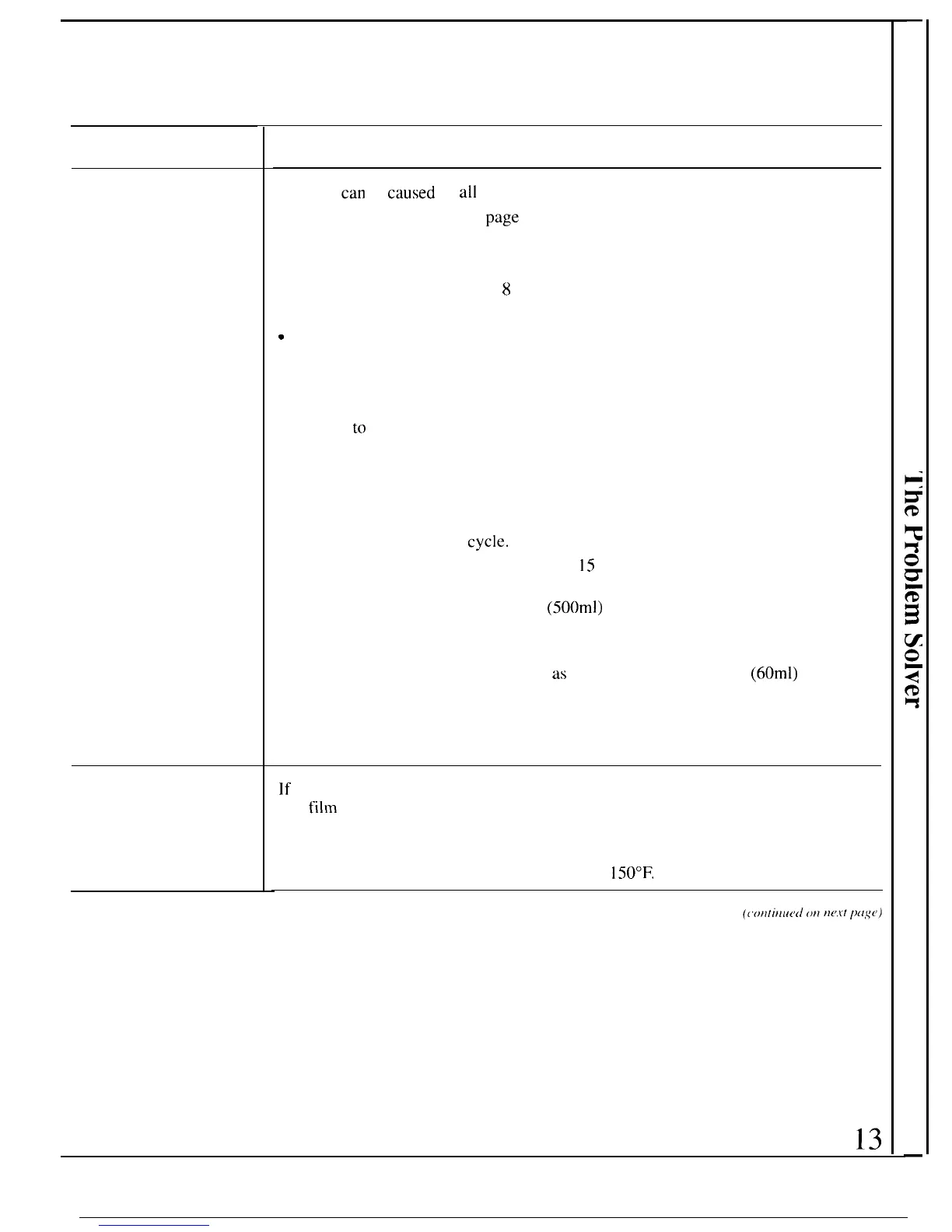
Spotting
can
be
caused
by
all
these things:
●
●
●
●
●
9
●
●
Extremely hard water. (See
page
6.)
Low inlet water temperature. (To test, see page 6.)
Overloading the dishwasher.
Improper loading. (See pages
8
and 9.)
Old or damp powder detergent.
Phosphate level in detergent too low. (See page 6.)
Rinse agent dispenser empty. (See page 6.)
Too little detergent. (See page 7.)
Due to varying local water conditions and personal preferences, try several brands of
detergents
to
find one that gives the best results for you. A liquid dishwasher detergent
may help reduce filming.
To remove stubborn spots and film from glassware:
1. Remove all metal utensils from the dishwasher.
2. Do not add detergent.
3. Select POTSCRUBBER
cycle.
4. Start the dishwasher and allow to run for
15
to 20 minutes. The dishwasher will
now be in the main wash.
5. Then open the door and pour 2 cups
(500ml)
of white vinegar into the bottom of
the dishwasher.
6. Close the door and allow to complete the cycle.
If vinegar rinse doesn’t work: Repeat
as
above, except use 1/4 cup
(60ml)
of citric
acid crystals instead of vinegar. (Most drugstores carry citric acid crystals. If yours
doesn’t, call GE Factory Service. )
Using a vinegar or citric acid crystal rinse more than twice a month? Consider a
home water softener.
If
vinegar or citric acid crystal rinse doesn’t work, the cloudiness is “etching.”
The
filtn
cannot be removed.
It can be prevented: Use less detergent if you have soft water. Wash glassware in
the shortest cycle that will get them clean.
Water temperature entering dishwasher exceeds
150°F.



 To Next Page