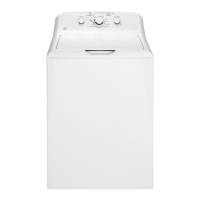
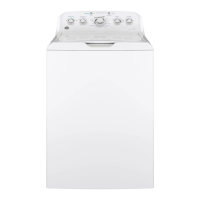
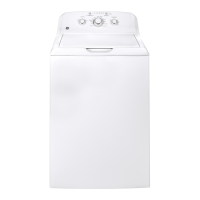
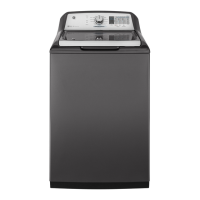
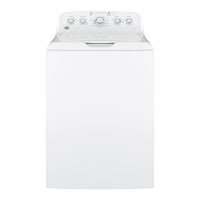
This document is an owner's manual and installation instructions for GE Appliances Washers, covering models GTW540, GTW525, GTW500, GTW490, GTW485, GTW480, GTW465, GTW460, GTW340, GTW335, GTW330, GTW220, HTW240, and HTW200. It provides comprehensive guidance on the safe and effective operation, installation, and maintenance of these washing machines.
The primary function of these devices is to wash clothes using various cycles and settings tailored to different fabric types and soil levels. The washers are designed for household use and aim to provide efficient and effective cleaning.
Usage Features:
The washer offers a range of features to customize the washing experience:
- Getting Started: The manual outlines a four-step process for starting a wash cycle: adding fabric softener (if applicable), loading items loosely around the agitator or infusor, adding detergent, closing the lid, selecting the wash cycle and options, and pressing Start.
- Start/Pause Function: The Start/Pause button initiates or pauses a cycle. The lid locks during load sensing and spin portions of the cycle, unlocking after these phases. Pressing Pause unlocks the lid (if locked) and blinks the Pause indicator light. To resume, press Start again. If water remains in the machine after pausing, the Drain & Spin cycle can be selected to remove it.
- Cycle Status Lights: These lights indicate the current phase of the wash cycle: Fill, Soak, Wash, Rinse, or Spin. If an out-of-balance condition is detected, the Spin light will blink and remain illuminated for a short period after the cycle, indicating the washer is attempting to correct the balance.
- Load Size/Water Level: Users can select the load size (Low, Medium, High, Max, Small, Medium, Large, Super) or use the "Precise Fill/Auto" option for automatic water level adjustment. Precise Fill/Auto is recommended for optimal efficiency and automatically determines the correct water amount based on load size and type. For specialty items like bulky comforters or pillows, manual load size selection is suggested to ensure a larger water level.
- Wash Cycles: A cycle selector knob allows users to choose from various wash cycles, including Colors, Dark Colors, Casuals, Delicates, Cold Wash, Active Wear, Speed Wash, Towels/Sheets, Bulky Items, and Sanitize with Oxi. Each cycle is designed for specific items and soil levels, with recommended wash temperatures, soil levels, and spin selections. Turning the knob after starting a cycle will stop the washer and allow for a new selection.
- Temperature Settings: Available temperature options include Hot, Warm, Colors, Cool, Cold, and Tap Cold, with "All Cold Rinses" as a common default.
- Soil Level Settings: Options include Ex. Heavy, Heavy, Normal/Medium, Light, and Ex. Light, allowing users to adjust the wash intensity.
- Spin Selection (Duration): Spin duration can be set to Max/Extra or Normal, with longer spin times generally reducing dryer time and energy usage.
- Cycle Options:
- Stain PreTreat: This feature allows users to select a specific stain type (Tomato, Dirt, Grass, Wine) to trigger an initial water fill at a tailored temperature, followed by a scrubbing and soaking period before the main wash. This is designed for concentrated stain treatment.
- Deep Fill: Adds an incremental amount of water to the wash load. Holding the button for 3 seconds provides the deepest fill level. This option is recommended for special case loads, not typical use.
- Auto Soak: Initiates a brief agitation followed by a specified soaking period before proceeding with the rest of the cycle.
- 2nd Rinse: Recommended when using extra detergent or bleach for heavily soiled clothes to remove additional residues.
- Extra Spin: Provides additional spin time to increase energy efficiency by reducing drying times.
- 2nd Rinse + Extra Spin: Combines both a second rinse and an extra spin.
- Deep Rinse/Extra Rinse: Provides a deep rinse, especially useful when using fabric softener.
- Liquid Fabric Softener Dispenser: On some models, the agitator cap contains a dispenser for liquid fabric softener, which is automatically released at the appropriate time during the cycle. It is crucial to use only diluted liquid fabric softener and to fill the dispenser to the maximum fill line.
- Liquid Bleach Dispenser: Liquid chlorine bleach should be added through the dispenser in the front left corner, following manufacturer's recommendations for load size.
- Pretreatment: Laundry pretreatments, such as Oxi products, should be placed directly in the bottom of the wash basket before loading clothes.
- Automatic Load Sensing: The washer initiates a spin at the beginning of the cycle to determine the correct agitate profile, duration, and water amount for the load. This is a high-efficiency system that uses less water than traditional washers.
- Sanitize with Oxi Cycle: This specialized cycle, when used with an Oxi additive and detergent, is designed to remove 99.9% of bacteria. It requires a hot water supply of at least 120°F (50°C) and locks the lid during the wash.
Maintenance Features:
The manual provides instructions for routine care and troubleshooting:
- Exterior Cleaning: Wipe off spills immediately with a damp cloth.
- Interior Cleaning: Leave the lid open after washing to allow moisture to evaporate. For basket cleaning, use a clean soft cloth dampened with liquid detergent, then rinse. Avoid harsh or gritty cleaners.
- Fabric Softener Dispenser Cleaning: The dispenser cup and cover can be removed and soaked in a solution of warm water, heavy-duty liquid detergent, and bleach to remove buildup. Rinse and reassemble after cleaning.
- Water Supply Hoses: Hoses connecting the washer to the faucet should be replaced every 5 years to prevent leaks and water damage.
- Moving and Storage: If moving or storing the washer, especially in freezing temperatures, it is recommended to have a service technician remove water from the drain pump and hoses.
- Long Vacations: Turn off water faucets and drain all water from hoses and the water filter pump area if freezing temperatures are expected.
- Troubleshooting Tips: A comprehensive troubleshooting guide helps users diagnose and resolve common issues such as low water level, siphoning, excessive suds, leaks, incorrect water temperature, clothes being too wet, lint or residue on clothes, colored spots, grayed or yellowed clothes, pilling, snags, holes, tears, rips, excessive wear, and wrinkling. It also addresses various sounds the washer might make during operation.
- Consumer Help Indicator (CHI): This system uses flashing lights (Spin light, Fill light, Lid Locked light) to communicate simple remedies for common issues like out-of-balance loads, water supply problems, or repeated cycles without opening the lid.
Installation Instructions:
Detailed instructions are provided for proper installation to ensure safe and efficient operation:
- Location Requirements: The washer should not be installed in areas exposed to dripping water, freezing temperatures, or on carpet. The floor must be a hard surface with a maximum slope of 1/2" per foot. Minimum clearances for alcoves or closets are specified, and closet doors must be louvered or ventilated.
- Water Supply Requirements: Hot and cold water supply lines must be purged for 30 seconds before installation. Water pressure should be between 20 psi and 120 psi. The household water heater should be set to deliver water at 120° to 150°F (50° to 66°C) for hot washes. Both hot and cold shutoff valves are required.
- Drain Requirements: Water should be drained into a standpipe with a discharge height of 30 to 96 inches above the washer's base. The standpipe must have a minimum 1-1/2 inch inside diameter and be open to the atmosphere.
- Unpacking: Instructions include removing outer packing materials, the bag containing accessories, and leaving foam shipping material inside the tub until later in the installation process.
- Removing the Base: Steps are provided to safely remove the unit's base.
- Connecting Drain Hose: The drain hose clip should be installed on the rear panel, and the hose routed through the clip into the home's drain opening. An optional drain hose extension kit is available for higher discharge heights. It is crucial not to insert the drain hose too far into the drain pipe to prevent siphoning.
- Connecting Water Hoses: The hot water hose connects to the "H" valve and the cold water hose to the "C" valve. New water supply hoses are strongly recommended every 5 years.
- Connecting Power and Installation: The washer requires a grounded 3-prong outlet on an individual 15 or 20 amp circuit. The unit must be properly leveled using its adjustable legs.
- Final Checklist: Before starting the washer, users are instructed to verify power, plug, water faucets, leveling, removal of shipping materials, drain hose connection, and absence of leaks. A complete cycle should be run to check for proper operation.
The manual emphasizes safety throughout, including warnings about electrical shock hazards, flammable substances, and proper grounding. It also highlights the importance of using High Efficiency (HE) detergents in these energy-efficient washers.

 Need help?
 General

 To Next Page