2
BE1-27, 59, 27/59
APPLICATION
PURPOSE
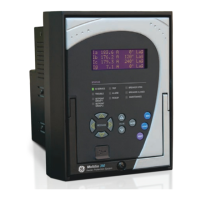
The BE1-27 Undervoltage, BE1-59 Overvoltage and the
BE1-27/59 Under/Overvoltage Relays are solid-state
devices which provide reliable protection for generators,
motors, and transformers against adverse system voltage
conditions.
can initiate switching after a given time delay to avoid
transfer switching during temporary low voltage condi-
tions. To return the substation to normal service upon the
restoration of primary voltage, the BE1-59 overvoltage
relay supervises the transition to its normal operating
condition.
Cogeneration
Utilities employ the use of a voltage check scheme to
supervise reclosing at the substation when cogenerators
are connected to a radial distribution feeder and the
cogenerator is capable of supplying the entire load when
the utility circuit breaker is open. During a faulted condi-
tion, the utility requires the cogenerator to be discon-
nected from the system before reclosing the utility breaker.
If the cogenerator remains connected to the system, the
utility may attempt to reclose onto an energized line. This
could result in reconnecting two systems out of synchro-
nism. The BE1-27 undervoltage relay monitoring the line
voltage at the substation will inhibit reclosing of the utility
circuit breaker if the line remains energized by the
cogenerator.
At the interface between the utility and the cogenerator,
overvoltage and undervoltage relays are installed as
minimum protection to provide an operating voltage
window for the cogenerator. During faulted conditions
when the cogenerator may become overloaded, the BE1-
27 Undervoltage Relay will detect the decline in voltage
and remove the cogenerator from the system. The BE1-59
Overvoltage Relay will protect the system from overvolt-
age conditions that may result when power factor correc-
tion capacitors are located on the feeder.
Transformer Protection
Voltage relays can be applied to protect large transform-
ers from damage as a result of overexcitation. The concern
for transformer overvoltage may be minimized in many
power system applications where proper voltage control
of the generating unit is provided. However, where a tap
changing regulating transformer is located between the
generating source and the load, some form of voltage
protection may be required to supplement the tap
changing control and to prevent equipment damage due
to over, as well as undervoltages resulting from a failure of
the tap changing control. The BE1-27/59 Under/Overvolt-
age Relay is well suited for these applications.
Ground Fault Detection
In a three-phase, three-wire system, a single conductor
may break or the insulation may deteriorate resulting in a
high resistance ground fault which may be sensed by an
overvoltage relay connected to a grounded wye, broken
delta set of voltage transformers (VT’s).
APPLICATION
Electric power systems are designed to operate with
relatively constant voltage. Loads utilizing commercial
electric power are designed to operate at a constant input
voltage level with some tolerance. Radical voltage varia-
tions on a power system are indicative of a system
malfunction. Protective relays which monitor system
voltage and provide an output signal when the voltage
goes outside predetermined limits find a variety of appli-
cations. Some of these applications include motor and
transformer protection, interface protection for cogenera-
tion systems, ground fault detection, and supervision of
automatic transfer switching schemes.
Motor Protection
When selecting the type of protection for motor applica-
tions, the motor type, voltage rating, horsepower, thermal
capability during start-up, and exposure to automatic
transfer restarting following a voltage interruption need to
be considered. During motor start-up, a low terminal
voltage condition will inhibit the motor from reaching rated
speed. The BE1-27 undervoltage relay will detect this low
voltage condition and trip. Critical applications requiring
continuous motor operation and applications where
overloads during start-up may be maintained for a given
time period usually have a definite time or inverse time
delay characteristic incorporated to avoid unnecessary
tripping during low voltage dips. If the undervoltage
condition persists for the established time delay, the relay
output contacts are used to either trip the unit off line or
sound an alarm at the annunciator panel, allowing the
station operator to take corrective action. The BE1-59
Overvoltage relay is applied to insure the voltage does not
exceed the limits established by the machine manufacturer
for proper operation. Overvoltage conditions stress the
insulation level of the equipment and may cause a dielec-
tric breakdown, resulting in a flashover to ground.
Automatic Transfer Switching
Distribution substations are sometimes designed with
duplicate supply circuits and transformers to eliminate
service interruptions due to faults located on the primary
feeder. In order to restore service within a given accept-
able time period, automatic transfer switching can be
applied to initiate the throwover from primary power to the
alternate power source. The BE1-27 Undervoltage Relay


 To Next Page
 Loading...