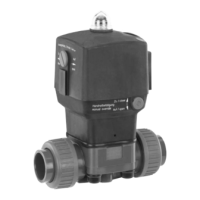
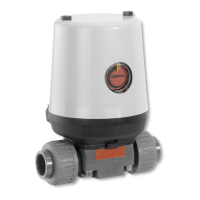
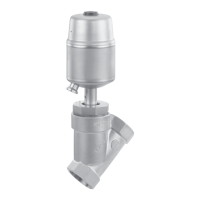
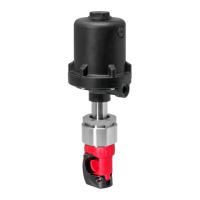
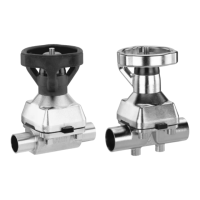
The GEMÜ 653 or 654 diaphragm valve is designed for installation in piping systems. It controls a flowing medium by manual operation. The metal diaphragm valve is equipped with a stainless steel bonnet. The GEMÜ 653 has a handwheel in high temperature and chemically resistant plastic, while the GEMÜ 654 features a stainless steel handwheel. The handwheels for diaphragm size 8 are rising, whereas those for diaphragm sizes 10-100 are non-rising. An optical position indicator is standard. Two bonnet versions are available: for 2/2-way bodies and for T bodies or multi-port bodies. The valve body and the diaphragm are available in various designs as shown in the data sheet. The diaphragm valve can be continuously opened or closed.
The valve is intended for use with corrosive, inert, gaseous, and liquid media that do not negatively impact the physical and chemical properties of the body and diaphragm material. It is crucial to use the diaphragm valve only for its intended purpose; otherwise, manufacturer liability and guarantee will be void. Operation must always be in accordance with the specified operating conditions in the contract documentation and the installation, operating, and maintenance instructions. The diaphragm valve may only be used in potentially explosive zones confirmed in the declaration of conformity (ATEX).
Prior to commissioning, it is essential to read the installation, operating, and maintenance instructions thoroughly. Adequate training must be provided for installation and operating personnel, ensuring they fully understand the contents of the instructions. Areas of responsibility should be clearly defined. During operation, these instructions must be kept available at the place of use, and all safety information must be observed. The valve should only be used in accordance with specifications. Any servicing or repairs not described in the instructions must not be performed without consulting the manufacturer.
For installation, ensure that the valve body and diaphragm material are appropriate and compatible with the working medium. Check the suitability of the valve prior to installation. Do not apply external force to the valve. The installation location should prevent the valve from being used as a foothold. The pipeline must be laid to protect the valve body against transverse and bending forces, vibrations, and tension. The valve should only be mounted between matching aligned pipes. The direction of the working medium and the mounting position of the diaphragm valve are optional.
Installation work must only be performed by trained personnel, using appropriate protective gear as specified in plant operator's guidelines. Before installation, shut off and secure the plant or plant component against recommissioning. Depressurize and completely drain the plant, allowing it to cool down until the temperature is below the media vaporization temperature to prevent scalding. Correctly decontaminate, rinse, and ventilate the plant or plant component.
For butt weld spigots, adhere to good welding practices. Disassemble the bonnet with the diaphragm before welding the valve body into the pipeline. Allow butt weld spigots to cool down before reassembling the valve body and bonnet with the diaphragm. For clamp connections, insert a gasket between the body clamp and the adjacent piping clamp, joining them with the appropriate clamp fitting. The gasket and clamp are not included in the scope of delivery. For threaded connections, screw them into the piping according to valid standards, using appropriate thread sealant (not included). For flange connections, ensure clean, undamaged sealing surfaces, align flanges carefully, and center seals accurately. Connect the valve flange and piping flange using appropriate sealing material and matching bolting (not included). Use all flange holes and only approved connector elements, tightening bolts diagonally.
After installation, reactivate all safety and protective devices. The handwheel can become hot during operation, so protective gloves should be worn to prevent burns. The optical position indicator shows whether the valve is open or closed.
Setting the seal adjuster and stroke limiter should only be done when the valve is completely assembled (with diaphragm and valve body) and in a cold condition. For diaphragm size 8, to set the stroke limiter, move the valve to the OPEN position by turning the handwheel until the required flow rate is reached. Pull off the handwheel from the threaded spindle. Screw the stroke limiting sleeve on until it stops, ensuring the threaded spindle does not turn. Fix the sleeve with a locking screw, then push the handwheel back onto the spindle and secure it. To set the seal adjuster, unscrew and remove the locking screw, pull off the handwheel, loosen the locking screw, unscrew and remove the stroke limiting sleeve. Loosen the lock nut and the seal adjuster nut. Place the handwheel upside down on the spindle, gently close the valve until it is tight. Screw in the seal adjuster nut until it stops and secure it with the lock nut.
For diaphragm sizes 10-50, remove the protective cap and move the bonnet out of the end positions to allow the handwheel to turn freely. To release the stroke limiter, turn it anticlockwise upwards until the male thread is visible. To release the seal adjuster, turn it clockwise downwards until it stops. To set the seal adjuster, move the bonnet to the desired CLOSED position, then turn the seal adjuster anticlockwise upwards until it stops. To set the stroke limiter, move the bonnet to the desired OPEN position. Complete the settings by placing the protective cap back on, aligning the flats with a light twisting movement, and pressing it down.
For diaphragm sizes 80-100, the procedure is similar, but a supplied setting tool is used for the stroke limiter.
For maintenance, after disassembly, clean all parts of contamination, checking for damage and replacing if necessary with genuine GEMÜ parts. The diaphragm is a wearing part and must be replaced if damaged. Incorrectly mounted diaphragms can cause leakage. The compressor is fixed to the spindle for diaphragm size 8, while for sizes 10-80, it is loose. For diaphragm size 100, the diaphragm is round, and the compressor is loose. An anti-twist system is fitted at the end of the bonnet spindle to protect it against twisting. When mounting the compressor, the double flat must be in correct alignment with the recess of the compressor back.
When mounting a concave diaphragm (size 8), place the diaphragm with the fastening spigot in an inclined position at the recess of the compressor. Turn the diaphragm with manual force to push the spigot into the compressor, aligning the diaphragm tab in parallel to the compressor weir. For threaded pin type diaphragms (sizes 10-100), screw the new diaphragm tightly into the compressor manually, ensuring the diaphragm boss fits closely in the recess.
For convex diaphragms, invert the new diaphragm face manually, using a clean, padded mat for bigger nominal sizes. Position the new backing diaphragm onto the compressor, then the diaphragm face onto the backing diaphragm. Screw the diaphragm face tightly into the compressor manually. Press the diaphragm face tightly onto the backing diaphragm manually so it returns to its original shape.
When mounting the bonnet on the valve body, position the bonnet with the mounted diaphragm on the valve body, aligning the compressor weir and valve body weir. Tighten bolts, washers, and nuts by hand, then fully tighten them diagonally. Ensure the diaphragm is compressed evenly (approx. 10-15%, visible by an even bulge to the outside). Check the tightness of the completely assembled valve. Diaphragms degrade over time, so after valve disassembly/assembly, check that the bolts and nuts on the body are tight and retighten as necessary, especially after the first sterilization process.
Special versions include an electrical locking device actuated by a solenoid, available with ATEX approval. A mechanical locking device is also available, supplied with or without a padlock. A special version is available for mounting proximity switches, which can also be combined with locking devices.
Setting proximity switches for both OPEN and CLOSED positions involves removing screws, moving the bonnet, ensuring the damping cam is visible, loosening grub screws, correcting the damping cam position, securing it, screwing in threaded plugs, and screwing in proximity switches until they touch the damping cam, then turning them back slightly and securing with nuts.
Commissioning requires checking the tightness of media connections and the function of the diaphragm valve. If the plant is new or has undergone repairs, rinse the piping system with a fully opened diaphragm valve to remove any harmful foreign matter. The plant operator is responsible for selecting cleaning material and performing the procedure.
For inspection and servicing, the equipment is subject to pressure, so only work on depressurized plant. Hot plant components pose a burn risk, so only work on cooled-down plant. Servicing and maintenance work must only be performed by trained personnel. GEMÜ assumes no liability for damages caused by improper handling or third-party actions. In case of doubt, contact GEMÜ before commissioning. The operator must carry out regular visual examinations of the valves and disassemble them at corresponding intervals to check for wear. Depending on operating conditions, regrease the threaded spindle with GEMÜ's recommended "TUNGREASE DAB" from TUNAP.
Disassembly involves observing the same precautionary measures as for installation. All valve parts must be disposed of according to relevant local or national disposal regulations, paying attention to adhered residual material and gas diffusion from penetrated media. For returns, clean the valve and request a goods return declaration form from GEMÜ. Returns must be made with a completed declaration; otherwise, GEMÜ cannot process credits or repair work and will dispose of the goods at the operator's expense. The German version of this document is the authoritative document.


 To Next Page
 General