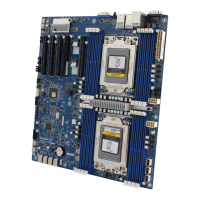
This document describes the GIGABYTE MZ72-HB2, an AMD EPYC™ 7003 Dual Sockets Server Motherboard. It provides detailed information regarding hardware installation, BIOS setup, and technical specifications.
Function Description:
The GIGABYTE MZ72-HB2 is a server motherboard designed to support AMD EPYC™ 7003 series processors, including those with AMD 3D V-Cache™ Technology. It features a dual-socket design, enabling high-performance computing for server applications. The motherboard integrates various components for system management, storage, networking, and expansion, making it suitable for demanding server environments. Its BIOS setup utility allows users to configure basic system settings, activate specific features, and manage hardware parameters.
Important Technical Specifications:
- Form Factor: E-ATX, with dimensions of 305W x 330D (mm).
- CPU:
- Supports AMD EPYC™ 7003 processors with AMD 3D V-Cache™ Technology and AMD EPYC™ 7003 series processor family.
- Dual processors, 7nm, Socket SP3.
- Up to 64-core, 128 threads per processor.
- cTDP up to 280W.
- Compatible with AMD EPYC™ 7002 series processor family.
- Chipset: System on Chip.
- Memory:
- 16 x DIMM slots.
- DDR4 memory supported only.
- 8-Channel memory architecture.
- Supports RDIMM modules up to 128GB.
- Supports LRDIMM modules up to 128GB.
- Supports 3DS RDIMM/LRDIMM modules up to 256GB.
- Memory speed: Up to 3200/2933 MHz.
- LAN:
- 2 x 10GbE LAN ports (1 x Broadcom® BCM57416).
- 1 x 10/100/1000 management LAN.
- Onboard Graphics:
- Integrated Aspeed® AST2600.
- 2D Video Graphic Adapter with PCIe bus interface.
- 1920x1200@60Hz 32bpp, DDR4 SDRAM.
- Storage Interface:
- 4 x 7-pin SATA 6Gb/s ports.
- 3 x SlimSAS (with 12 x SATA 6Gb/s or 3 x NVMe PCIe Gen4 x4) ports.
- 1 x M.2 slot (M-key, PCIe Gen4 x4, supports NGFF-2280/22110 cards).
- 2 x NVMe ports (SlimSAS 4i type, PCIe Gen4 x4 per port).
- Default storage setting is SATA; NVMe drives require manual configuration in BIOS.
- Expansion Slots:
- Slot_6: 1 x PCIe x16 (Gen4 x16 bus) slot (from CPU_0).
- Slot_4: 1 x PCIe x16 (Gen4 x16 bus) slot (from CPU_0).
- Slot_3: 1 x PCIe x16 (Gen4 x16 bus) slot (from CPU_1).
- Slot_2: 1 x PCIe x16 (Gen4 x8 bus) slot (from CPU_0).
- Slot_1: 1 x PCIe x16 (Gen4 x8 bus) slot (from CPU_1).
- Internal I/O Connectors:
- 1 x 24-pin ATX main power connector.
- 2 x 8-pin ATX 12V power connectors.
- 5 x SlimSAS connectors.
- 4 x SATA 7-pin connectors.
- 1 x M.2 slot.
- 2 x CPU fan headers.
- 4 x System fan headers.
- 1 x USB 3.0 header.
- 1 x USB 2.0 header.
- 1 x TPM header.
- 1 x Front panel header.
- 1 x PMBus connector.
- 1 x IPMB connector.
- 1 x Clear CMOS jumper.
- 1 x BIOS recovery jumper.
- Rear I/O Connectors:
- 2 x USB 3.0 ports.
- 1 x VGA port.
- 1 x Serial port.
- 2 x RJ45 ports.
- 1 x MLAN port.
- 1 x ID button with LED.
- TPM:
- 1 x TPM header with SPI interface.
- Optional TPM2.0 kit: CTM010.
- Board Management (Aspeed® AST2600 management controller):
- GIGABYTE Management Console (AMI MegaRAC SP-X) web interface.
- Dashboard, HTML5 KVM, Sensor Monitor (Voltage, RPM, Temperature, CPU Status, etc.).
- Sensor Reading History Data, FRU Information, SEL Log (Linear/Circular Storage Policy).
- Hardware Inventory, Fan Profile, System Firewall, Power Consumption, Power Control.
- LDAP / AD / RADIUS Support, Backup & Restore Configuration, Remote BIOS/BMC/CPLD Update.
- Event Log Filter, User Management, Media Redirection Settings, PAM Order Settings, SSL Settings, SMTP Settings.
- Operating Properties:
- Operating temperature: 10°C to 40°C.
- Operating humidity: 8-80% (non-condensing).
- Non-operating temperature: -40°C to 60°C.
- Non-operating humidity: 20%-95% (non-condensing).
Usage Features:
- Easy Installation: The manual provides clear, step-by-step instructions for installing the CPU, heat sink, memory modules, and M.2 SSD modules. It emphasizes precautions against electrostatic discharge (ESD) and proper handling of components.
- Memory Configuration: Supports 8-channel DDR4 memory with specific population tables for 8, 16, and 32 DIMMs, indicating supported memory speeds based on DIMM population.
- Extensive Connectivity: Offers a wide range of internal and external connectors, including multiple SATA, SlimSAS, NVMe, USB 3.0, USB 2.0, LAN, VGA, and serial ports, catering to diverse server needs.
- BIOS Setup Utility: Accessible via the
key during POST, the BIOS setup program allows for comprehensive configuration of system parameters. It is organized into Main, Advanced, AMD CBS, AMD PBS Option, Chipset, Server Management, Security, Boot, and Save & Exit menus.
- Advanced BIOS Options: Includes detailed settings for Trusted Computing (TPM support), PSP Firmware Versions, Legacy Video Select, AST2600 Super IO Configuration (Serial Port settings), S5 RTC Wake Settings, Serial Port Console Redirection, CPU Configuration (SVM Mode, CPU info), PCI Subsystem Settings (PCIe lanes, I/O ROM, SlimSAS function, SR-IOV), USB Configuration (Legacy USB support, XHCI Hand-off, Mass Storage Driver Support), Network Stack Configuration (IPv4/IPv6 PXE/HTTP support), NVMe Configuration (LED Control), SATA Configuration, Graphic Output Configuration, AMD Mem Configuration Status, Tls Auth Configuration, iSCSI Configuration (Initiator Name, Attempts, Target Parameters), Broadcom BCM57416 10GBASE-T Network Connection (Firmware, Device Configuration, MBA Configuration, iSCSI Boot Configuration), and VLAN Configuration.
- AMD CBS Menu: Provides granular control over CPU Common Options (Performance, Prefetcher settings, Core Watchdog, SEV ASID, SMT Control), DF Common Options (Scrubber, Memory Addressing, ACPI, Link), UMC Common Options (DDR4 Common Options, DRAM Memory Mapping, NVDIMM, Memory MBIST), and NBIO Common Options (IOMMU, DMAr Support, PCIe ARI, SMU Common Options, NBIO RAS Common Options).
- Server Management: Features a dedicated menu for managing server-specific functions, including FRB-2 Timer, OS Watchdog Timer, View FRU Information, BMC Network Configuration (IPv4/IPv6), and System Event Log.
- Security Features: Allows setting Administrator and User passwords, and configuring Secure Boot settings, including managing Platform Key (PK), Key Exchange Keys (KEK), Authorized Signatures (DB), Forbidden Signatures (DBX), and Authorized TimeStamps (DBT).
- Boot Options: Configurable boot order priorities for various devices (Hard drive, CD-ROM/DVD, USB, Network, UEFI) and options for UEFI Network Drive BBS and UEFI Application Boot Priorities.
Maintenance Features:
- BIOS Recovery: The system includes an embedded recovery technique to restore the BIOS from a corrupt state using a USB diskette.
- Clear CMOS Jumper: An internal jumper allows clearing CMOS data, useful for resetting BIOS settings to default in case of system instability.
- Battery Socket (BAT): For maintaining BIOS configurations, date, and time information when the system is off. Instructions for battery replacement are provided with safety warnings.
- Chassis Intrusion Alert (CASE_OPEN): A header for chassis detection, indicating if the chassis cover has been removed, enhancing physical security.
- System Event Log: Records system events, aiding in troubleshooting and monitoring.
- FRU Information: Provides basic system ID and product information, useful for inventory and support.
- BMC Network Configuration: Allows real-time synchronization of BMC network parameter values, simplifying network management.
- BIOS POST Beep Codes: Standard AMI beep codes are provided to diagnose hardware issues during POST.
- Fan Headers: Multiple CPU and system fan headers with speed control support for optimal heat dissipation and system stability.

 Need help?
 General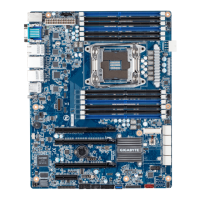


 To Next Page