24
IMPORTANT: Any repairs should only be carried
out by the manufacturer or by an approved
agent. This will ensure that the correct
materials and repair techniques are used.
IMPORTANT: No harness should ever be flown
if there is any kind of damage to the webbing.
Maintenance and repairs
The materials used in this harness have been carefully selected for saving weight. The harness is
certified to meet the demands of normal flight but not extreme conditions or aerobatics. Handle your
harness with care to ensure the longest possible period of safe operation.
Care and maintenance
Don’t drag your harness over rough or rocky ground. Avoid unnecessary exposure to UV rays, heat and
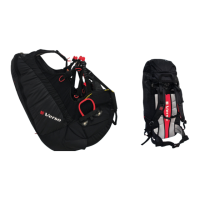
humidity. Keep the folded harness in your rucksack when not in use.
Store all your equipment in a cool, dry place, and never put it away while damp or wet. Regularly clean
off dirt with a plastic bristled brush and/or a damp cloth. If the harness gets exceptionally dirty, wash
it with water. Make sure you first remove the entire sub-components for example, rescue parachute
container and verify all of the attachments are secure.
Inspection checklist
The harness should be checked by a professional after 24 months or 200 hours of flying (whichever
comes’s first). Additional inspections should be performed after any crash, bad landing or take off, or if
there are any signs of damage or undue wear. Always seek professional advice whenever in doubt.
The following checks should be carried out:
Check all webbing, straps and buckles for wear and damage (such as: open seams, tearing or
cutting), especially the areas that are not easily seen.
All sewing must be intact and any anomalies attended to immediately to avoid exacerbation of
the problem.
The main carabiners must be replaced at least every 5 years or after 500 hours, whatever comes
first. Impacts may create undetectable cracks that could result in structural failure under continuous
load.
Repairs
The manufacturer or an approved specialist should carry out any repair that involves critical parts of
the harness. This will ensure that the correct materials and repair techniques are used.


 To Next Page