Need help?
Do you have a question about the Goodway REAM-A-MATIC RAM-5-DC and is the answer not in the manual?
How rotational speed affects cleaning tool feed rate in enhanced tubes.
Operator requirements for rotational speed and feed rate in smooth-bore tubes.
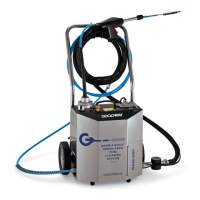
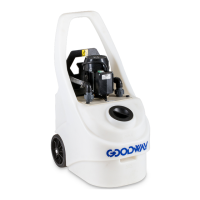
The Goodway RAM-A-MATIC Tube Cleaning Machine is a sophisticated and versatile device designed for efficiently cleaning tubes in various industrial applications. This particular model, the RAM-5 Speed-Feed with Variable-Speed Ream-A-Matic®, represents the latest in flexible shaft tube cleaning technology, offering enhanced performance and user convenience.
The primary function of the RAM-5 is to clean tubes by utilizing a rotating, nylon-encased flexible steel shaft with a brush or other cleaning tool attached to its end. As the rotating tool/shaft assembly is fed through a tube, the brush or tool dislodges deposits such as mud, sand, or other fouling. Simultaneously, water flows through the casing of the flexible shaft, flushing out the loosened debris. An electronic valve automatically controls the water flow, ensuring it is active only when the shaft is rotating, which optimizes water usage and prevents dry running.
The RAM-5 is engineered to clean both enhanced-bore (internally "rifled" or grooved) and smooth-bore tubes with an inside diameter (ID) ranging from 1/4" to 1" (6.4mm to 25.4mm). Its variable speed function allows for precise control over both the brush rotational speed and the shaft feed rate. This adaptability enables operators to match the cleaning parameters to the specific job requirements, whether dealing with enhanced tubes, stubborn deposits, or different types of fouling.
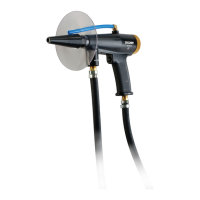
A key feature of the RAM-5 is its Speed-Feed attachment, which mechanically feeds the shaft into the tube. This mechanism significantly boosts efficiency and reduces operator fatigue, especially during prolonged cleaning operations. While the Speed-Feed mode is ideal for situations where deposits are soft enough to be removed by a nylon brush, the machine also supports a manual mode. In manual mode, the operator manually feeds the shaft into the tube, allowing for the use of a full range of cleaning tools to tackle more difficult and stubborn deposits.
For enhanced tubes, the rotational speed of the cleaning tool directly influences the linear feed rate of the shaft. It is crucial to minimize slip between the brush and the grooves of the tube. Excessive rotational speed can cause the brush bristles to slip over the grooves, leaving them fouled, while insufficient speed might prevent the bristles from fully engaging with the grooves. For smooth-bore tubes, the operator simply selects a comfortable rotational speed and feed rate.
The RAM-5 is designed for ease of assembly and operation. Initial setup involves placing the power unit on a stable surface, attaching the handlebar with thumbscrews, and securing the dolly bar. Once assembled, the machine can be turned upright and is ready for shaft connection.
Connecting the flexible shaft is a straightforward process: the square end of the shaft is inserted into the drive shaft of the machine, and a quick-connect nut is pushed until latches engage. It's important to select the correct flexible shaft size for the tube diameter and length. For Speed-Feed operation, the flexible shaft must be 20 feet (6.1m) longer than the longest tube to be cleaned, and specific shaft series (GTC-702 Special, GTC-703, or GTC-704) are required. Other shafts must be fed manually.
Before operation, the water hose must be connected to the water inlet, ensuring a clean water supply to prevent solenoid valve clogging. The ground fault cord is then plugged into a properly grounded outlet, and the reset button on the ground fault is pressed, which will illuminate the power indicator light and start the internal air pump. The machine is typically tipped onto its back so the flexible shaft is parallel to the floor, and the speed is set to the desired level, controlling both linear and rotational movement simultaneously.
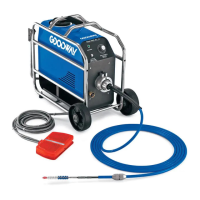
In manual mode, a single or double foot switch is connected to the air fittings on the power unit. The appropriate cleaning tool is threaded onto the flexible shaft, ensuring it is not larger than the tube's inner diameter. A lock nut is used with brushes to prevent unthreading in reverse. A tube length marker can be positioned on the shaft casing to indicate when the cleaning tool is halfway out of the opposite end of the tube. The flexible shaft should be uncoiled completely and fed into the tube without forcing it. If resistance is met, the shaft should be backed off and re-advanced. For optimal operation, inserting the shaft into the tube several hours before use can help remove loops.
For Speed-Feed mode, the flexible shaft guide tube is threaded onto the power unit's fitting, and control hoses are connected to the air fittings. The direction of shaft rotation is checked by squeezing the trigger; it should rotate counterclockwise from the tip. If not, the control hoses are reversed. A Goodway nylon brush is attached to the flexible shaft with a small lock nut. The shaft stop is then installed and adjusted to the desired tube length, ensuring the spring and metal cone are on the brush side of the locking collar. A safety strap is provided to protect the operator in case of blockages. The control handle is positioned over the tube, and squeezing the top trigger feeds the shaft. The Speed-Feed automatically stops at the preset distance, and squeezing the bottom trigger reverses the shaft out of the tube. If heavy deposits cause the Speed-Feed to stall, the unit should be reversed, and another pass attempted, or manual mode with a different cleaning tool may be considered.
Routine maintenance is crucial for ensuring years of trouble-free service from the RAM-5. One key aspect is the lubrication of the chain and sprockets every 100 hours of running time. A good grade of non-detergent SAE 20 to 50 weight petroleum-based oil or NLGI no. 1 or no. 2 grade mixed-base or lithium-soap grease should be applied sparingly, with excess wiped off. A critical safety reminder is to ensure the power is OFF before lubricating the chain.
Operators should regularly check all louvers and water drain holes for any obstructions to maintain proper airflow and drainage. Additionally, the machine's hoses and wire insulation should be inspected for any signs of decay or wear, and any water leaks should be promptly addressed.
For Speed-Feed troubleshooting, if the shaft does not feed forward, potential issues include the shaft casing being caught on the drain assembly (which may require trimming), or the forward stop valve stem needing oil. This valve stem should be oiled approximately every 10,000 tubes with a light oil (e.g., 3-in-1, WD-40) to prevent sticking. If the unit runs but the shaft does not move or moves slowly, operators should check for bends in the guide tube (bends should be no less than a one-foot radius), clean guide tubes with a nylon brush, and check for clogged tubes. The flexible shaft should be removed and wiped clean of any grease or slime, and new shafts may need to be "roughed up" with fine sandpaper to improve grip. The chain and sprockets should be checked for proper tension and alignment, and bearings should be inspected for wear that might reduce gear grip. Gears/rollers should be cleaned of any lubricant.
Electrical precautions are also emphasized, including never exposing the unit to rain, storing it indoors in a cool, dry area, and ensuring the power source conforms to equipment requirements. The unit is equipped with a Ground Fault Circuit Interrupter (GFCI) at the plug end for electrocution protection, which should not be removed. If replacement is needed, only identical parts with GFCI protection should be used. All connections must be kept dry, and the unit or electrical plug should not be handled with wet hands. The power cord should be unplugged by grasping the plug, not the cord, and should be kept away from hot surfaces and sharp corners. If the machine has a damaged cord or plug, it should not be used.
Before disconnecting hoses, fittings, or the flexible shaft, or making any adjustments or changing accessories, the plug must be disconnected from the power source, and the water supply turned off. This prevents accidental starting of the unit. Regular checks for misalignment or binding of moving parts, breakage, and any other condition affecting operation are recommended. Only Goodway recommended accessories and replacement parts should be used, and servicing should follow the instructions in the manual to avoid risks of electric shock or injury. The unit should never be operated with covers removed, exposing moving parts and electrical connections.
 General
| Brand | Goodway |
|---|---|
| Model | REAM-A-MATIC RAM-5-DC |
| Category | Cleaning Equipment |
| Language | English |


 To Next Page