
 Need help?
Do you have a question about the GRAUPNER mz-12 HOTT and is the answer not in the manual?
Specifies the type of device, such as a Video Projector.
Identifies the manufacturer of the device, BenQ.
Indicates the firmware version of the device.
Specifies the model number of the device, MX812ST.
Details for Driver Version 2: 3/23/2011, 1.4.0, 3.0.4, Extron Certified, Added USB Inputs.
Details for Driver Version 1: 8/16/2010, 1.4.0, 3.0.3, Extron Certified.
Notes that pass-through is not recommended for this driver.
Lists available control commands and their states, including Aspect Ratio, Audio Mute, Freeze, and Input.
Details the status parameters that can be monitored, such as Aspect Ratio, Connection Status, and Lamp Mode.
Details the commands supported by the MLC62 controller, covering Aspect Ratio, Audio Mute, Power Control, etc.
Specifies the requirement for an M/F RS-232 Crossed serial cable for connectivity.
Defines serial communication parameters: Port Type (RS-232), Baud Rate (115200), Data Bits (8), Parity (None), Stop Bits (1).
Diagrams and lists pin assignments for DB9 Male connectors on both the IP Link Device Interface and the Projector.
This document provides a comprehensive guide for integrating an Extron IP Link enabled product with a BenQ MX812ST video projector, detailing the communication protocols, control commands, and status monitoring capabilities. It serves as a crucial resource for system integrators and users looking to establish seamless control and feedback between an Extron IP Link system and the BenQ projector.
The core function of this integration is to allow an Extron IP Link control system to manage various aspects of the BenQ MX812ST video projector. This includes fundamental operations such as power control, input selection, and video/audio muting, as well as more nuanced adjustments like aspect ratio and lamp mode. The document outlines the specific commands that can be sent from the IP Link system to the projector and the corresponding status information that can be received back, ensuring a robust and interactive control experience.
For usage features, the system offers extensive control over the projector's display settings. Users can remotely adjust the aspect ratio, choosing between 4:3, 16:9, 16:10, Auto, and Real modes to suit different content types and viewing preferences. Audio control is also integrated, allowing for the muting and unmuting of the projector's audio output. The "Auto Image" command provides a convenient way to optimize the projected image with a single command. The "Freeze" function allows users to pause the current display, which can be useful during presentations or when needing to hold a specific image on screen.
Input selection is a critical feature, enabling the IP Link system to switch between various sources connected to the BenQ projector. Supported inputs include S-Video, Video, RGB 1, RGB 2, HDMI, USB Reader, and USB Display. This comprehensive input management ensures flexibility in connecting diverse media sources, from traditional video players to modern digital devices and USB storage.
Power management is a fundamental aspect of the integration, allowing the IP Link system to turn the projector on and off. This is crucial for energy conservation and extending the lifespan of the projector lamp. The "Lamp Mode" control allows users to switch between "Normal" and "Eco" modes, providing options for brightness and lamp longevity. The "Video Mute" function offers a quick way to temporarily black out the screen without turning off the projector, useful for intermissions or when attention needs to be directed elsewhere. Volume control is also supported, with the ability to step the volume up or down, providing granular audio adjustment.
Beyond direct control, the system provides extensive status monitoring capabilities, which are essential for effective system management and troubleshooting. The "Status Available" section details the feedback that the IP Link system can receive from the projector. This includes the current aspect ratio setting, audio mute status, and crucially, the "Connection Status," which indicates whether the projector is "Connected" or "Disconnected" from the control system. This real-time feedback is vital for confirming the operational state of the projector and diagnosing connectivity issues.
The system also reports the current "Freeze" status, input selection, and "Lamp Mode." For maintenance features, the "Lamp Usage" status provides information on the number of hours the lamp has been in operation. This is a critical piece of information for proactive maintenance, allowing users to anticipate when a lamp replacement might be necessary and schedule it accordingly to avoid unexpected downtime. The "Power Control" status indicates whether the projector is currently set to "On" or "Off," while "Power Status" provides a more detailed "On," "Off," or "Status Unavailable" indication, offering a clear picture of the projector's power state. The "Video Mute" status confirms whether the video output is currently muted. Finally, the "Volume Level Status" provides a numerical indication of the current volume setting, ranging from 0 to 10 in steps of 1, offering precise feedback on audio levels.
The document also specifies the serial communication parameters required for the integration. The projector uses an RS-232 port with a baud rate of 115200, 8 data bits, no parity, 1 stop bit, and no flow control. This detailed information is crucial for configuring the serial port on the Extron IP Link system to ensure proper communication. The pin assignments diagram for the RS232 DB9 Male IP Link Device Interface and the RS232 DB9 Male Projector is provided, illustrating the crossed serial cable connection (RxD to TxD, TxD to RxD, and GND to GND). This visual guide simplifies the wiring process, minimizing errors and ensuring a correct physical connection. The note regarding the captive screw connector highlights an alternative connection method, offering flexibility in installation.
The "MLC62 Supported Commands" section specifically lists the commands that are compatible with the MLC62 controller, which is a specific model within the Extron IP Link family. This ensures that users of the MLC62 can quickly identify the available control options without having to cross-reference with the general command list. The commands listed for MLC62 are consistent with the general control commands, covering aspect ratio, audio mute, auto image, freeze, input selection, lamp mode, power control, video mute, and volume step. This consistency simplifies programming and operation across different Extron IP Link controllers.
In summary, this document provides a comprehensive framework for integrating and controlling a BenQ MX812ST video projector with an Extron IP Link system. It covers all essential aspects from basic power control and input switching to detailed status monitoring and maintenance indicators like lamp usage. The clear instructions for serial communication and pin assignments ensure a straightforward setup process, while the detailed list of commands and statuses empowers users to fully leverage the capabilities of both the Extron control system and the BenQ projector for a seamless and efficient audiovisual experience.
 General
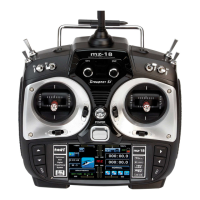
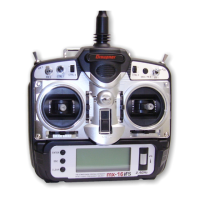
| Frequency | 2.4 GHz |
|---|---|
| Modulation | HOTT |
| Channels | 12 |
| Display | LCD |
| Telemetry | Yes |
| Battery | LiPo |
| Receiver | HoTT |
| Model Memory | 20 |



 To Next Page