EasyManua.ls Logo

GRE PSR-255 - User Manual

GRE PSR-255
24 pages
Print Icon
To Next Page IconTo Next Page
Loading...
1
PSR-255
50-CHANNEL SCANNER
OWNER'S MANUAL

Questions and Answers

Summary

Scanner Features

Ten Preprogrammed Search Bands

Allows searching within preset frequency ranges for quicker discovery of transmissions.

Fifty Channels Storage

Enables storage of up to 50 favorite frequencies for easy recall and scanning.

Duplicate Frequency Check

Automatically warns if a frequency is already stored, enhancing memory efficiency.

Monitor Memory Function

Temporarily saves a frequency found during a direct search for later channel storage.

Channel Lockout Feature

Prevents selected channels from being scanned, improving scanning efficiency.

Memory Backup

Retains channel frequencies for approximately 1 hour after a power loss.

Two-Second Scan Delay

Delays scanning for 2 seconds after a transmission, allowing more replies to be heard.

Key Lock Function

Locks keypad keys to prevent accidental changes to the scanner's programming.

Flexible Antenna with BNC Connector

Provides excellent reception and allows easy connection of various antennas.

Liquid Crystal Display

Clearly displays scanner settings and facilitates easy changes to configurations.

Three Power Options

Allows powering the scanner via internal batteries, rechargeable pack, or AC/DC adapter.

Scanner Preparation and Setup

Power Sources

Details on powering the scanner using internal batteries, rechargeable packs, AC, or vehicle DC adapters.

Using Standard AC Power

Instructions for connecting and using an AC adapter for powering the scanner.

Using Vehicle Battery Power

Instructions for powering the scanner using a vehicle's DC cigarette-lighter socket.

Charging Rechargeable Batteries

How to charge rechargeable battery packs or batteries using the scanner's built-in circuit.

Scanner Connections

Connecting the Antenna

Steps to attach the supplied flexible antenna or connect optional antennas.

Using the Belt Clip

How to use the belt clip for hands-free carrying of the scanner.

Connecting Earphone;Headphones

Instructions for connecting earphones or headphones for private listening.

Connecting an Extension Speaker

How to connect an extension speaker for better audio in noisy environments.

Understanding Your Scanner

Keypad Overview

Explanation of the functions of each key on the scanner's keypad.

Display Indicators

Explanation of the indicators and symbols shown on the scanner's display.

Search Bands and Monitor Memory

Details on preprogrammed frequency bands and using monitor memory.

Scanner Operation

Turning On and Setting Controls

Steps for powering on the scanner and adjusting volume and squelch settings.

Storing Frequencies

How to manually store frequencies into channels or via band/direct search.

Band Search

Instructions on how to search for active frequencies using preprogrammed bands.

Direct Search

How to search up or down from a specific frequency and store it.

Channel Monitoring and Scanning

Procedures for monitoring stored channels and initiating channel scanning.

Clearing Channels

Steps to delete stored frequencies from specific channels.

Special Scanner Features

Delay Function

How to program a 2-second delay for monitoring channels after transmission stops.

Locking Out Channels

Method to prevent specific channels from being scanned.

Display Backlight

Instructions to turn on the display backlight for better visibility in low light.

Key Tone On;Off

Procedure to enable or disable the audible tones for key presses.

Keylock Operation

How to lock the keypad to prevent accidental changes to the scanner's settings.

General Scanning Guide

Birdie Frequencies

Information about internal scanner frequencies that might cause interference.

Specified Intervals

Details on frequency step intervals for different bands.

Troubleshooting Scanner Issues

Scanner Not Working

Possible causes and remedies if the scanner fails to power on or operate.

Poor or No Reception

Solutions for issues related to weak or absent signal reception.

Scanner Not Scanning

Troubleshooting steps when the scanner is on but fails to scan channels.

Scanner Locks on Unclear Transmission

How to resolve issues where the scanner gets stuck on noisy or unclear transmissions.

Scanner Reset and Initialization

Resetting the Scanner

Procedure to restart the scanner if the display locks up or malfunctions.

Initializing the Scanner

Steps to restore the scanner to its default factory settings, clearing all data.

Care and Maintenance

Scanner Specifications

Overview

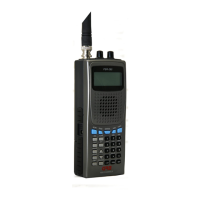
The PSR-255 is a 50-channel portable scanner designed to provide direct access to over 26,000 exciting frequencies, including those used by police and fire departments, ambulance services, and amateur radio services. Users can select and store up to 50 of their favorite frequencies for easy recall and scanning, with the flexibility to change selections at any time. The scanner's capabilities are powered by a custom-designed microprocessor.

Important Technical Specifications:

  • Frequency Coverage:
    • 26-54 MHz
    • 68-88 MHz
    • 137-174 MHz
    • 380-512 MHz
  • Channels of Operation: 50 Channels and 1 Monitor Memory
  • Sensitivity (20dB S/N):
    • 26-54 MHz: 0.7 µV
    • 68-88 MHz: 0.7 µV
    • 137-174 MHz: 0.7 µV
    • 380-512 MHz: 0.7 µV
  • Selectivity:
    • +/-10kHz: -6 dB
    • +/-18kHz: -50 dB
  • Spurious Rejection:
    • 26-54 MHz: 50 dB at 41 MHz
    • 68-88 MHz: 50 dB at 78 MHz
    • 137-174 MHz: 50 dB at 154 MHz
  • Scanning Rate: Up to 25 channels/second
  • Search Rate: Up to 50 steps/second
  • Delay Time: 2 seconds
  • Intermediate Frequencies (IF):
    • 1st: 10.7 MHz
    • 2nd: 455 kHz
  • IF Rejection: 10.7 MHz: 70 dB at 154 MHz
  • Squelch Sensitivity:
    • Threshold: Less than 0.5 µV
    • Tight: (S+N)/N 25 dB
  • Antenna Impedance: 50 ohms
  • Audio Output Power: 200 mW Nominal (10% THD)
  • Built-in Speaker: 36 mm, 8-ohm Dynamic Type
  • Power Requirements: 9 V DC, 6 AA batteries (AC adapter/DC adapter 9V, 200 mA)
  • Current Drain (Squelched): 50 mA
  • Dimensions: 171 (H) x 59 (W) x 40 (D) mm
  • Weight: 240 g without antenna and batteries
  • Supplied Accessory: Antenna

Usage Features:

  • Ten Preprogrammed Search Bands: These bands allow users to search for transmissions within preset frequency ranges, facilitating quicker discovery of interesting frequencies. The bands include VHF Lo (26-40 MHz, 40-54 MHz, 68-78 MHz), VHF Hi (78-88 MHz, 137-144 MHz, 146-174 MHz), 2-m Amateur Radio (144-146 MHz), UHF (410-430 MHz, 440-470 MHz), and 70-cm Amateur Radio (430-440 MHz). These search bands are preset and cannot be changed.
  • Fifty Channels: Provides ample storage for up to 50 favorite frequencies, enabling easy recall and scanning.
  • Duplicate Frequency Check: Automatically alerts the user if they attempt to store a frequency that is already saved, helping to optimize memory usage.
  • Monitor Memory: Allows temporary storage of a frequency found during a direct search, providing the option to move it to channel storage later.
  • Channel Lockout: Users can select specific channels to be excluded from scanning, speeding up the scanning process.
  • Memory Backup: Retains stored channel frequencies for approximately 1 hour during a power loss.
  • Two-Second Scan Delay: Delays scanning for 2 seconds before moving to the next channel, ensuring that replies to transmissions are not missed.
  • Key Lock: Prevents accidental changes to the scanner's programming by locking the keypad.
  • Flexible Antenna with BNC Connector: Ensures excellent reception and allows for easy attachment/removal of the antenna or various optional antennas.
  • Liquid Crystal Display (LCD): Clearly shows the scanner's current settings, making it easy to monitor and adjust operations.
  • Three Power Options:
    • Internal Batteries: Can be powered by six AA batteries (not supplied), including non-rechargeable, rechargeable, or a rechargeable scanner battery pack. Alkaline batteries are recommended for longest operation.
    • Standard AC Power: Requires an optional AC adapter (9V, 200mA, center tip negative). Connecting to the PWR jack disconnects internal batteries.
    • Vehicle Battery Power: Requires an optional DC cigarette-lighter adapter (9V, 200mA, center tip negative).
  • Charging Function: The scanner has a built-in charging circuit for rechargeable battery packs or nickel-cadmium batteries when connected to the CHG jack via an AC or DC adapter. Full discharge takes 14-16 hours. Warning: Never use the CHG jack with non-rechargeable batteries as they could overheat and explode.
  • Manual Channel Selection: Allows continuous monitoring of a specific channel without scanning.
  • Scanning Channels: Initiates rapid scanning of programmed channels, stopping on active frequencies and resuming when transmissions end. Scanning direction can be changed. Empty channels are automatically locked out.
  • Key Tone: The scanner sounds a tone with each key press (except for the keylock symbol and LIGHT). This feature can be turned on or off.
  • Display Backlight: Can be activated for 5 seconds for easy viewing in dim light, and can be turned off manually before the automatic timeout.

Maintenance Features:

  • Battery Handling: Always use fresh batteries of the required size and type. Remove old or weak batteries promptly to prevent chemical leaks that can damage electronic circuits. Do not mix old and new batteries or different types/capacities of batteries. Dispose of old batteries properly; do not bury or burn them. Rechargeable batteries should be recycled or disposed of properly at the end of their useful life.
  • Physical Care: Keep the scanner dry; wipe it immediately if it gets wet. Handle gently to avoid damage to circuit boards and cases.
  • Environmental Conditions: Use and store the scanner in normal temperature environments to prevent shortening the life of electronic devices, battery damage, or plastic distortion.
  • Cleaning: Keep the scanner free from dust and dirt. Wipe with a damp cloth occasionally; avoid harsh chemicals, cleaning solvents, or strong detergents.
  • Troubleshooting: A dedicated section provides remedies for common issues like the scanner not working, poor reception, or scanning problems.
  • Resetting/Initializing:
    • Resetting: If the display locks up or the scanner doesn't work properly after connecting power, turn it off and on, then gently press and release the reset button inside the hole on the side with a pointed object.
    • Initializing: This procedure clears all stored frequencies and restores default settings. It should only be performed if resetting doesn't resolve issues. To initialize, turn the scanner off and on, then while holding down CLEAR, gently press and release the reset button. Release CLEAR when the display reappears.

GRE PSR-255 Specifications

General IconGeneral
BrandGRE
ModelPSR-255
CategoryScanner
LanguageEnglish

Related product manuals