EasyManua.ls Logo

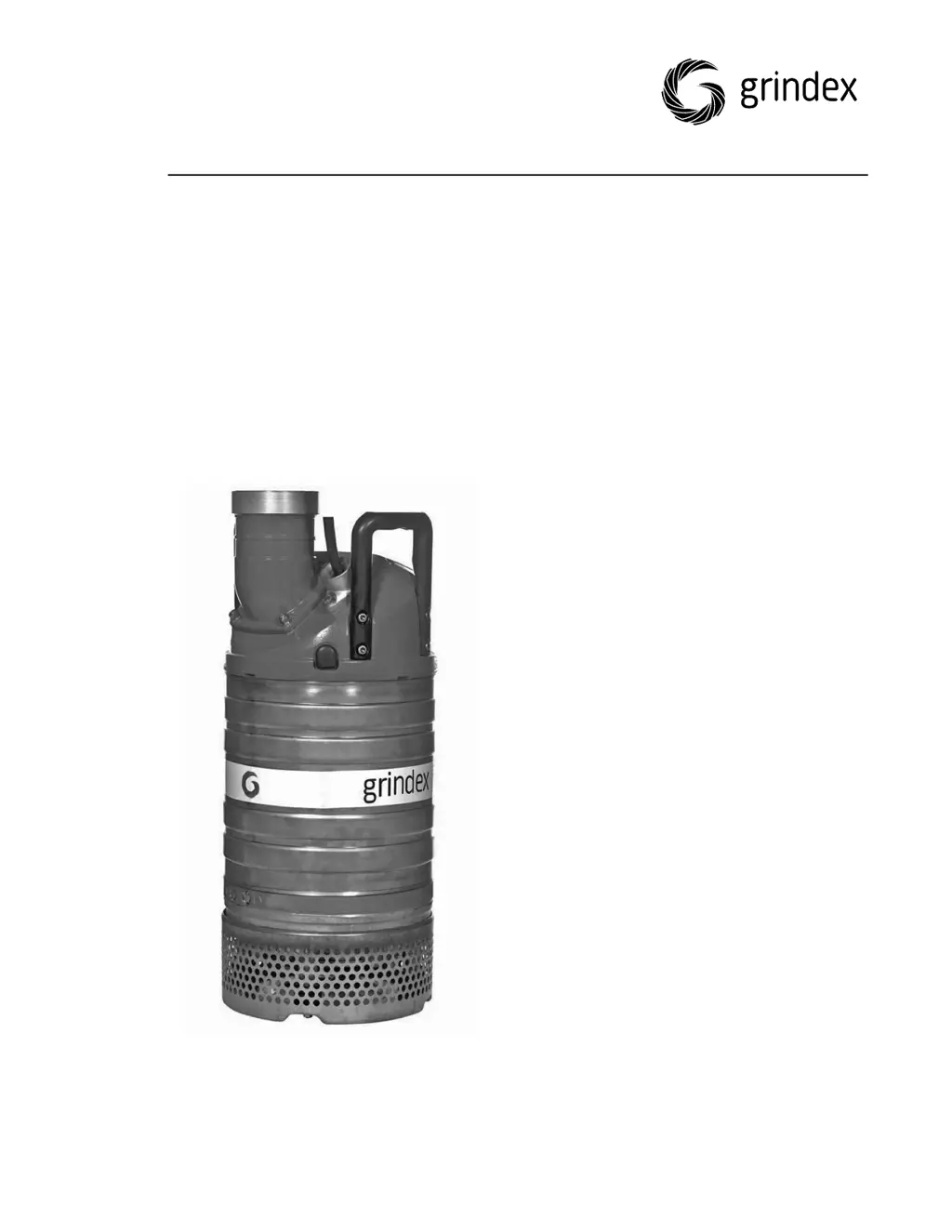
Grindex Matador N - User Manual

Grindex Matador N
56 pages
Print Icon
To Next Page IconTo Next Page
Loading...
Revision 2.0
www.grindex.com
Installation, Operation, and Maintenance
Manual
8106.082/.181 Matador

Questions and Answers

  • S
    Sean HolmesAug 9, 2025
    What to do if the motor protection trips on my Grindex Water Pump?
    • L
      Latoya HamptonAug 9, 2025
      If your Grindex Water Pump runs but the motor protection trips, it could be due to a few reasons. The motor protection might be set too low; in this case, set it according to the data plate and cable chart if applicable. Additionally, if the impeller is difficult to rotate by hand, clean the impeller and the sump, and ensure the impeller is properly trimmed.
  • L
    Lindsey RodriguezAug 14, 2025
    Why does my Grindex Matador N Water Pump start and stop in rapid sequence?
    • W
      William FischerAug 14, 2025
      If your Grindex Water Pump starts and stops rapidly, it could be due to back-flow causing the sump to refill to the start level. Ensure the distance between the start and stop levels is sufficient and that the non-return valves are functioning properly. Also, confirm that the length of the discharge pipe between the pump and the first non-return valve is sufficiently short. Alternatively, the self-holding function of the contactor may be malfunctioning. Check the contactor connections, the voltage in the control circuit in relation to the rated voltages on the coil, and the functioning of the stop-level regulator. Determine whether the voltage drop in the line at the starting surge causes the contactor's self-holding malfunction.
  • A
    Ashley BradshawAug 29, 2025
    How to fix a Grindex Matador N with SMART[™] or softstarter that won't start?
    • T
      Teresa HillAug 29, 2025
      If your Grindex Water Pump with SMART[™] or softstarter does not start, the phase sequence may be incorrect. To correct this: pull out the plug, then shift two phases by turning two contact pins with a screwdriver (do not take the plug apart), or turn the knob to the opposite position 1, with 8 seconds delay (do not reverse the phase sequence while the motor is running; doing so may cause incorrect rotation resulting in damages to the motor electronics and the rotating parts; respect the 8 seconds delay), or shift two phase conductors in the cabinet if no glove or phase shifter is used.
  • S
    Sara StewartSep 10, 2025
    What to do if my Grindex Water Pump doesn't stop when using a level sensor?
    • L
      lisadavisSep 12, 2025
      If your Grindex Water Pump doesn't stop when a level sensor is used, it could be because the pump can't empty the sump to the stop level. Check for leaks from the piping and discharge connection, ensure the impeller isn't clogged, and verify that the non-return valves are functioning properly. Another reason could be a malfunction in the level-sensing equipment, so clean the level regulators, check their functioning, check the contactor and the control circuit, and replace any defective items. Lastly, the stop level might be set too low, so raise it.
  • D
    david99Nov 3, 2025
    Why is my Grindex Water Pump not delivering enough water?
    • J
      Justin OsborneNov 3, 2025
      If your Grindex Water Pump delivers too little or no water, several factors could be at play. The impeller might be rotating in the wrong direction; if it is a 3-phase pump without SMART™, transpose two phase leads, or if it has a softstarter, transpose the leads at T1, T2, T3 on the softstarter. For pumps with SMART™, correct the internal wiring. One or more valves might be incorrectly positioned, so reset them, replace if needed, and ensure they are correctly installed according to media flow and open correctly. Also, check for obstructions in the pipes and clean them to ensure free flow. Address any leaks in pipes and joints by sealing them. Inspect the impeller, pump, and casing for wear and replace worn parts. Ensure the liquid level isn't too low by checking the level sensor setting....
  • A
    annrichardsonNov 22, 2025
    Why won't my Grindex Matador N Water Pump start?
    • M
      Matthew GallagherNov 23, 2025
      If your Grindex Water Pump does not start, several issues could be the cause. An alarm signal might have been triggered on the control panel, so check that the impeller rotates freely, the sensor indicators do not indicate an alarm, and the overload protection is not tripped. The installation might not be receiving voltage; check that the main power switch is on, there is control voltage to the start equipment, the fuses are intact, there is voltage in all phases of the supply line, all fuses have power and are securely fastened, the overload protection is not tripped, and the motor cable is not damaged. The impeller could be stuck, so clean the impeller and the sump to prevent future clogs. If the pump does not start automatically but can be started manually, check that the start level re...

Summary

Introduction and Safety

Introduction

Purpose of this manual

Safety Terminology and Symbols

Explains safety messages, terminology, and hazard levels.

Hazard Levels and Symbols

Details hazard levels and their corresponding indications.

Introduction and Safety

Hazard Categories

Identifies hazard categories and specific symbols.

Product Warranty Details

Covers warranty coverage, limitations, claims, and spare parts.

Introduction and Safety

User and General Safety

Provides general safety rules for users and lists required safety equipment.

Introduction and Safety

Electrical Connections

Details requirements for electrical connections.

Hazardous Liquids and Skin;Eye Safety

Addresses handling hazardous liquids and first aid for exposure.

MSHA Safety Requirements

Outlines specific safety requirements for MSHA permissibility.

Introduction and Safety

Service and Repair Safety

Specifies safety measures for service, repairs, fastenings, and cables.

Environmental Safety and Recycling

Covers environmental safety, waste management, and recycling guidelines.

Transportation and Storage

Delivery Inspection

Instructions for inspecting the delivery package and the unit upon receipt.

Transportation Guidelines and Precautions

Covers safe transportation, positioning, fastening, and lifting procedures.

Transportation and Storage

Temperature Handling and Storage

Details temperature ranges for handling, transport, and storage to prevent damage.

Storage Guidelines

Provides guidelines for proper storage location and long-term storage.

Product Description

Products Included

Lists the pump models included in the product range.

Pump Design and Intended Use

Describes the submersible pump design and its intended applications.

Particle Size and Pressure Class

Specifies the particle handling capability and pressure classes.

Monitoring Equipment

Explains the function of integrated monitoring equipment and thermal contacts.

Product Description

Data Plate Information

Details the information found on the pump's data plate and warning plate.

Product Description

MSHA Approval Plate

Shows the MSHA approval plate information.

Installation

Pump Installation

Provides safety precautions and general steps for installing the pump.

Sedimentation Prevention

Recommends minimum velocities for discharge lines to prevent sedimentation.

Installation

Discharge Line Requirements

Specifies that discharge lines must not have sharp bends.

Fasteners

Warns about using correct fasteners and tightening them properly.

Pump Installation Steps

Details steps for connecting discharge lines and lowering the pump.

Installation

Electrical Connections and Precautions

Covers general precautions, electrical hazards, and requirements for electrical installation.

Installation

Cable Installation Guidelines

Details requirements for installing cables, including bending radius and voltage drop.

Earthing (Grounding) Requirements

Explains the necessity and methods for proper earthing of electrical equipment.

Installation

Motor Cable Connection to Pump

Provides instructions and cautions for connecting the motor cable to the pump.

Cable Charts and Connections

Details connection locations, cable charts, and color code standards.

Installation

Color Code Standard

Lists color codes for motor leads and their descriptions.

Stator Leads and Thermal Contacts Connection

Illustrates stator lead and thermal contact connections to the terminal plate.

Installation

Motor Cable and Starter Unit Connection

Shows connection diagrams for motor cables and various starter units.

Installation

MSHA Version Cable Charts

Provides specific cable connection details for the MSHA version.

Check Impeller Rotation (No Motor Protection)

Details how to check impeller rotation when the pump lacks built-in motor protection.

Installation

Check Phase Sequence (With Motor Protection)

Explains how to check phase sequence for pumps with built-in motor protection.

Operation

Operational Precautions

Lists crucial precautions and warnings before operating the pump.

Distance to Wet Areas and Noise Level

Advises on safety distances and noise level considerations during operation.

Starting the Pump

Provides safety warnings and steps for starting the pump.

Operation

Pump Starting Warnings

Reinforces warnings about unit stability and hot liquids during startup.

Pump Cleaning Procedure

Details how to clean the pump after operation in dirty water.

Maintenance

Maintenance Precautions

Highlights safety precautions, including electrical lockout and unit cooling.

General Maintenance Guidelines

Outlines essential tasks for maintenance and reassembly, including lubrication.

Maintenance

Torque Values for Screws and Nuts

Provides torque specifications for stainless steel and steel screws and nuts.

Maintenance

Service Schedule and Intervals

Defines inspection and major overhaul intervals based on service type.

Inspection Tasks

Lists specific items to check during pump inspection, such as visible parts and impeller.

Maintenance

Oil Level Check and Seal Maintenance

Describes checking oil, replacing mechanical seals, and inspecting cable entry.

Inspection Volume and Cable Maintenance

Details checks for inspection volume, cable condition, cooling systems, and sensors.

Starter Equipment and Stator Insulation Check

Covers maintenance checks for starter equipment and stator insulation resistance.

Maintenance

Major Overhaul Actions

Lists actions for major overhaul, including bearing and seal replacement.

Oil Change Procedure

Provides steps for safely draining and refilling the pump with oil.

Maintenance

Oil Refill Procedure

Details how to refill the pump with oil and check the oil level.

Impeller Replacement

Covers the process of removing the impeller, including safety warnings.

Maintenance

Impeller Installation

Describes preparing the shaft and installing the impeller with proper lubrication.

Troubleshooting

Troubleshooting Introduction

Introduces troubleshooting safety guidelines and required tools.

Pump Start Issues (SMART;Softstarter)

Addresses causes and remedies for pumps not starting with SMART or softstarter.

Troubleshooting

Pump Does Not Start

Lists causes and remedies for the pump failing to start automatically.

Troubleshooting

Pump Not Stopping with Level Sensor

Diagnoses issues when the pump fails to stop correctly with a level sensor.

Troubleshooting

Rapid Start-Stop Sequence

Explains causes and solutions for the pump starting and stopping repeatedly.

Motor Protection Trips

Covers scenarios where the pump runs but the motor protection trips.

Troubleshooting

Low or No Water Delivery

Addresses causes and remedies for insufficient or no water output from the pump.

Troubleshooting

Incorrect Impeller Rotation or Valve Settings

Troubleshoots issues related to impeller direction and valve positions.

Obstructed Pipes and Low Liquid Level

Covers problems with clogged pipes, leaks, wear, and low liquid levels.

Softstarter Start Issues

Details troubleshooting for pumps not starting when using a softstarter.

Troubleshooting

Softstarter Settings and LED Indicators

Explains softstarter potentiometer functions, LED status, and alarm signals.

Troubleshooting

Troubleshooting LED Indicators

Provides checks for various LED indicator statuses on the control panel.

Technical Reference

Application Limits

Specifies operating limits for temperature, pH, density, and immersion depth.

Motor Data Specifications

Details motor type, frequency, supply, starting methods, and compliance.

Technical Reference

Standard Motor Data (50 Hz)

Lists rated current, starting current, and power factor for 50 Hz motors.

Standard Motor Data (60 Hz)

Lists rated current, starting current, and power factor for 60 Hz motors.

Technical Reference

MSHA Version Motor Data (60 Hz)

Provides motor data specifically for the MSHA version at 60 Hz.

Dimensions and Weights

States that all measurements are in millimeters unless specified otherwise.

Technical Reference

Standard Version Dimensions

Shows dimensional drawings and weights for standard N and H pump versions.

Technical Reference

MSHA Version Dimensions and Performance Curves

Presents dimensions for MSHA versions and performance curves for standard versions.

Technical Reference

Standard Pump Performance Curves (50 Hz)

Displays performance curves (head, power, efficiency) for 50 Hz pumps.

Standard Pump Performance Curves (60 Hz)

Displays performance curves (head, power, efficiency) for 60 Hz pumps.

Technical Reference

MSHA Pump Performance Curves (60 Hz)

Displays performance curves (head, power, efficiency) for MSHA 60 Hz pumps.

Grindex Matador N Specifications

General IconGeneral
Protection classIP 68
TypeSubmersible sludge pump
Frequency50 Hz / 60 Hz
Discharge2" - 6"
Voltage220 - 690 V
Inlet Diameter2" - 6"
Outlet Diameter2" - 6"

Related product manuals