EasyManua.ls Logo

Haier AD50S2SS1FA - User Manual

Haier AD50S2SS1FA
22 pages
Print Icon
To Next Page IconTo Next Page
Loading...
0150524582
7
8
8
9
11
12
13
AD50S2SS1FA
AD50S2SS2FA
AD71S2SS1FA
AD71S2SS2FA
AD25S2SS1FA
AD35S2SS1FA
AD25S2SS2FA
AD35S2SS2FA
Question and Answer IconNeed help?

Do you have a question about the Haier AD50S2SS1FA and is the answer not in the manual?

Summary

Regulations and Refrigerant Information

European Regulations Conformity

Details CE, RoHS, and WEEE compliance for Haier models.

Refrigerant Type and GWP

Important information on the type of refrigerant used and its global warming potential.

Cautions and Safety Instructions

Product Disposal Guidelines

Procedures for environmentally responsible disposal of old units and packaging.

General Safety Instructions and Warnings

Critical instructions and warnings for safe operation and handling of the air conditioner.

Safety Precautions for Operation and Installation

Cautions for Installation

Essential safety considerations and warnings specific to the installation process.

Cautions for Transfer or Repair

Safety advice related to moving or repairing the air conditioner unit.

Operation Safety Precautions

Cautions for Operation

Key safety measures and warnings to follow during the operation of the unit.

Unit Parts and Functions

Component Overview

Identification and description of the main parts of the air conditioner unit.

Wire Controller Installation

Wiring Connections for Controller

Methods for connecting the wire controller to indoor units.

Communication Wiring Specifications

Details on communication wiring length and required dimensions.

Heating Mode

Heating Mode Operations

Explains heating functions like HOT KEEP, defrosting, and warming operations.

Care and Maintenance

Maintenance Procedures

Covers cleaning air filter, unit care, and seasonal maintenance tasks.

Troubleshooting Unit Failures

Unit Start-up Issues

Checks to perform when the air conditioner does not start.

Performance Issues

Steps to take if cooling or heating performance is not adequate.

Non-Malfunction Phenomena

Descriptions of sounds or occurrences that are not actual malfunctions.

Detailed Troubleshooting Codes

Failure Code Analysis and Causes

Table of failure codes, their causes, and possible reasons for outdoor unit issues.

Installation Precautions and Checks

General Warning Precautions

Critical warnings regarding installation safety, environment, and electrical work.

General Caution Precautions

Cautions related to grounding, circuit breakers, and gas leakage.

Installation Verification and Procedures

Correct Unit Installation Checklist

Key items to confirm for safe and comfortable unit installation.

Installation Place and Electrical Work

Guidance on choosing location and requirements for electrical installation.

Indoor Unit Installation Cautions

Warnings and guidelines specific to indoor unit installation.

Installation Procedure - Indoor Unit Mounting

Mounting Position and Unit Dimensions

Guidance on selecting mounting positions and indoor unit dimensions.

Air Duct Installation Steps

Procedures for installing air supply and return ducts.

Installation Procedure - Ducting Details

Air Sending Duct Installation

Details on installing the air sending duct and transition duct.

Air Return Duct and Thermal Insulation

Steps for connecting the air return duct and insulating ducts.

Installation Procedure - Piping and Electrical

Suspension and Unit Hanging

Instructions for installing suspension screws and hanging the indoor unit.

Refrigerant Pipe Installation

Details on pipe sizes, material, torque, and vacuum creation for refrigerant lines.

Installation Procedure - System Connections

Valve Operation and Gas Leakage Checks

Procedures for opening valves and checking for gas leaks.

Insulation Treatment and Drain Pipe

Guidance on insulating pipes and installing the drain pipe.

Installation Procedure - Final Steps

Hose Installation and Drain Confirmation

Steps for installing the hose and confirming drain operation.

Electrical Wiring Precautions and Connection

Safety warnings and connection details for electrical wiring.

General Cautions and Procedures

Installation Requirements and Servicing

Pipe-work, ventilation, worker qualifications, and servicing information.

Environmental and Safety Checks

Guidelines for unventilated areas, ignition sources, and equipment checks.

Detailed Cautions for Handling and Decommissioning

Electrical Device and Refrigerant Handling

Safety checks for electrical devices and procedures for refrigerant handling.

Charging, Evacuation, and Decommissioning

Procedures for refrigerant charging, evacuation, and decommissioning the unit.

Refrigerant Recovery and Labelling

Refrigerant Recovery Procedures

Steps for safely recovering refrigerant, handling cylinders, and labelling equipment.

Summary

Regulations and Refrigerant Information

European Regulations Conformity

Details CE, RoHS, and WEEE compliance for Haier models.

Refrigerant Type and GWP

Important information on the type of refrigerant used and its global warming potential.

Cautions and Safety Instructions

Product Disposal Guidelines

Procedures for environmentally responsible disposal of old units and packaging.

General Safety Instructions and Warnings

Critical instructions and warnings for safe operation and handling of the air conditioner.

Safety Precautions for Operation and Installation

Cautions for Installation

Essential safety considerations and warnings specific to the installation process.

Cautions for Transfer or Repair

Safety advice related to moving or repairing the air conditioner unit.

Operation Safety Precautions

Cautions for Operation

Key safety measures and warnings to follow during the operation of the unit.

Unit Parts and Functions

Component Overview

Identification and description of the main parts of the air conditioner unit.

Wire Controller Installation

Wiring Connections for Controller

Methods for connecting the wire controller to indoor units.

Communication Wiring Specifications

Details on communication wiring length and required dimensions.

Heating Mode

Heating Mode Operations

Explains heating functions like HOT KEEP, defrosting, and warming operations.

Care and Maintenance

Maintenance Procedures

Covers cleaning air filter, unit care, and seasonal maintenance tasks.

Troubleshooting Unit Failures

Unit Start-up Issues

Checks to perform when the air conditioner does not start.

Performance Issues

Steps to take if cooling or heating performance is not adequate.

Non-Malfunction Phenomena

Descriptions of sounds or occurrences that are not actual malfunctions.

Detailed Troubleshooting Codes

Failure Code Analysis and Causes

Table of failure codes, their causes, and possible reasons for outdoor unit issues.

Installation Precautions and Checks

General Warning Precautions

Critical warnings regarding installation safety, environment, and electrical work.

General Caution Precautions

Cautions related to grounding, circuit breakers, and gas leakage.

Installation Verification and Procedures

Correct Unit Installation Checklist

Key items to confirm for safe and comfortable unit installation.

Installation Place and Electrical Work

Guidance on choosing location and requirements for electrical installation.

Indoor Unit Installation Cautions

Warnings and guidelines specific to indoor unit installation.

Installation Procedure - Indoor Unit Mounting

Mounting Position and Unit Dimensions

Guidance on selecting mounting positions and indoor unit dimensions.

Air Duct Installation Steps

Procedures for installing air supply and return ducts.

Installation Procedure - Ducting Details

Air Sending Duct Installation

Details on installing the air sending duct and transition duct.

Air Return Duct and Thermal Insulation

Steps for connecting the air return duct and insulating ducts.

Installation Procedure - Piping and Electrical

Suspension and Unit Hanging

Instructions for installing suspension screws and hanging the indoor unit.

Refrigerant Pipe Installation

Details on pipe sizes, material, torque, and vacuum creation for refrigerant lines.

Installation Procedure - System Connections

Valve Operation and Gas Leakage Checks

Procedures for opening valves and checking for gas leaks.

Insulation Treatment and Drain Pipe

Guidance on insulating pipes and installing the drain pipe.

Installation Procedure - Final Steps

Hose Installation and Drain Confirmation

Steps for installing the hose and confirming drain operation.

Electrical Wiring Precautions and Connection

Safety warnings and connection details for electrical wiring.

General Cautions and Procedures

Installation Requirements and Servicing

Pipe-work, ventilation, worker qualifications, and servicing information.

Environmental and Safety Checks

Guidelines for unventilated areas, ignition sources, and equipment checks.

Detailed Cautions for Handling and Decommissioning

Electrical Device and Refrigerant Handling

Safety checks for electrical devices and procedures for refrigerant handling.

Charging, Evacuation, and Decommissioning

Procedures for refrigerant charging, evacuation, and decommissioning the unit.

Refrigerant Recovery and Labelling

Refrigerant Recovery Procedures

Steps for safely recovering refrigerant, handling cylinders, and labelling equipment.

Overview

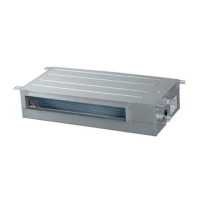
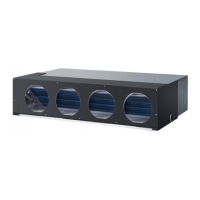
This document is an operation and installation manual for Haier duct-type air conditioners, covering models AD25S2SS1FA, AD35S2SS1FA, AD25S2SS2FA, AD35S2SS2FA, AD50S2SS1FA, AD50S2SS2FA, AD71S2SS1FA, and AD71S2SS2FA. The manual provides essential information for safe installation, operation, and maintenance of these units.

Function Description

The Haier duct-type air conditioner is designed for cooling and heating indoor spaces. It operates by circulating refrigerant to transfer heat between the indoor and outdoor environments. The unit is intended for use in various settings such as offices, restaurants, residences, shops, light industry, and farms. It features a "HOT KEEP" function during heating mode to prevent the discharge of cool air at startup and during defrosting, ensuring a comfortable indoor environment. The system automatically adjusts fan speed and operation mode based on room temperature and defrosting requirements.

Important Technical Specifications

  • Refrigerant: R32, a fluorinated greenhouse gas with a Global Warming Potential (GWP) of 675. The manual emphasizes that R32 is the only refrigerant to be used and warns against venting it into the atmosphere.
  • Applicable Ambient Temperature Range:
    • Cooling:
      • Indoor: 18/14°C (min DB/WB) to 32/23°C (max DB/WB)
      • Outdoor: 18°C (min DB/WB) to 46/24°C (max DB/WB)
    • Heating:
      • Indoor: 15°C (min DB/WB) to 27°C (max DB/WB)
      • Outdoor: -15°C (min DB/WB) to 24/18°C (max DB/WB)
  • Power Supply: The supply cord, if damaged, must be replaced by the manufacturer, its service agent, or similarly qualified persons. The fuse on the PC board should be T 3.15A/250VAC.
  • Wiring: The wiring method must comply with local wiring standards. An all-pole switch breaker with a minimum contact distance of 3mm is required for disconnection. The specification of power cable to the outdoor unit is HO5RN-F3G 4.0mm², and between indoor and outdoor units is HO5RN-F4G 2.5mm².
  • Installation Height: Recommended indoor unit installation height is 2.5m to 2.7m.
  • Terminal Block Distance: The distance between the indoor and outdoor unit terminal blocks should not exceed 5m. If it does, the wire diameter must be enlarged according to local wiring standards.
  • Static Pressure (ESP) Adjustment: The indoor unit PCB SW1-4 and SW1-5 can be adjusted to achieve four different static pressure settings: 0Pa, 10Pa, 20Pa, and 30Pa. This adjustment requires cutting off the power supply.
  • Refrigerant Pipe Sizes:
    • AD25S2SS1FA, AD35S2SS1FA, AD25S2SS2FA, AD35S2SS2FA: Gas side Ø9.52, Liquid side Ø6.35
    • AD50S2SS1FA, AD50S2SS2FA: Gas side Ø12.7, Liquid side Ø6.35
    • AD71S2SS1FA, AD71S2SS2FA: Gas side Ø15.88, Liquid side Ø9.52
  • Drain Pipe: Rigid PVC pipe VP20 mm (internal diameter) with foamed PE insulation (thickness above 7mm). The drain pipe must have a downward slope greater than 1/100 and a horizontal length of less than 20m.
  • Indoor Unit Dimensions (mm):
    • Models AD25S2SS1FA/AD35S2SS1FA/AD25S2SS2FA/AD35S2SS2FA: A=420, B=892, C=370, D=850, E=185, F=640, G=90, H=760, I=152.
    • Models AD50S2SS1FA/AD50S2SS2FA/AD71S2SS1FA/AD71S2SS2FA: A=420, B=1212, C=370, D=1170, E=185, F=960, G=90, H=1080, I=152.
  • Wire Controller Communication Wiring: Uses 3-core shielded wire. Lengths and corresponding wire dimensions are specified: <100m (0.3mm²x3-core), >100m and <200m (0.5mm²x3-core), >200m and <300m (0.75mm²x3-core), >300m and <400m (1.25mm²x3-core), >400m and <600m (2mm²x3-core). One side of the shielded sheet must be earthed.

Usage Features

  • Wire Controller Connectivity: Supports three connection methods:
    • One wired controller controlling up to 6 indoor units (master unit connected directly, others via polar wire).
    • One wired controller controlling one indoor unit.
    • Two wired controllers controlling one indoor unit (master and slave controllers).
  • Heating Mode ("HOT KEEP" function):
    • Startup: Fan stops for 2-3 minutes to prevent cool air discharge, then switches to ordinary heating.
    • Defrosting: Heating stops for 5-12 minutes approximately once per hour for defrosting, then resumes ordinary heating.
    • Room Thermostat Actuation: Fan speed automatically adjusts or stops under low indoor heat exchanger temperature conditions, then switches back to ordinary heating when temperature drops.
  • Warming Operation: Utilizes a heat pump mechanism to concentrate outdoor heat for indoor warming. Warming capacity may decrease with outdoor temperature drop, suggesting supplementary heating if insufficient.
  • Warm-up Period: Due to the circulation of warm air, it takes time for the room temperature to rise. Starting the unit earlier in cold mornings is recommended.
  • Troubleshooting: The manual includes a comprehensive troubleshooting guide with failure codes (indicated by LED flashes on the indoor PCB or wired controller) and possible causes, distinguishing between malfunctions and normal operational sounds (e.g., refrigerant flow, plastic expansion/contraction, smells from tobacco smoke/cosmetics, white fog from oil fumes, automatic FAN mode switching, delayed restart, fan speed adjustment during dehumidifying, AUTO mode changes, water/steam from outdoor unit during heating).

Maintenance Features

  • Regular Cleaning:
    • Unit: Clean with a soft, dry cloth. For heavy dirt, use a neutral detergent dissolved in lukewarm water, wipe, then clean with plain water.
    • Air Filter: Clean by lightly tapping or using a cleaner. Water cleaning is more effective. For very dirty filters, dissolve neutral detergent in lukewarm water (approx. 30°C), rinse, and thoroughly wash off detergent with plain water. Dry before reinstallation.
  • Post-Season Care:
    • Operate in FAN mode for half a day on a fair day to dry the unit's interior.
    • Stop operation and turn off the power supply switch.
    • Clean and reinstall the air filter.
  • Pre-Season Care:
    • Check for obstructions at air inlets and outlets of both indoor and outdoor units.
    • Ensure the air filter is clean.
    • Turn on the power supply switch 12 hours before starting operation.
  • Professional Maintenance:
    • The manufacturer recommends professional installation and servicing by qualified personnel.
    • Special inspection/maintenance service is necessary every three years (or sooner in dusty environments) to prevent capacity decrease due to internal contamination. A maintenance contract is recommended.
    • Electrical repairs must be carried out by qualified electricians.
    • For refrigerant handling (installation, moving, repair, disposal), only trained and certified professional personnel should perform the work, adhering to national competency standards and ISO 14903 for mechanical connectors.
    • The manual provides detailed instructions for refrigerant handling, including charging procedures, leak detection, and decommissioning, emphasizing safety precautions such as proper grounding, ventilation, and the use of appropriate equipment.
  • Disposal:
    • Old air conditioners must be rendered inoperative and safe before disposal.
    • Refrigerants require specialized waste disposal by qualified installers in accordance with local and national legislation.
    • Packaging materials (cardboard, polyethylene bags, foam pads) are recyclable.
    • Waste batteries from the remote controller must be removed and disposed of separately.
    • The product is marked with a symbol indicating it should not be mixed with unsorted household waste and should be treated at a specialized facility for reuse, recycling, and recovery.

Haier AD50S2SS1FA Specifications

General IconGeneral
BrandHaier
ModelAD50S2SS1FA
CategoryAir Conditioner
LanguageEnglish

Related product manuals