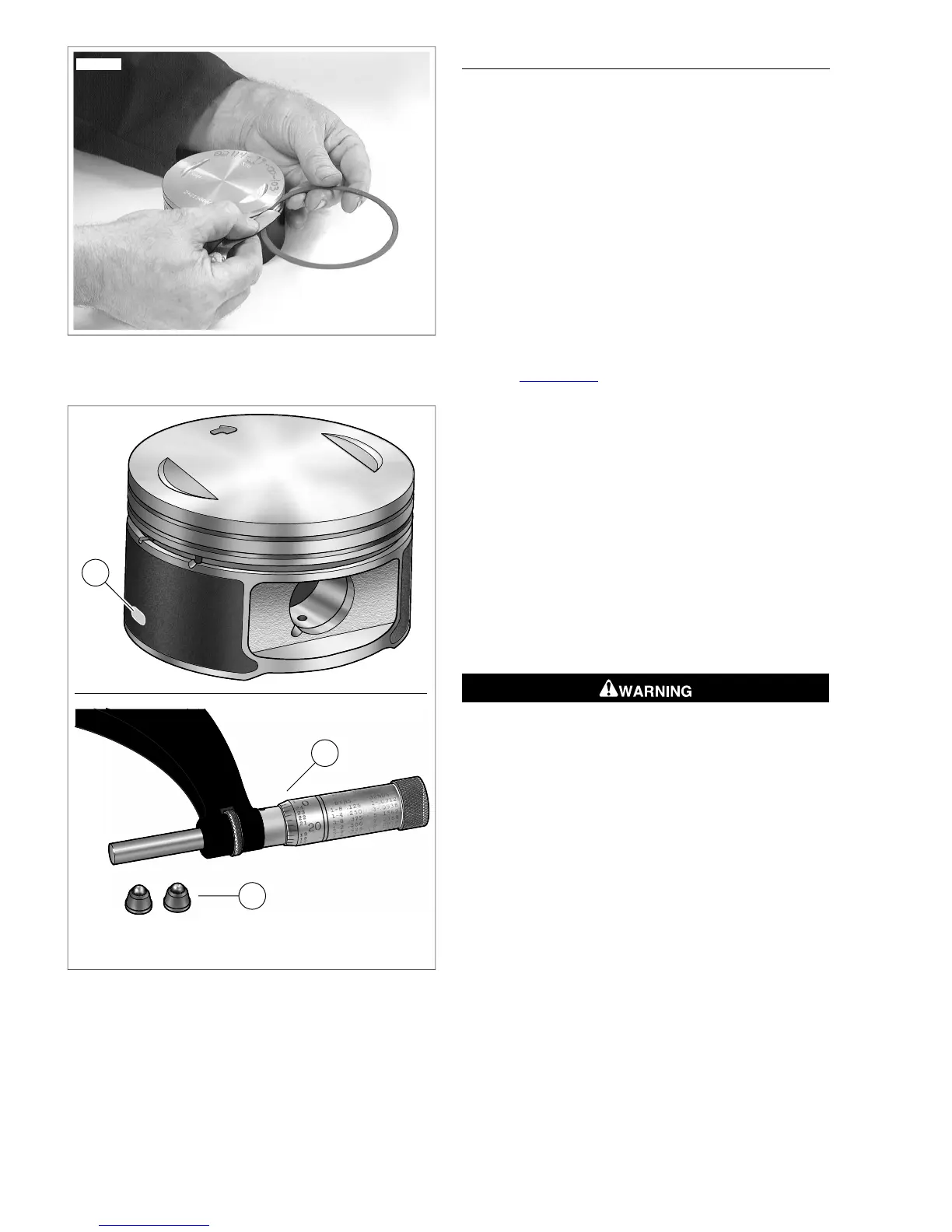
1. Bare aluminum
2. 4-5 inch micrometer
3. Spherical ball anvil adapters
Figure 3-108. Measuring Running Clearance of Piston
ASSEMBLY
Checking Piston Ring Gap
NOTES
• Always use new piston rings. Piston rings take a definite
set and must not be reused if the engine has been oper-
ated. Always deglaze (or hone) the cylinder before
installing new rings. Ring sets are available to fit oversize
pistons.
• Insufficient ring gap may cause the ends to abut at engine
operating temperatures, resulting in ring breakage, cylinder
scuffing and/or piston seizure.
• Excessive ring gap results in high oil consumption and
blow-by of exhaust gases. While blow-by contaminates
the oil supply and leaves sludge in the crankcase, it also
reduces engine efficiency by weakening the combustion
seal necessary for efficient transfer of energy to the piston.
1. See Figure 3-109. Check ring gap before placing each
ring on the piston.
a. Insert the new ring into the cylinder and square it in
the bore using the top of the piston. Measure the ring
gap with a feeler gauge.
b. Top compression ring gap must be 0.010-0.020
in. (0.25-0.51 mm).
c. Second compression ring gap must be 0.014-0.024
in. (0.36-0.61 mm).
d. Oil control rail gap must be 0.010-0.050 in. (0.25-1.27
mm).
NOTE
Ring end gap dimensions also apply to oversize rings. Replace
ring if end gap exceeds specification. If end gap is under spe-
cification, filing is permissible.
Compressed air can pierce the skin and flying debris from
compressed air could cause serious eye injury. Wear
safety glasses when working with compressed air. Never
use your hand to check for air leaks or to determine air
flow rates. (00061a)
2. Use compressed air to remove any dirt or dust that may
have settled in the oil drain holes and piston ring grooves.
3-78 2008 Dyna Service: Engine



 To Next Page