66
(3) Action of tilt-lock valve
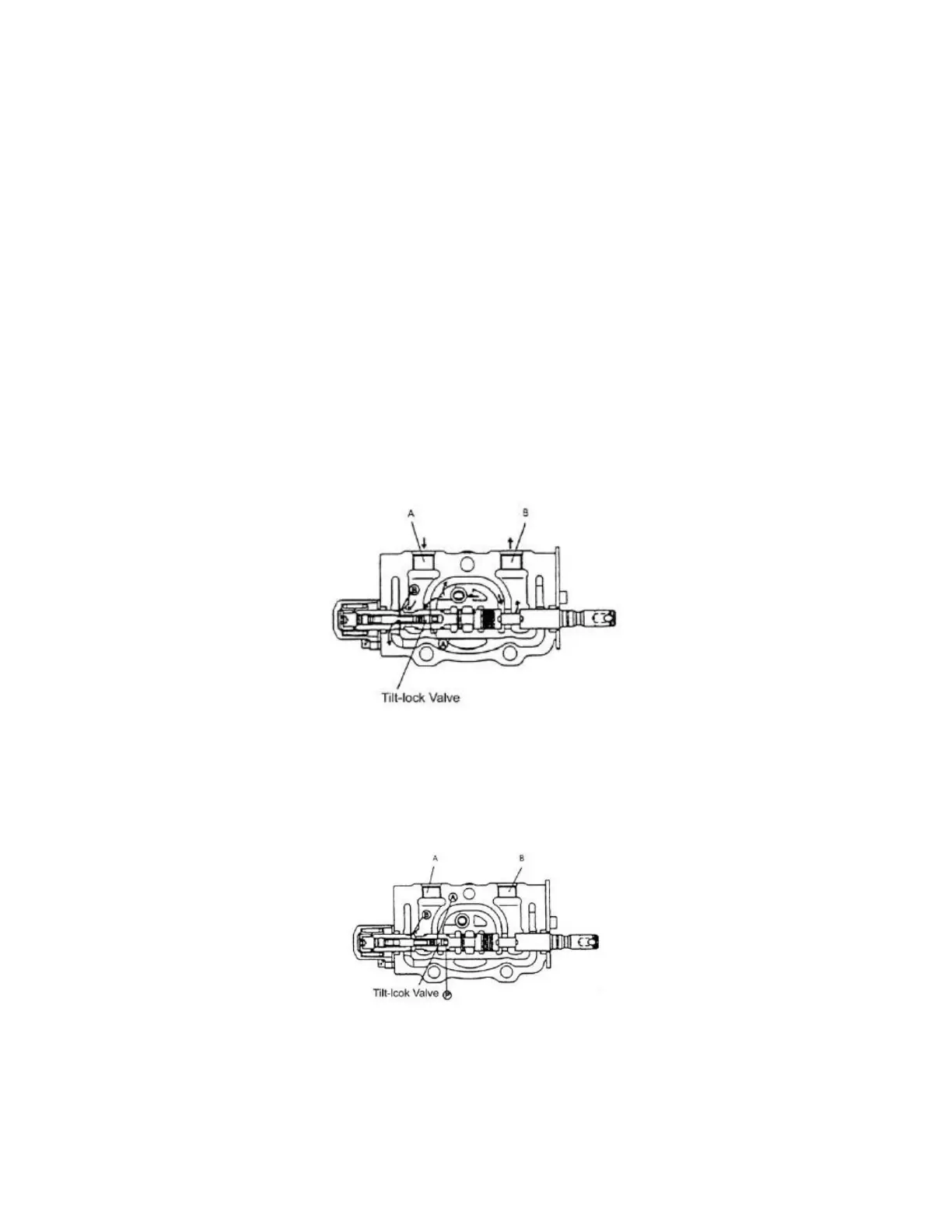
Tilt spool valve housing contains a tilt-lock valve. The tilt lock valve is intended to
prevent vibrations of the mast resulting from the negative pressure in the tilt cylinder and
also to avoid danger incurred from mishandling of the spool. When the lift motor isn’t
running, the mast doesn’t be tilted forward by push the tilt lever.
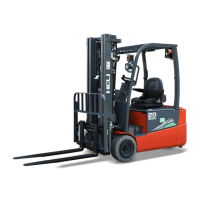
See Fig. 5-11, when the spool is pushed in. See Fig. 5-12, when the lift motor stops.
a) The spool is pushed in
The pressure oil flows through the port “B” to tilt cylinder and moves the tilt-lock
valve to let the port “A” connect with the low-pressure tank. The tilt cylinder and the
mast is tilted forward.
Fig. 5-11
b) The spool is pushed in (when the lift motor stops)
When the lift motor stops, no pressure oil flows to the tilt-lock valve. The port “A”
can’t connect with the low-pressure tank and the mast doesn’t be tilted forward.
Fig. 5-12
(4) Operation of the control valve
The control valve is operated with the valve levers. All valve levers are assembled



 To Next Page