EasyManua.ls Logo

Hisense 3 Series - User Manual

Hisense 3 Series
28 pages
Print Icon
To Next Page IconTo Next Page
Loading...
Question and Answer IconNeed help?

Do you have a question about the Hisense 3 Series and is the answer not in the manual?

Summary

SAFETY INFORMATION

General Precautions

Manufacturer's rights and importance of reading the manual.

Electrical and Water Safety

Ensuring safe electrical connections and water supply.

Appliance Use and Supervision

Guidelines for use by children and supervision requirements.

Ventilation and Placement

Ensuring ventilation openings are not obstructed by carpets.

Usage Restrictions and Age Limits

Keeping young children away and intended for private domestic use.

Technical Specifications and Guidelines

Water pressure limits, washing capacity, and intended applications.

BEFORE USING THE WASHING MACHINE

Removing Packaging and Inspection

Checking for damage and presence of accessories after unpacking.

Removing Transport Bolts

Instruction to remove transport bolts before use to prevent damage.

Installing the Washing Machine

Guidance on placing the machine on a level surface and checking feet.

Water Inlet Connection

How to connect the water supply inlet hose correctly.

Drain Hose Connection

Connecting the drain hose to a siphon or sink.

Electrical Connection

Requirements for electrical connection by qualified technicians.

Minimum Housing Dimensions

Specifies minimum dimensions for housing the appliance.

PRECAUTIONS AND GENERAL RECOMMENDATIONS

Packaging Disposal

Information on recycling packaging materials according to local regulations.

Disposing of Packaging and Scrapping Old Machines

Guidelines for environmentally sound disposal of the appliance.

Location and Surroundings

Recommendations for optimal installation location and avoiding flammable fluids.

General Safety Precautions

Advice on unplugging, handling wet hands, and switching off before maintenance.

Cleaning Exterior and Door Seal

How to clean the appliance exterior and check the door seal.

EMERGENCY DOOR OPENING

Emergency Door Opening Procedure

Steps for opening the door in case of power failure or malfunction.

BEFORE THE FIRST WASH CYCLE

Initial Wash Cycle without Laundry

Instructions for running a short cycle without clothes to remove residual water.

PREPARATION OF THE WASHING

Sorting Laundry

Guidelines for sorting laundry by fabric type, colour, and size.

Emptying Pockets

Importance of emptying pockets to prevent damage to laundry and appliance.

Fasteners and Stain Removal

Advice on closing fasteners and pre-treating stains.

Pre-treating Stains and Dyeing

Using stain removers and appropriate dyes for washing machines.

Loading the Laundry

How to load laundry into the drum correctly.

DETERGENTS AND ADDITIVES

Choosing the Right Detergent

Factors influencing detergent choice, like fabric type, colour, and water hardness.

Detergent Dosage and Remarks

Recommendations for detergent dosage and notes on residues and solvents.

Detergent Dosage Factors

Factors affecting detergent dosage like soiling, load size, and water hardness.

Detergent and Additive Placement

Where to place detergent and additives in the drawer compartments.

Notes on Detergents and Additives

Important notes on storing, using, and types of detergents and additives.

CARE AND MAINTENANCE

Cleaning Appliance Exterior and Door Seal

Instructions for cleaning the washing machine's exterior and door seal.

Cleaning the Detergent Dispenser

Step-by-step guide to removing and cleaning the detergent dispenser.

Filter Cleaning

Recommendation to check and clean the filter regularly.

Filter Cleaning Procedure

Detailed procedure for draining and cleaning the filter.

Water Supply Hose Maintenance

Checking the water supply hose for damage and replacing if necessary.

Mesh Filter for Water Connection

Checking and cleaning the mesh filter at the water connection.

TROUBLESHOOTING GUIDE

Machine Will Not Start (No Indicator Lamps)

Troubleshooting steps for when the washing machine does not start.

Machine Will Not Start (Start;Pause Lamp Flashes)

Diagnosing issues when the Start/Pause indicator lamp flashes.

Appliance Stops During Programme

Reasons why the appliance might stop during a wash cycle.

Detergent Residue in Drawer

Troubleshooting detergent residue left in the dispenser drawer.

Machine Vibrates During Spin Cycle

Identifying causes for excessive vibration during the spin cycle.

Poor Final Spin Results

Explaining imbalance detection and tips for improving spin results.

Programme Time Display Adjustments

Understanding why the programme time display may change during a cycle.

Hot; Cold fill fault - For Models with Dual Inlets

Connecting Dual Water Supply

Instructions for connecting hot and cold water supply to dual inlet models.

For Models with Single Inlet

Connecting Single Water Supply

Instructions for connecting cold water supply to single inlet models.

Child Safety and Porthole Temperature

Warnings about children's access and potential porthole door heat.

Fault Code List

Fault Code F01 (Water Inflow)

Troubleshooting water inflow faults (F01).

Fault Code F03 (Drainage)

Troubleshooting drainage faults (F03).

Fault Code F13 & F14 (Door Lock;Open)

Resolving door lock and door open faults (F13, F14).

Fault Code F24 (Overflow;Foam)

Addressing overflow or excessive foam issues (F24).

Fault Codes F04-F98 (Electronic Module)

Troubleshooting electronic module faults (F04-F98).

Fault Code Unb (Unbalance Alarm)

Resolving unbalance alarms (Unb) due to laundry winding or light loads.

Before Contacting After-Sales Service

Steps to take before calling customer support for issues.

TRANSPORT;HANDING

Transport and Handling Procedures

Instructions for safely moving and transporting the washing machine.

ELECTRICAL CONNECTION

Electrical Connection Requirements

Safety guidelines and requirements for electrical connections.

INSTALLATION GUIDE

Installation Warnings

Warnings about potential noise, vibration, and leaks from incorrect installation.

BEFORE USING THE WASHER, PLEASE REMOVE TRANSPORT BOLTS!

Transport Bolt Removal Procedure

Detailed steps for removing transport bolts for safe operation.

ADJUSTMENT OF THE FEET

Leveling the Appliance

How to adjust the appliance's feet to ensure it is level.

INSTALL BOTTOM COVER

Noise-Reduction Bottom Plate Installation

Instructions for installing the bottom cover for noise reduction.

CONNECT THE WATER SUPPLY INLET HOSE

Connecting Water Inlet Hose

Guides on connecting the water inlet hose, with important attention points.

CONNECT THE DRAIN HOSE

Connecting Drain Hose

Instructions for connecting the drain hose, including sink connection and notes.

Overview

This document is the User's Operation Manual for a Hisense washing machine, providing comprehensive instructions for its safe and efficient use, installation, and maintenance.

Function Description:

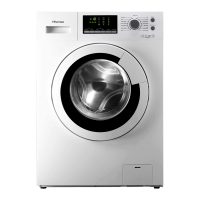
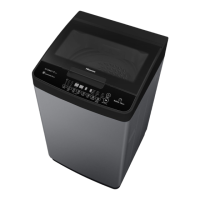
The Hisense washing machine is designed for domestic use to clean laundry. It offers various wash cycles tailored to different fabric types, colors, and levels of soiling. The machine incorporates automatic safety functions to detect and react to faults, ensuring safe operation. It also features an imbalance detection and correction system to optimize spin cycles and protect the appliance. The washing machine is equipped with a detergent dispenser for prewash, main wash, and softener, accommodating both powder and liquid detergents.
Important Technical Specifications:

  • Washing Capacity: The maximum washing capacity ranges from 7/8/9/10/11/12kg, depending on the specific model.
  • Water Pressure: The maximum permissible inlet water pressure is 1 MPa, and the minimum permissible inlet water pressure is 0.1 MPa for correct operation.
  • Electrical Connection: The appliance requires a grounded socket with an earth connection and an adequate electric supply for a 10 A Current Rating. It should not be used with extension leads or multiple sockets.
  • Hose-sets: New hose-sets are supplied with the appliance and should be used; old hose-sets should not be reused.
  • Drain Hose Length: The maximum overall drain hose length is 2.50 m.
  • Housing Dimensions: Minimum housing dimensions are 615 mm width and 855 mm height. Depth depends on the program chart.
  • Weight: The machine is over 55 kg, requiring two persons for transport.
  • Water Inlet: Models can have either a single inlet (cold water only) or dual inlets (hot and cold water).
  • Water Tap Connector: 3/4 threaded hose connector.

Usage Features:

  • Program Selection: Users can select from various programs for different fabric types (cottons, mixed fibres, easy care/synthetics, wool, handwash items).
  • Detergent Dispenser: The detergent drawer has three chambers for prewash/soak detergent, main wash detergent (including stain remover and water softener), and fabric softener.
  • Loading Laundry: Instructions emphasize loading articles loosely without overfilling to ensure satisfactory washing results and prevent creasing.
  • Stain Removal: The machine's automatic enzyme phase helps remove common stains like blood, milk, and eggs. Additional stain removers can be added to the main wash chamber for tougher stains.
  • Dyeing: Only dyes suitable for washing machines should be used, following manufacturer's instructions.
  • Emergency Door Opening: In case of power outage or other special circumstances, the door can be opened manually via a lock lever at the drainage pump door, provided the inner barrel has stopped, temperature is not high, and water level is below the clothing inlet.
  • Fault Code Display: The machine displays fault codes (e.g., "F01" for water inflow, "F03" for drainage, "F13" for door lock, "F14" for door unlock, "F24" for overflow/foam, "Unb" for unbalance) to help diagnose and troubleshoot issues.
  • Time Display: Models with a time display will show the program duration, which may be lengthened or shortened based on factors like foam formation, load imbalance, and water temperature.

Maintenance Features:

  • Exterior and Control Panel Cleaning: Can be cleaned with a soft, damp cloth and a neutral (non-abrasive) detergent.
  • Door Seal Cleaning: Should be cleaned with a damp cloth periodically.
  • Detergent Dispenser Cleaning: The dispenser can be removed and washed under running water. This involves pressing a release lever, removing the siphon, washing all parts, and then refitting them.
  • Filter Cleaning: The filter should be checked and cleaned regularly (at least two or three times a year), especially if drainage is poor or spin cycles fail. Instructions detail how to drain residual water, unscrew and clean the filter, and check the pump rotor.
  • Water Supply Hose Check: The supply hose should be regularly checked for brittleness and cracks and replaced if necessary with a new hose of the same type.
  • Mesh Filter for Water Connection: The mesh filters in the water inlet hose should be checked and cleaned regularly to prevent blockages.
  • Transport Bolts: These must be removed before using the machine and refitted for future transport. The manual provides detailed steps for removal and installation of transport bolt covers.
  • Bottom Cover Installation: A noise-reduction bottom cover is supplied with some models to reduce noise levels. Instructions are provided for its installation, involving attaching acoustic wool and securing the cover to the machine's base.

Hisense 3 Series Specifications

General IconGeneral
BrandHisense
Model3 Series
CategoryWasher
LanguageEnglish

Related product manuals