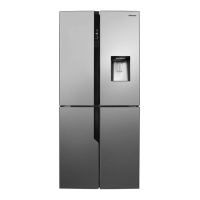
This document describes the Hisense Refrigerator, a household appliance designed for storing food and beverages. It emphasizes safe operation, proper installation, and effective maintenance to ensure longevity and optimal performance.
Function Description
The Hisense Refrigerator is designed to keep food fresh and beverages chilled. It features multiple compartments with adjustable temperature settings, including a fridge, a freezer, and a "My Fresh Choice" two-star compartment. The appliance uses isobutene (R600a) as a refrigerant, a natural gas with high environmental compatibility.
Key functions include:
- Temperature Control: Users can set desired temperatures for the fridge (2°C to 8°C), freezer (-15°C to -25°C), and "My Fresh Choice" compartment (-5°C to -18°C) using dedicated buttons on the display panel.
- Super Cool: This function rapidly refrigerates food, helping to preserve freshness for longer periods. It automatically switches off after 6 hours, returning the fridge temperature to 2°C.
- Super Freeze: Designed for quick freezing, this feature lowers the freezer temperature to -25°C, preserving vitamins and nutrients. It automatically deactivates after 26 hours.
- Artificial Intelligence Mode: When activated, this mode automatically sets the refrigerator temperature to 5°C and the freezer temperature to -18°C, optimizing performance.
- Energy Saving Mode: This mode sets the refrigerator to 6°C and the freezer to -17°C to minimize energy consumption.
- Holiday Mode: For extended periods of absence, this mode sets the refrigerator to 15°C and the freezer to -18°C to reduce energy use. It's important not to store food in the fridge during this mode.
- Lock Function: The display panel can be locked to prevent accidental changes to settings.
- Door Alarm: An alarm sounds if any door is left open for more than 2 minutes, and the control panel displays "DA". The alarm stops automatically after 8 minutes or when the door is closed.
- Water Dispenser: Located in the fridge door, this feature provides chilled drinking water without opening the main compartment. It includes a child lock for safety.
- Twistable Ice Tray: Found in the freezer, this tray allows for easy production and storage of ice cubes.
Usage Features
The refrigerator is designed for user convenience and efficient food storage.
Installation and Placement:
- The appliance should be placed in a dry area, away from direct sunlight, rain, frost, and heat sources like stoves or heaters.
- Adequate ventilation is crucial for efficient cooling and energy saving. A minimum of 100mm space from the back to the wall, 300mm from the top, and 200mm from the sides is recommended.
- The appliance should be leveled using the adjustable bottom feet, with a slight backward tilt (about 10mm) to allow doors to self-close.
- The power plug must be accessible after installation.
Food Storage:
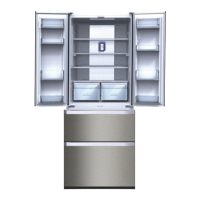
- Fridge Chamber: Suitable for vegetables and fruits. Separate packing is recommended to prevent moisture loss and flavor permeation. Glass shelves can be adjusted to various heights. Crisper drawers, mounted on telescopic slides, are designed for vegetables and fruits, with a humidity control sliding block to adjust airflow. Higher humidity is recommended for vegetables, while lower humidity suits fruit preservation.
- Freezer Drawers: Ideal for foods requiring freezing, such as meat and ice cream. Bottles should not be stored in the freezer to prevent breakage.
- Door Racks: Suitable for eggs, canned liquids, bottled drinks, and packed food. Avoid placing excessively heavy items. Middle door racks are height-adjustable.
- General Tips:
- Do not place hot food directly into the refrigerator or freezer, as this increases internal temperature and compressor workload.
- Cover or wrap food, especially items with strong flavors, to allow air to circulate freely.
- Store meat wrapped in polythene food wrap on the glass shelf above the vegetable drawer.
- Cooked food and cold dishes should be covered and can be placed on any shelf.
- Do not store explosive substances or aerosol cans with flammable propellants.
- Avoid placing carbonated or fizzy drinks in the freezer compartment to prevent explosions.
- Do not consume ice popsicles or ice cubes directly from the freezer to avoid frost burns.
- Label and date frozen packages to track storage time.
Water Dispenser Usage:
- Fill the water tank with up to 3.5L of drinking water, ensuring it is steady and correctly positioned.
- The tank can be filled by removing the small lid and pouring water into the larger inlet, or by removing the entire tank cover.
- Ensure the lock device is in the "Unlock" position before dispensing water.
- Use appropriate cups to receive water. Do not push the dispenser lever forward without a cup to prevent leakage.
Maintenance Features
Regular cleaning and proper care are essential for the appliance's hygiene and longevity.
Cleaning:
- Frequency: Clean the appliance (exterior and interior accessories) regularly, at least every two months.
- Safety First: Always switch off the appliance and disconnect the mains plug before cleaning to prevent electrical shock.
- Exterior Cleaning:
- Wipe the digital panel and display with a clean, soft cloth.
- Spray water onto the cleaning cloth rather than directly onto the appliance surface for even moisture distribution.
- Clean doors, handles, and cabinet surfaces with a mild detergent, then wipe dry with a soft cloth.
- Avoid sharp objects that could scratch surfaces.
- Do not use thinners, car detergents, Clorox, ethereal oil, abrasive cleansers, or organic solvents like Benzene, as these can damage the surface and pose a fire risk.
- Interior Cleaning:
- Clean the interior regularly, especially when food stocks are low.
- Wipe the inside with a weak solution of bicarbonate of soda, then rinse with warm water using a wrung-out sponge or cloth.
- Thoroughly dry all surfaces and removable parts before reassembling.
- To clean crisper chambers or freezer drawers, empty them, pull them out to the fully open position, lift them from the lateral slides, and then push the slides fully in to avoid damage when closing the door.
- Door Seals Cleaning: Keep door seals clean to prevent stickiness and tearing. Wash with mild detergent and warm water, rinse, and dry thoroughly before powering on the appliance.
- Water Dispenser Cleaning:
- Carefully remove the water tank from the door.
- Wash the tank, lid, and head gently with water.
- Dry all parts thoroughly, either naturally or with a dryer.
- Regularly clean the receiving tank with a dry towel to prevent overflow onto the floor.
Defrosting:
- The Hisense Refrigerator is a frost-free appliance, meaning it defrosts automatically.
- Water from defrosting is drained into a drip tray and evaporated.
- If a thick layer of frost forms on freezer compartment walls due to frequent or prolonged door openings, remove existing food and accessories, unplug the appliance, and leave the doors open to accelerate thawing.
- After defrosting, clean the freezer as described above.
- Do not use sharp objects to remove frost. Only plug the appliance back in once the interior is completely dry.
Replacing LED Light:
- The LED light must not be replaced by the user. Contact customer service for assistance if the LED light is damaged.
- To replace, unplug the appliance, remove the light cover by pushing up and out, then pull the LED cover while pressing the connector latch. Replace with a new LED light and snap it into place.
Switching Off for Extended Periods:
- If the appliance will be off for a long time, remove all food, unplug the power cord, clean and dry the interior thoroughly, and wedge the doors open slightly to allow air circulation and prevent mold.
This comprehensive guide ensures users can effectively operate, maintain, and troubleshoot their Hisense Refrigerator for optimal performance and safety.

 Need help?
 General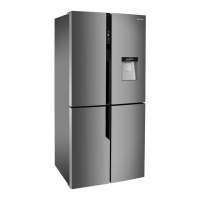


 To Next Page