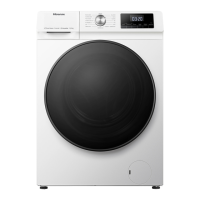
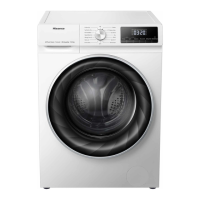
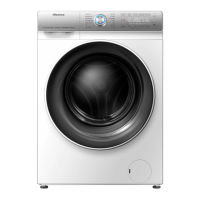
This document serves as the user's operation manual for a Hisense washing machine, specifically models WDQY8014*, WDQY8014EVJM*, WDQA8014EVJM*, WDQY9014EVJM*, WDQY901418VJM*, WDQA9014EVJM*, WDQY1014EVJM*, and WDQA1014EVJM*. It provides comprehensive instructions for safe operation, installation, maintenance, and troubleshooting, ensuring users can effectively utilize their appliance.
Function Description
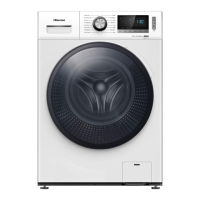
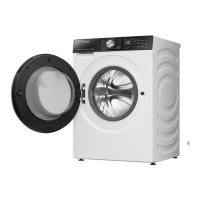
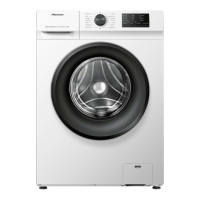
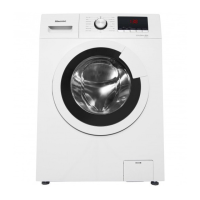
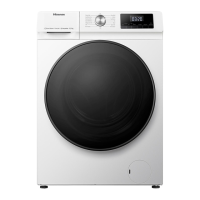
The Hisense washing machine is designed for domestic use, offering various wash cycles and features to clean different types of fabrics. It is a front-load machine, requiring high-efficiency, low-foam detergent. The appliance is capable of both washing and, for some models, tumble drying, with maximum washing capacities ranging from 8kg to 10kg and drying capacities from 5kg to 7kg.
Key functions include:
- Washing Cycles: The machine offers a range of programs suitable for different fabric types such as cottons, mixed fibres, easy care/synthetics, wool, and handwash items. Users can select programs based on fabric type, color, wash temperature, and degree of soiling.
- Detergent Dispensing: The detergent drawer is equipped with three chambers for prewash detergent/soak, main wash detergent/stain remover/water softener, and fabric softener. This allows for precise dispensing of various additives during the wash cycle.
- Spin Cycle: The machine includes a spin function to remove excess water from laundry. It features an imbalance detection and correction system that may adjust spin speed or interrupt the spin if a significant imbalance is detected, protecting the machine.
- Emergency Door Opening: In case of power outage or other issues preventing the door from opening, an emergency door lock lever is provided near the drainage pump door for manual release. This feature requires ensuring the inner barrel has stopped, is not hot, and the water level is below the clothing inlet before activation.
- Automatic Safety Functions: The washing machine is equipped with various safety functions to detect and react to faults, often allowing minor issues to be resolved quickly.
Usage Features
The manual outlines several features and recommendations for optimal use:
- Preparation of Washing: Users are advised to sort laundry by fabric type, care label symbol, and color. It's recommended to wash items of different sizes together for improved efficiency and distribution. Delicates and items with hooks should be placed in a cloth bag or pillowcase. All pockets must be emptied, and fasteners like zips and buttons should be closed. Loose belts or ribbons should be tied.
- Stain Removal: The machine's automatic enzyme phase typically removes blood, milk, and egg stains. For red wine, coffee, tea, grass, and fruit stains, a stain remover can be added to the main wash chamber. Heavily-soiled areas may require pre-treatment.
- Dyeing: Only dyes suitable for washing machines should be used, following the manufacturer's instructions. Users are warned that plastic and rubber parts of the machine can be stained by dyes.
- Loading Laundry: Laundry should be loaded loosely into the drum without overfilling to ensure satisfactory washing results and prevent creasing. Load sizes specified in the quick reference guide should be observed.
- Detergent Choice and Dosage: The choice of detergent depends on fabric type, color, wash temperature, and soiling. High-efficiency, low-foam detergent is required for front-load machines. Dosage recommendations on the detergent pack should be followed, adjusting for load size (full, half, or minimum) and water hardness. Overdosing can lead to excessive foam and reduced washing efficiency, while underdosing can result in grey laundry and calcification of heating elements.
- Water Inlet Options: Depending on the model, the machine may have a single inlet for cold water only or dual inlets for both hot and cold water. Specific instructions are provided for connecting the water supply hoses, including the use of a Y-piece connector for single cold fill on dual-inlet models.
- Drainage: The drain hose can be connected to a siphon or hooked over a sink edge using the supplied "U" bend. It must be securely fixed to prevent scalding.
- Installation: The appliance should be installed on a solid, level floor surface. If on a wooden floor, a plywood sheet is recommended to distribute weight. The four leveling feet can be adjusted to ensure stability. Transport bolts must be removed before use, and the openings covered with plastic caps.
Maintenance Features
Regular maintenance is crucial for the longevity and performance of the washing machine:
- Appliance Exterior and Control Panel: These can be cleaned with a soft, damp cloth and a little neutral, non-abrasive detergent, then dried with a soft cloth.
- Door Seal: The door seal should be cleaned with a damp cloth as needed and its condition checked periodically.
- Detergent Dispenser: The detergent drawer should be cleaned regularly. This involves pressing the release lever, removing the drawer, taking out the siphon in the softener slot, washing all parts under running water, and then refitting them.
- Filter: The filter should be checked and cleaned regularly (two or three times a year), especially if draining issues or spin cycle failures occur, or if the pump is blocked by foreign objects. Before cleaning, the appliance must be stopped, unplugged, and the water cooled. The process involves opening the bottom baffle, draining residual water, unscrewing and removing the filter, cleaning it and its chamber, checking the pump rotor, and then re-inserting and securing the filter.
- Water Supply Hose: The supply hose should be checked regularly for brittleness and cracks and replaced if necessary with a new hose of the same type.
- Mesh Filter for Water Connection: This filter should be checked and cleaned regularly. The process involves closing the tap, loosening the inlet hose, cleaning the internal mesh filter, unscrewing the inlet hose from the machine, pulling off and cleaning the mesh filter from the machine connection, and then refitting everything, ensuring water-tight connections.
- Transport Bolts: The transport bolts, crucial for safe transport, should be kept for future use. If the appliance needs to be moved again, they should be refitted in reverse order of removal.
- Bottom Cover (Noise Reduction): For models supplied with a bottom cover for noise reduction, installation instructions are provided. This involves attaching acoustic wool to the cover, tilting the washer, and securing the cover to the bottom of the machine. While recommended for quieter operation, the machine can be used without it.

 Need help?
 General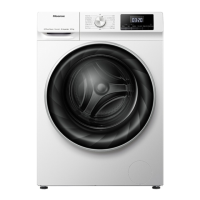


 To Next Page