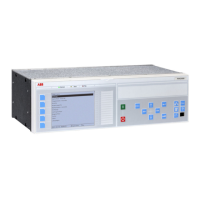
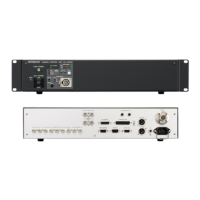
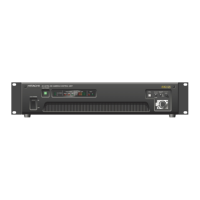
This document serves as the commissioning manual for the Relion® 670 SERIES Busbar protection REB670, Version 2.2 IEC. It provides instructions for commissioning the IED (Intelligent Electronic Device), and can also be used by system engineers and maintenance personnel for testing. The manual covers procedures for checking external circuitry, energizing the IED, parameter setting and configuration, and verifying settings via secondary injection. It outlines the process of testing an IED in a substation not yet in service, with chapters organized chronologically according to the commissioning sequence. Relevant procedures can also be followed during service and maintenance activities.
Function Description
The REB670 is a busbar protection IED designed for various substation automation systems. It includes main protection functions, back-up protection functions, control and monitoring functions, and communication capabilities.
Main Protection Functions:
The device offers busbar differential protection with different configurations:
- BUTPTRC, BCZTPDIF, BZNTPDIF, BZITGGIO, BUTSM4: 2 zones, three-phase/4 bays (1 instance).
- BUTPTRC, BCZTPDIF, BZNTPDIF, BZITGGIO, BUTSM8: 2 zones, three-phase/8 bays (1 instance for A20, 1 for A31).
- BUSPTRC, BCZSPDIF, BZNSPDIF, BZISGGIO, BUSSM12: 2 zones, single-phase/12 bays (1 instance for B20, 1 for B21).
- BUSPTRC, BCZSPDIF, BZNSPDIF, BZISGGIO, BUSSM24: 2 zones, single-phase/24 bays (1 instance for B31).
- BDZSGAPC, BFPTRC, BICPTRC, BZNPDIF, BCZPDIF, BSMGAPC: 6 zones, single-phase/24 bays (1 instance).
- BDCGAPC: Status of primary switching object for busbar protection zone selection (128 instances, with varying numbers for specific configurations like 20 for A20, 40 for A31, B20, B21, and 96 for B31).
Back-up Protection Functions:
The REB670 includes a range of back-up protection functions:
- Current Protection:
- OC4PTOC (51_67): Directional phase overcurrent protection, four steps (0-8 instances, 4-C06 for A20, 8-C07 for A31). Requires voltage for 67 functionality.
- PH4SPTOC (51): Single phase overcurrent protection, four steps (0-24 instances, 12-C08 for B20, B21, 24-C09 for B31).
- EF4PTOC (51N_67N): Directional residual overcurrent protection, four steps (0-8 instances). Requires voltage for 67N functionality.
- NS4PTOC (46I2): Directional negative phase sequence overcurrent protection, four steps (0-8 instances).
- TRPTTR (49): Thermal overload protection, two time constants (0-2 instances).
- CCRBRF (50BF): Breaker failure protection (0-8 instances, 4-C10 for A20, 8-C11 for A31).
- CCSRBRF (50BF): Breaker failure protection, single phase version (0-24 instances, 12-C12 for B20, B21, 24-C13 for B31).
- GUPPDUP (37): Directional underpower protection (0-4 instances).
- GOPPDOP (32): Directional overpower protection (0-4 instances).
- CBPGAPC: Capacitor bank protection (0-2 instances).
- Voltage Protection:
- UV2PTUV (27): Two step undervoltage protection (0-2 instances).
- OV2PTOV (59): Two step overvoltage protection (0-2 instances).
- ROV2PTOV (59N): Residual overvoltage protection, two steps (0-2 instances).
- VDCPTOV (60): Voltage differential protection (0-2 instances).
- LOVPTUV (27): Loss of voltage check (0-2 instances).
- Frequency Protection:
- SAPTUF (81): Underfrequency protection (0-10 instances).
- SAPTOF (81): Overfrequency protection (0-6 instances).
- SAPFRC (81): Rate-of-change of frequency protection (0-6 instances).
- Multipurpose Protection:
- CVGAPC: General current and voltage protection (0-6 instances).
Control and Monitoring Functions:
- Control:
- SESRSYN (25): Synchrocheck, energizing check and synchronizing (0-3 instances).
- SMBRREC (79): Autorecloser (0-2 instances, 2-H05 for A20, A31, B20, B21, B31).
- APC30 (3): Control functionality for up to 6 bays, max 30 objects (6CBs), including interlocking (0-1 instance).
- QCBAY: Bay control (1+5/APC30 instances, 1 for A20, A31, B20, B21, B31).
- LOCREM: Handling of LR-switch positions (1+5/APC30 instances, 1 for A20, A31, B20, B21, B31).
- LOCREMCTRL: LHMI control of PSTO (1 instance for all configurations).
- SXCBR: Circuit breaker (24 instances for all configurations).
- SLGAPC: Logic rotating switch for function selection and LHMI presentation (15 instances for all configurations).
- VSGAPC: Selector mini switch (30 instances for all configurations).
- DPGAPC: Generic communication function for Double Point indication (32 instances for all configurations).
- SPC8GAPC: Single point generic control function, 8 signals (5 instances for all configurations).
- AUTOBITS: Automation bits, command function for DNP3.0 (3 instances for all configurations).
- SINGLECMD: Single command, 16 signals (8 instances for all configurations).
- I103CMD: Function commands for IEC 60870-5-103 (1 instance for all configurations).
- I103GENCMD: Function commands generic for IEC 60870-5-103 (50 instances for all configurations).
- I103POSCMD: IED commands with position and select for IEC 60870-5-103 (50 instances for all configurations).
- I103POSCMDV: IED direct commands with position for IEC 60870-5-103 (50 instances for all configurations).
- I103IEDCMD: IED commands for IEC 60870-5-103 (1 instance for all configurations).
- I103USRCMD: Function commands user defined for IEC 60870-5-103 (4 instances for all configurations).
- Secondary System Supervision:
- FUFSPVC: Fuse failure supervision (0-2 instances).
- VDSPVC (60): Fuse failure supervision based on voltage difference (0-2 instances).
- DELVSPVC (7V_78V): Voltage delta supervision (4 instances for all configurations).
- DELISPVC (7I): Current delta supervision (4 instances for all configurations).
- DELSPVC (78): Real delta supervision, real (4 instances for all configurations).
- Logic: Includes various configurable logic blocks like AND, GATE, INV, LLD, OR, PULSETIMER, RSMEMORY, SRMEMORY, TIMERSET, XOR (40-496 instances), and configurable logic blocks Q/T (0-1 instance).
- Monitoring:
- CVMMXN: Power system measurement (6 instances for all configurations).
- CMMXU: Current measurement (10 instances for all configurations).
- VMMXU: Voltage measurement phase-phase (6 instances for all configurations).
CMSQI: Current sequence measurement (6 instances for all configurations).
- VMSQI: Voltage sequence measurement (6 instances for all configurations).
- VNMMXU: Voltage measurement phase-earth (6 instances for all configurations).
- AISVBAS: General service value presentation of analog inputs (1 instance for all configurations).
- EVENT: Event function (20 instances for all configurations).
- DRPRDRE: Disturbance report (1 instance for all configurations).
- SPGAPC: Generic communication function for single point indication (96 instances for all configurations).
- SP16GAPC: Generic communication function for single point indication, 16 inputs (16 instances for all configurations).
- MVGAPC: Generic communication function for measured values (60 instances for all configurations).
- BINSTATREP: Logical signal status report (3 instances for all configurations).
- RANGE_XP: Measured value expander block (28 instances for all configurations).
- SSIMG (63): Insulation supervision for gas medium (21 instances for all configurations).
- SSIML (71): Insulation supervision for liquid medium (3 instances for all configurations).
- SSCBR: Circuit breaker condition monitoring (0-24 instances, 12 for A20, A31, B20, B21, 24 for B31).
- I103MEAS: Measurands for IEC 60870-5-103 (1 instance for all configurations).
- I103MEASUSR: Measurands user defined signals for IEC 60870-5-103 (3 instances for all configurations).
- I103AR: Function status auto-recloser for IEC 60870-5-103 (1 instance for all configurations).
- I103EF: Function status earth-fault for IEC 60870-5-103 (1 instance for all configurations).
- I103FLTPROT: Function status fault protection for IEC 60870-5-103 (1 instance for all configurations).
- I103IED: IED status for IEC 60870-5-103 (1 instance for all configurations).
- I103SUPERV: Supervision status for IEC 60870-5-103 (1 instance for all configurations).
- I103USRDEF: Status for user defined signals for IEC 60870-5-103 (20 instances for all configurations).
- L4UFCNT: Event counter with limit supervision (30 instances for all configurations).
- TEILGAPC: Running hour meter (6 instances for all configurations).
- CHMMHAI (ITHD): Current harmonic monitoring, 3 phase (0-3 instances, 3-M23 for A20, A31, B20, B21, B31).
- VHMMHAI (VTHD): Voltage harmonic monitoring, 3 phase (0-3 instances, 3-M23 for A20, A31, B20, B21, B31).
- FLTMMXU: Fault current and voltage monitoring (8 instances for all configurations).
- Metering:
- PCFCNT: Pulse-counter logic (16 instances for all configurations).
- ETPMMTR: Function for energy calculation and demand handling (6 instances for all configurations).
Communication:
The device supports various communication protocols:
- Station Communication: LONSPA, SPA, ADE (LON communication protocol), HORZCOMM (Network variables via LON), PROTOCOL (Operation selection between SPA and IEC 60870-5-103 for SLM), RS485PROT, RS485GEN, DNPGEN, CHSERRS485, CH1TCP, CH2TCP, CH3TCP, CH4TCP, CHSEROPT, MSTSER, MST1TCP, MST2TCP, MST3TCP, MST4TCP, DNPFREC, IEC 61850-8-1, GOOSEINTLKRCV, IEC 61850SIM, GOOSEBINRCV, GOOSEDPRCV, GOOSEINTRCV, GOOSEMVRCV, GOOSESPRCV, ALGOS, MULTICMDRCV, MULTICMDSND, OPTICAL103, RS485103.
- Remote Communication: BinSignRec1_1, BinSignRec1_2, BinSignReceive2 (Binary signal transfer, receive), BinSignTrans1_1, BinSignTrans1_2, BinSignTransm2 (Binary signal transfer, transmit), BSR2M_305, BSR2M_312, BSR2M_322, BSR2M_306, BSR2M_313, BSR2M_323 (Binary signal transfer, 2Mbit receive), BST2M_305, BST2M_312, BST2M_322, BST2M_306, BST2M_313, BST2M_323 (Binary signal transfer, 2Mbit transmit), LDCMTRN (Transmission of analog data from LDCM), LDCMTRN_2M_305, LDCMTRN_2M_306, LDCMTRN_2M_312, LDCMTRN_2M_313, LDCMTRN_2M_322, LDCMTRN_2M_323 (Transmission of analog data from LDCM, 2Mbit), LDCMRecBinStat1, LDCMRecBinStat3 (Receive binary status from remote LDCM), LDCMRecBinStat2 (Receive binary status from LDCM), LDCM2M_305, LDCM2M_312, LDCM2M_322 (Receive binary status from LDCM, 2Mbit), LDCM2M_306, LDCM2M_313, LDCM2M_323 (Receive binary status from remote LDCM, 2Mbit).
Basic IED Functions:
- INTERRSIG: Self supervision with internal event list.
- TIMESYNCHGEN: Time synchronization module.
- BININPUT, SYNCHCAN, SYNCHGPS, SYNCHCMPPS, SYNCHLON, SYNCHPPH, SYNCHPPS, SNTP, TIMEZONE: Time synchronization.
- DSTBEGIN, DSTENABLE, DSTEND: GPS time synchronization module functions.
- IRIG-B: Time synchronization.
- SETGRPS: Number of setting groups.
- ACTVGRP: Active parameter setting group.
- TESTMODE: Test mode functionality.
- CHNGLCK: Change lock function.
- TERMINALID: IED identifiers.
- PRODINF: Product information.
- SYSTEMTIME: System time.
- LONGEN: LON communication.
- RUNTIME: IED Runtime component.
- SMBI: Signal matrix for binary inputs.
- SMBO: Signal matrix for binary outputs.
- SMMI: Signal matrix for mA inputs.
- SMAI1 - SMAI12: Signal matrix for analog inputs.
- 3PHSUM: Summation block 3 phase.
- ATHSTAT, ATHCHCK, AUTHMAN: Authority status, check, and management.
- FTPACCS: FTP access with password.
- SPACOMMMAP, SPATD: SPA communication mapping and date/time.
- BCSCONF: Basic communication system.
- GBASVAL: Global base values for settings.
- PRIMVAL: Primary system values.
- SAFEFILECOPY: Safe file copy function.
- ALTMS, ALTIM: Time master supervision and management.
- CAMCONFIG, CAMSTATUS: Central account management configuration and status.
- TOOLINF: Tools information.
- COMSTATUS: Protocol diagnostic.
- LHMICTRL, LANGUAGE, SCREEN: Local HMI functions.
- FNKEYTY1–FNKEYTY5, FNKEYMD1–FNKEYMD5: Parameter setting function for HMI in PCM600.
- LEDGEN: General LED indication part for LHMI.
- OPENCLOSE_LED: LHMI LEDs for open and close keys.
- GRP1_LED1–GRP1_LED15, GRP2_LED1–GRP2_LED15, GRP3_LED1–GRP3_LED15: Basic part for CP HW LED indication module.
Important Technical Specifications
- CT Inputs: Designed for a maximum continuous current of four times the rated value.
- Optical Connections: Minimum space requirement of 180 mm for plastic fiber cables and 275 mm for glass fiber cables.
- LON Communication: Supports glass fiber (62.5/125 m, 1000 m max length) and plastic fiber (1 mm, 10 m max length). Communication speed of 1.25 Mbit/s.
- IEC 61850 Communication: Supports process bus (IEC/UCA 61850-9-2LE) and substation bus (IEC 61850-8-1) communication. Redundant communication requires two Ethernet ports.
- Internal Event List: Stores up to 40 events with 1ms resolution.
Usage Features
- HMI (Human-Machine Interface): Settings can be entered manually through the local HMI or written from a PC using PCM600. Push button navigation, bold menu paths, and Courier font for messages are used for clarity.
- PCM600 Software: Used for configuration, parameter setting, signal monitoring, disturbance handling, and firmware updates.
- Test Mode: The IED can be put into test mode to block protection functions and prevent unwanted operation during testing. The yellow StartLED flashes when in test mode.
- Forcing Binary Signals: Binary inputs and outputs can be forced to a specific value (active or not-active) for testing wiring and configuration logic. This can be done via LHMI or PCM600.
- Disturbance Report: Includes disturbance recorder, event list, event recorder, trip value recorder, and indications. Recordings can be made in test mode and cleared afterwards.
- Parameter Setting Groups: The IED supports multiple setting groups, allowing different operational parameters to be stored and activated.
- Time Synchronization: Supports various time synchronization sources including GPS, IRIG-B, and SNTP.
Maintenance Features
- Self-Supervision: The IED is self-supervised, continuously monitoring its internal components and reporting any failures or warnings via the local HMI (Diagnostics/IED status/General menu) and internal event list.
- Periodic Maintenance Tests: Recommended every two to three years for visual inspection, dust removal, and functional testing. For redundant protection systems, tests are recommended every four to six years. The first maintenance test should be performed after the first half year of service.
- Test Switch (RTXP): Designed for safe testing, it blocks trip and alarm circuits, short-circuits CT secondary circuits, and opens VT secondary circuits when a test plug handle is inserted.
- Fault Tracing: Internal fault indications are displayed on the local HMI, providing information on the faulty module, sequence of faults, and exact time of occurrence.
- Hardware Re-configuration: Procedures are provided for adding, removing, or moving hardware modules, including steps for switching off/on the IED, performing HW reconfig, and updating licenses.
- Repair Support: Instructions for returning faulty IEDs to Hitachi Energy Logistic Center for repair.

 Need help?
 General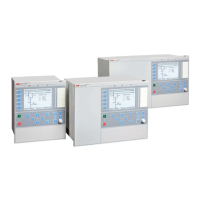

 To Next Page