3. EC/TDS CALIBRATION & MAINTENANCE
A. EC/TDS Basic Information.
EC (Electrical Conductivity) and TDS (Total Dissolved Solids) are closely related.
TDS measures the concentration of dissolved solids within water or a nutrient
solution.
TDS is calculated by sending a charge in the water which measures the
electrical conductivity of that solution, and is then converted to TDS using the
following conversion factors:
[Conversion Factors]
• 442™ (or 0.7 Factor): developed by Myron L, to simulate natural water (river, lake,
or drinks). The 442™ is named after the three main ingredients of the solution:
40% sodium bicarbonate, 40% sodium sulfate, and 20% sodium chloride.
• NaCl (or 0.5 Factor): Stands for sodium chloride. This solution is widely used in
the Water Market.
EC (µS, mS) does not require the usage of a conversion factor – the factor is used
only when converting EC data to TDS.
[EC, TDS Available Mode]
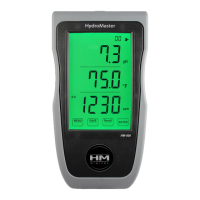
The HM-500 includes the following scales and modes:
• Two different EC measuring scales: microsiemens (µS) and millisiemes (mS).
1000 µS equals 1 mS.
• Two different TDS measuring scales and modes: PPM (Parts Per Million) and
PPT (Parts Per Thousand), both available in 0.5 & 0.7 scale 1000 ppm equals
1 ppt.
[EC, TDS and Automatic Temperature Compensation (ATC)]
• Temperature plays an important role when measuring EC or TDS. If the temperature
of the calibration solution you’re using is higher than 25°C (77°F), the device will
read measurements that are higher than normal. In comparison, if the temperature
is lower than 25°C (77°F), the device will read measurements lower than normal.
Thus, the international standard measurement requires an EC or TDS reading at
25°C (77°F).
• Since maintaining temperature of the solution you are measuring at 25°C (77°F) can
be difficult, the HM-500 includes an Automatic Temperature Compensation (ATC)
function that converts the reading to reflect that of 25°C (77°F).
8


 To Next Page