To Next PageTo Next Page
 Need help?
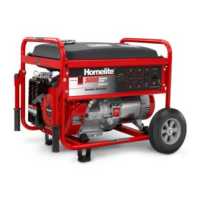
Do you have a question about the Homelite HL2500 and is the answer not in the manual?
 General
| Brand | Homelite |
|---|---|
| Model | HL2500 |
| Category | Portable Generator |
| Language | English |
Install a manual transfer switch for emergency standby service to isolate generator from utility lines.
Never operate in explosive atmospheres; ensure adequate ventilation to prevent deadly exhaust fumes.
Ensure nothing is in a position to be hit by the operator's hand or arm when starting.
Ensure electric power tool switches are in the "OFF" position before plugging them in.
Follow instructions to reduce injury risk: ground generator, clear area, instruct operators, avoid wet areas, ensure stability.
Avoid using equipment in confined spaces due to dangerous gases that can cause explosions or asphyxiation.
Use genuine parts, never operate with guards removed, and ensure proper maintenance.
Handle fuel safely in containers, avoid smoking, do not refill while running, and clean spills.
Indicates warnings, dangers, and cautions for safe operation.
Advises reading all safety, operating, and maintenance instructions.
GFCI protects against shock from defective tools/cords by interrupting electricity if a fault to ground occurs.
Connect the generator to a suitable ground source using the frame terminal and #8 wire.
For standby service, a transfer switch isolates the generator from utility power to prevent feedback.
Verify engine oil level is correct before operating the generator.
Guidelines for safely adding fuel to the generator tank, avoiding spills and ignition sources.
Verify engine oil level before attempting to start the generator.
Step-by-step guide for starting the engine, including choke usage and stopping.
Do not exceed continuous duty rating; avoid operating at intermittent rating for more than 10 minutes per hour.
Use adequate cable or extension cord size to prevent voltage drop and equipment damage.
Describes the 120V receptacle, circuit breaker, and overload protection.
Refer to the engine manual for specific maintenance procedures.
Keep vents clear, clean the generator, and periodically check fasteners.
Steps for storing the generator long-term, including draining fuel, oiling the cylinder, and cleaning.
Troubleshooting steps for when the engine fails to start, checking fuel, spark, and switch.
Steps to resolve no output issues, including checking circuit breakers and cords.
Details the one-year/90-day warranty, exclusions, and limitations for product defects.
Information on how to get warranty service, including contact numbers and dealer locations.
Lists and identifies various parts of the generator with corresponding part numbers.
Illustrates the electrical connections and components of the generator.