This document serves as a user manual for a Hoover built-in freezer-fridge, model BHBF 172 UKT/N. It provides essential information on safety, operation, maintenance, and troubleshooting to ensure proper and safe use of the appliance.
Function Description
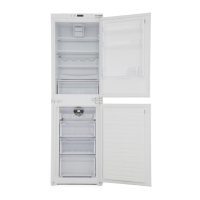
The Hoover BHBF 172 UKT/N is a built-in freezer-fridge designed for household and domestic use. It features two main compartments: a refrigerator compartment and a freezer compartment. The appliance utilizes Frost Free Technology, which employs a built-in fan to circulate dry and cold air evenly throughout both compartments. This prevents humidity and frost build-up, eliminating the need for manual defrosting in the freezer section, unlike traditional static fridges.
The refrigerator compartment is intended for storing fresh food, while the freezer compartment is designed for storing pre-frozen food, freezing fresh food, and making ice cubes. The appliance is equipped with a control panel that allows users to adjust temperature settings and activate special modes like Super Cooling.
Usage Features
The appliance offers several features to enhance usability and food preservation:
- Temperature Control: The control panel includes a temperature set button to adjust the temperature in the fridge compartment. Settings range from MIN to MAX, and a Super Cooling mode can be activated for rapid cooling of large quantities of food or for quick freezing. The initial temperature setting for the refrigerator is at the middle point. Each press of the temperature set button decreases the temperature until the Super Cooling symbol is displayed.
- Super Cooling Mode: This mode is ideal for cooling large quantities of food, fast food, or for long-term storage of seasonal food. It is recommended to activate this mode 5 hours before placing fresh food into the fridge for optimal performance. The Super Cooling mode automatically cancels after 5 hours.
- Alarm Light: An alarm LED illuminates red in case of a problem within the fridge, such as improper temperatures or a system failure.
- Fresh Dial: Located in front of the crisper, the fresh dial allows control over air circulation and humidity levels within the crisper, extending the life of fresh food. If condensation is observed on the glass shelf, the dial behind the shelf should be opened.
- Ice Tray: The freezer compartment includes an ice tray for making ice cubes. Users can fill it with water, freeze it, and then twist the tray to release the ice cubes.
- Freezer Box: This feature provides easier access to frozen food. It can be pulled out and removed for convenience.
- Food Storage Recommendations: The manual provides detailed guidance on how to store different types of food in both the refrigerator and freezer compartments to maintain freshness and prevent contamination. This includes advice on using sealed containers for liquids, allowing warm food to cool before refrigeration, avoiding direct contact with the rear wall, and proper packaging for frozen foods. It also specifies suitable storage times and locations for various food groups like vegetables, fruits, meat, fish, cheese, butter, and cooked food.
- Turbo Fan (if available): This feature aids in even air circulation. Users are advised not to block the air inlet and outlet openings to ensure efficient operation.
- Climate Classes: The appliance is designed to operate within specific ambient temperature ranges (T, ST, N, SN), as indicated on the information label, to ensure optimal cooling effectiveness.
Maintenance Features
Regular cleaning and maintenance are crucial for the appliance's longevity and efficient operation:
- Cleaning: The appliance should be disconnected from the power supply before cleaning. It should not be washed by pouring water directly onto it. Abrasive products, detergents, or soaps should be avoided. Instead, a solution of bicarbonate of soda and lukewarm water is recommended for regular cleaning. Accessories should be cleaned separately by hand with soap and water, not in a dishwasher. The condenser should be cleaned with a brush at least twice a year to save energy and increase productivity.
- Defrosting: The appliance features automatic defrosting. The water generated during defrosting flows through a collection spout into a vaporization container behind the appliance, where it evaporates. The vaporization container should be removed and cleaned with soapy water at specific intervals to prevent odors.
- Door Gasket Maintenance: The door gasket should be kept clean and pliable. In case of wear, it should be replaced to ensure proper sealing and energy efficiency.
- Troubleshooting: The manual includes a section on common errors and their solutions, such as the alarm LED turning on, the refrigerator not operating, poor performance, or noisy operation. It provides steps to check for issues like power supply, temperature settings, door closure, and food packaging.
- Spare Parts: Thermostats, temperature sensors, printed circuit boards, light sources, door handles, door hinges, trays, baskets, and door gaskets are available for a minimum period of seven to ten years after the last unit of the model is placed on the market.
- LED Lighting Replacement: If the appliance has LED lighting, replacement should be handled by authorized personnel only.
- Shipment and Repositioning: When moving the appliance, it is recommended to keep the original packaging and foam for protection. The appliance should be fastened with thick packaging, bands, or strong cords, and all movable parts should be secured to prevent damage. The appliance should always be carried in an upright position.

 Need help?
 General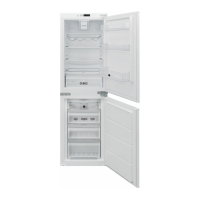


 To Next Page