EasyManua.ls Logo

HP A3600-24-SFP - User Manual

HP A3600-24-SFP
3 pages
Print Icon
To Next Page IconTo Next Page
Loading...
Product End-of-Life Disassembly Instructions
Product Category: Networking Equipment
Marketing Name / Model
[List multiple models if applicable.]
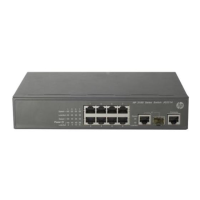
HP A3600-24-SFP v2 EI Switch (JG303A)
Purpose: The document is intended for use by end-of-life recyclers or treatment facilities. It provides the basic instructions
for the disassembly of HP products to remove components and materials requiring selective treatment, as defined by EU
directive 2002/96/EC, Waste Electrical and Electronic Equipment (WEEE).
1.0 Items Requiring Selective Treatment
1.1 Items listed below are classified as requiring selective treatment.
1.2 Enter the quantity of items contained within the product which require selective treatment in the right column, as
applicable.
Item Description Notes
Quantity
of items
included
in product
Printed Circuit Boards (PCB) or Printed Circuit
Assemblies (PCA)
With a surface greater than 10 sq cm
1
Batteries All types including standard alkaline and lithium coin
or button style batteries
0
Mercury-containing components For example, mercury in lamps, display backlights,
scanner lamps, switches, batteries
0
Liquid Crystal Displays (LCD) with a surface greater
than 100 sq cm
Includes background illuminated displays with gas
discharge lamps
0
Cathode Ray Tubes (CRT) 0
Capacitors / condensers (Containing PCB/PCT) 0
Electrolytic Capacitors / Condensers measuring
greater than 2.5 cm in diameter or height
0
External electrical cables and cords 0
Gas Discharge Lamps 0
Plastics containing Brominated Flame Retardants
weighing > 25 grams (not including PCBs or PCAs
already listed as a separate item above)
4
Components and parts containing toner and ink,
including liquids, semi-liquids (gel/paste) and toner
Include the cartridges, print heads, tubes, vent
chambers, and service stations.
0
Components and waste containing asbestos 0
Components, parts and materials containing
refractory ceramic fibers
0
Components, parts and materials containing
radioactive substances
0
2.0 Tools Required
List the type and size of the tools that would typically be used to disassemble the product to a point where components
and materials requiring selective treatment can be removed.
EL-MF877-00 Page 1
Tem
plate Revision B
PSG instructions for this template are available at EL-MF877-01
Question and Answer IconNeed help?

Do you have a question about the HP A3600-24-SFP and is the answer not in the manual?

Overview

This document provides disassembly instructions for the HP A3600-24-SFP v2 El Switch (JG303A), a piece of networking equipment. The primary purpose of these instructions is to guide end-of-life recyclers and treatment facilities in removing components and materials that require selective treatment, as mandated by the EU directive 2002/96/EC on Waste Electrical and Electronic Equipment (WEEE). This ensures proper handling and disposal of potentially hazardous or valuable materials, promoting environmental responsibility and resource recovery.

Function Description:

The HP A3600-24-SFP v2 El Switch (JG303A) is a networking switch designed to facilitate data communication within a network. As a switch, its fundamental function is to connect multiple devices on a computer network, such as computers, servers, and other network devices, and forward data packets between them. The "24-SFP" in its model name suggests that it features 24 Small Form-Factor Pluggable (SFP) ports. SFP ports are versatile interfaces that allow for flexible network connectivity, supporting various types of fiber optic or copper transceivers. This enables the switch to connect to different network segments, including long-distance fiber optic links, making it suitable for a range of networking environments, from enterprise networks to data centers. The "v2 El" likely indicates a specific version or enhanced iteration of the product line, potentially offering improved performance, features, or energy efficiency compared to previous versions. Its classification as "networking equipment" broadly encompasses its role in building and maintaining network infrastructure.

Important Technical Specifications (as inferred from the disassembly instructions):

While the document doesn't explicitly list full technical specifications, it highlights components that are significant from a recycling and environmental perspective, which can indirectly inform us about the device's characteristics:

  • Printed Circuit Boards (PCB) / Printed Circuit Assemblies (PCA): The presence of at least one PCB/PCA with a surface greater than 10 sq cm indicates a device with a certain level of electronic complexity and processing capability. This is standard for network switches, which require sophisticated circuitry to manage data traffic, implement network protocols, and provide various functionalities. The size suggests a substantial main board or multiple significant boards.
  • Plastics containing Brominated Flame Retardants (BFRs): The mention of 4 items of plastics containing BFRs weighing > 25 grams (excluding PCBs/PCAs) is a critical environmental specification. BFRs are used to reduce flammability in electronic enclosures but are a concern for recycling due to their potential environmental impact. The quantity suggests that the device's casing or internal structural components are made from such plastics, indicating a design that prioritizes fire safety.
  • Absence of certain hazardous materials: The document explicitly states a quantity of "0" for several components, which is a positive environmental indicator. This includes:
    • Batteries (all types): This suggests the switch operates solely on external power and does not contain internal backup batteries for configuration or real-time clock, simplifying its end-of-life handling.
    • Mercury-containing components: The absence of mercury in lamps, display backlights, scanner lamps, switches, or batteries is a significant environmental advantage, as mercury is highly toxic.
    • Liquid Crystal Displays (LCDs) > 100 sq cm: This implies the switch either lacks a large display or uses a different display technology (e.g., smaller LCD, LED indicators, or no display at all, relying on command-line interface or web interface for management).
    • Cathode Ray Tubes (CRTs): As expected for modern networking equipment, CRTs are not present.
    • Capacitors/condensers containing PCB/PCT: The absence of these highly toxic chemicals in capacitors is a crucial environmental compliance point.
    • Electrolytic Capacitors/Condensers > 2.5 cm in diameter or height: The absence of large electrolytic capacitors simplifies recycling, as these can sometimes contain hazardous electrolytes or require specific handling.
    • External electrical cables and cords: While the device undoubtedly uses external power cables, the "0" quantity here likely refers to cables that are part of the selective treatment list due to specific hazardous materials, implying standard cables are used.
    • Gas Discharge Lamps: Not present, consistent with modern lighting and display technologies.
    • Components and parts containing toner and ink: As a network switch, it does not have printing capabilities, so these are absent.
    • Components and waste containing asbestos: A critical safety and environmental positive, indicating no asbestos is used.
    • Components, parts, and materials containing refractory ceramic fibers: Another positive for worker safety and environmental impact.
    • Components, parts, and materials containing radioactive substances: A crucial safety and environmental positive, indicating no radioactive materials are used.

Usage Features (as inferred from disassembly process):

The disassembly process, while focused on end-of-life, provides some indirect insights into the device's construction and potential usage features:

  • Modular Construction: The detailed steps involving removing various "parts" (e.g., Part 4, Part 7, Part 8, Part 12), a "top cover," "plastic panel 10," and multiple PCBs (PCB 11, PCB 11-3, PCB 11-4) suggest a modular design. This modularity can be beneficial during the product's lifespan for maintenance, upgrades, or troubleshooting, allowing specific components to be replaced or accessed without dismantling the entire unit.
  • Fan-based Cooling: The instruction to "Unscrew all screws on fan 9, and then remove fan 9 from base 6" confirms the presence of an active cooling system. This is typical for networking switches, especially those with 24 SFP ports, as they generate heat during operation and require fans to maintain optimal operating temperatures and ensure reliability.
  • Cable Management: The step "Remove all of the inner cables" indicates internal cabling for power and data connections between different modules or boards. Good internal cable management is crucial for airflow, ease of maintenance, and overall system reliability.
  • Mounting Options: The instruction to "Unscrew all screws 2, and then remove the mounting angle 3" suggests that the device is designed to be mounted, likely in a server rack or similar networking cabinet. "Mounting angle" implies brackets for secure installation.
  • Power Cable Holder: The first step, "Unscrew the Power Cable Holder 1," points to a mechanism designed to secure the power cable, preventing accidental disconnections. This is a common feature in networking equipment to ensure continuous operation.

Maintenance Features (as inferred from disassembly process):

The disassembly instructions, by detailing how the device comes apart, implicitly reveal aspects that could be relevant for maintenance during its operational life:

  • Accessibility of Internal Components: The step-by-step removal of covers, panels, and internal parts suggests that internal components are accessible. This is vital for maintenance tasks such as cleaning, replacing failed modules (if designed for hot-swapping or field replacement), or upgrading certain components.
  • Screw-based Assembly: The repeated instructions to "Unscrew all screws" for various parts (mounting angle, top cover, internal parts, fan, PCBs) indicate that the device is primarily assembled with screws. This is a standard and robust method that allows for repeated disassembly and reassembly, which is beneficial for maintenance and repair.
  • Component Identification: The use of numbered parts (e.g., Part 4, Part 7, Part 8, Part 12, PCB 11, fan 9, plastic panel 10) in the instructions implies a structured internal layout where components can be individually identified. This is crucial for technicians performing repairs or replacements.
  • Labeling: The instruction "Remove all of the labels from the chassis" suggests that the device has various labels (e.g., serial number, regulatory compliance, port labels, warning labels) that are typically present on networking equipment for identification and operational guidance. While removed at end-of-life, these labels are key for maintenance during the product's use.
  • Modular PCB Design: The instructions to remove specific PCBs (PCB 11, PCB 11-3, PCB 11-4) indicate that the device's electronic functions are distributed across multiple circuit boards. This modularity can simplify troubleshooting and repair, as a faulty board might be replaced rather than attempting component-level repair on a single, complex board. The specific removal of "part 11-1 from PCB 11" and "part 11-2 from PCB 11-4" further emphasizes the modularity within the PCB assemblies themselves, potentially allowing for replacement of sub-modules.

In summary, the HP A3600-24-SFP v2 El Switch (JG303A) is a robust piece of networking equipment, likely designed for rack-mounting, featuring 24 SFP ports for flexible connectivity. Its construction emphasizes modularity, screw-based assembly for maintainability, and active cooling. From an environmental perspective, it avoids several highly hazardous materials like mercury, asbestos, and radioactive substances, but does contain plastics with brominated flame retardants, which require selective treatment at end-of-life. The detailed disassembly guide ensures that recyclers can efficiently recover and properly dispose of all components in accordance with WEEE directives.
HP A3600-24-SFP Specifications

General IconGeneral
BrandHP
ModelA3600-24-SFP
CategorySwitch
LanguageEnglish

Related product manuals