The HP E1440A is a synthesized function/sweep generator designed as a C-size (double slot) plug-in module for use within a VXI mainframe. It functions as a multi-task signal generator, capable of operating as a reference source, a function generator, and a sweep generator.
Function Description:
As a reference source, the HP E1440A produces sine waves with specified frequency, amplitude, DC offset, and phase. In its role as a function generator, it generates various waveforms (sine, square, triangle, positive ramp, negative ramp, and TTL clock) with adjustable frequency, amplitude, DC offset, and phase. When operating as a sweep generator, it produces both logarithmic and linear frequency sweeps. The device is message-based, responding to high-level ASCII SCPI commands, and allows for saving and recalling instrument settings. It is compatible with VXIbus mainframe units and associated modules.
Important Technical Specifications:
- Waveforms: Sine, square, triangle, negative and positive ramps, DC, and TTL clock.
- Frequency Range:
- Sine: 1 µHz to 21 MHz
- Square: 1 µHz to 11 MHz
- Triangle: 1 µHz to 11 kHz
- Ramps: 1 µHz to 11 kHz
- TTL clock: 1 µHz to 60 MHz
- Frequency Resolution: 1 µHz (up to 100 kHz), 1 mHz (at 100 kHz and greater frequencies).
- Frequency Accuracy: ±5 ppm of selected value (20°C to 30°C, at time of calibration with standard frequency reference).
- Frequency Stability: ±5 ppm/year (20°C to 30°C).
- Amplitude (into 50Ω, without DC offset): 1 mV to 10 V(p-p) in 8 ranges (1-3-10 sequence). Amplitude can also be set in rms and dBm.
- Amplitude Resolution: 4 digits (0.03% of full range).
- Sinewave Harmonic Distortion (relative to fundamental):
- 0.1 Hz - 199 kHz: -60 dBc
- 200 kHz - 1.99 MHz: -40 dBc
- 2 MHz - 14.9 MHz: -30 dBc
- 15 MHz - 20 MHz: -25 dBc
- Squarewave Rise/Fall Time (10% to 90% of p-p output voltage): ≤20 ns.
- Squarewave Overshoot: ≤5% of peak-to-peak amplitude at full output.
- Squarewave Symmetry: ≤0.02% of period +3 ns.
- Triangle/Ramp Linearity (10% to 90%, 10 kHz): ±0.05% of full peak-to-peak output voltage for each range.
- Ramp Retrace Time (typical, 10% to 90%): ≤3 µs.
- Period Variation for Alternate Ramp Cycles (typical): ≤1% of period.
- DC Offset Range:
- DC only (no AC signal): 0 to ±5 V / 50Ω
- DC + AC: Maximum DC offset ±4.5 V on highest range; decreasing to ±4.5 mV on lowest range.
- DC Offset Resolution: 4 digits.
- Phase Offset Range: 719.9° with respect to arbitrary starting phase or assigned zero phase.
- Phase Offset Resolution: 0.1°.
- Sweep Sequence Modes: Single, continuous.
- Sweep Function Modes: Multi-Interval (up to 50 different intervals, 100 intervals in sequence), Multi-Marker (up to 9 markers).
- Sweep Time: 0.01 s to 10⁵ s (Linear sweep), 0.1 s to 10⁵ s (Logarithmic sweep).
- Output Impedance: 50Ω (standard), <3Ω at DC and <10Ω at 1 MHz (High-Voltage Option 001).
- Auxiliary Outputs: SYNC-OUT TTL (1 µHz to 21 MHz phase synchronous squarewave, or 1 µHz to 60 MHz TTL Clock when main signal output is off), X DRIVE 0-10V (0-100 s sweeps only), PEN LIFT (TTL compatible), MARKER TTL (high to low transitions at selected marker frequencies), REF OUT 10 MHz (10 MHz squarewave).
- Auxiliary Inputs: External REF IN 1/10 MHz (0 dBm to 20 dBm into 50Ω, sub-harmonic of 10 MHz from 1 MHz to 10 MHz), AM (±5V input), PM (±5V input).
- VXIbus Interface Capabilities: A16/A24 D16 Master, A16 D16 Slave.
- Module Size: C-size, two (2) slots.
- Connectors Used: P1, P2.
- Device Type: Message-based.
- Cooling/Slot Air Flow: 2.0 litres/second, pressure 0.4 mm H₂O.
- Operating Environment: Relative humidity 65% (0°C to 40°C), Operating temperature 0°C to 55°C, Storage temperature -40°C to +75°C.
- Weight: 4 kg net, 6.5 kg shipping.
Usage Features:
The HP E1440A is controlled via an external computer using SCPI (Standard Commands for Programmable Instruments) commands, as it lacks manual controls. This allows for complex programming of waveforms, frequencies, amplitudes, and sweep parameters. The device includes a self-test routine that runs automatically on power-up and can be executed on command to verify communication with the VXI mainframe and controller. Error messages are stored in an error queue, which can be interrogated by the controller. The module's logical address can be configured via a row of switches. The "Command Group Feature" allows for efficient programming by sending multiple parameters in a single command string, preventing temporary incompatible states. Synchronization with the controller can be achieved using *OPC? and *WAI commands, which are crucial for managing long sweep operations.
Maintenance Features:
The manual provides detailed instructions for functional verification and performance verification tests. These tests are categorized into:
- Functional Verification Tests: Check if the instrument is working, properly connected, and responding to commands. These can be performed with or without a controller.
- Operational Verification Tests: Check if the instrument meets critical specifications, useful after repair or for troubleshooting. These can be performed without a controller.
- Performance Verification Tests: Check if the instrument meets all warranted specifications, serving as a calibration check or for troubleshooting. These require a controller.
The manual includes a "Test Record" for documenting performance verification results. It also lists recommended test equipment for various tests. Safety precautions, such as removing power before installation or removal from the mainframe, and using ESD precautions, are emphasized. The device features status indicators (Failed, Access, Error, Output On) on the front panel to provide visual feedback on its operational state and any detected issues. The *RST command resets the instrument to a standard default state, and *CLS clears status registers and the error queue. The CALibration subsystem allows for system calibration and checking of the synthesizer.

 Need help?
 General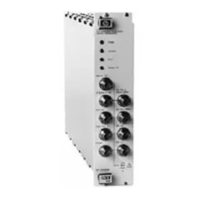

 To Next Page