
 Need help?
Do you have a question about the Huawei E173 and is the answer not in the manual?
Connects the E173 to a computer via the USB port.
Allows tying the cap and USB Stick together to prevent loss.
Displays the status of the USB Stick, including network connection and power.
Holds the Subscriber Identity Module (SIM) or Universal Subscriber Identity Module (USIM) card.
Holds the MicroSD card for expanded storage capabilities.
Instructions on how to physically connect the E173 device to a personal computer.
Procedure for installing the device software and drivers on a PC.
How to launch the Reliance 3G Dialer application after software installation.
Steps to uninstall the Reliance 3G software from the computer via control panel.
Procedure for safely disconnecting the E173 from the PC using the system tray.
Guidelines for using the device safely and avoiding electromagnetic interference.
Information regarding use near medical devices like hearing aids and pacemakers.
Restrictions on using the device in potentially explosive environments.
Safety recommendations for using the device while driving or in vehicles.
Advice on suitable operating conditions and avoiding extreme environments for the device.
Measures to ensure the safety of children around the device and its small parts.
Instructions for cleaning and maintaining the device and its accessories.
Details on the device's compliance with the Restriction of Hazardous Substances directive.
Information on Specific Absorption Rate (SAR) and safety for body-worn operation.
Information on how to properly dispose of and recycle the E173 device and batteries.
Details on the device's compliance with EU regulations on hazardous substances.
This document describes the Huawei E173 USB Stick, a device designed to provide wireless connectivity. The manual outlines its basic functions, installation procedures, and important safety and maintenance guidelines.
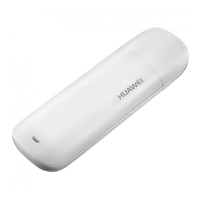
The Huawei E173 USB Stick serves as a wireless modem, connecting a computer to a 2G or 3G network for internet access. Its primary function is to enable mobile broadband connectivity, allowing users to access the internet from various locations where cellular network coverage is available. The device is designed for ease of use, featuring a simple USB interface for connection to a computer.
The E173 USB Stick is designed for straightforward operation. To begin using the device, it must be connected to a computer via its USB interface. The manual provides two methods for connection: directly plugging the E173 into a USB port on the PC or using a USB extension cable for more flexible placement. Once connected, the operating system of the PC is expected to automatically detect and recognize the new hardware, initiating an installation wizard. If the auto-run program does not start automatically, users are instructed to locate and double-click the "AutoRun.exe" file in the driver path to manually launch the installation.
The installation process involves following the prompts of the wizard. Upon successful installation, a shortcut icon for the "Reliance 3G" dialer program will appear on the desktop. This dialer program is crucial for managing the wireless connection. After the E173 is installed, the Reliance 3G Dialer is designed to launch automatically. Furthermore, every time the E173 is connected to the PC, the dialer program should launch automatically, streamlining the connection process. Users also have the option to manually launch the dialer by double-clicking its shortcut icon on the desktop.
The E173 features an indicator light that provides visual feedback on its operational status. This indicator helps users understand whether the device is powered on, registering with a network, or connected to a network.
The device also includes a SIM/USIM card slot and an optional microSD card slot. The SIM/USIM card is essential for network access, as it holds the Subscriber Identity Module (SIM) or Universal Subscriber Identity Module (USIM) card provided by the mobile network operator. The microSD card slot allows for expandable storage, which can be used for data storage.
Installation of the SIM/USIM and microSD cards involves a few simple steps. First, the front cover of the USB Stick must be slid off to expose the card slots. The SIM/USIM card and the microSD card are then inserted into their respective slots, ensuring proper alignment with the beveled edge and the direction labeled on the slots. After inserting the cards, the front cover is replaced and slid into position. It is important to note that the microSD card is an optional accessory; if not included in the package, users can purchase one separately. A critical caution is provided: users should not remove the microSD or SIM/USIM card while it is in use, as this could damage the card, the USB Stick, or corrupt the data stored on the card.
The E173 is compatible with a range of operating systems, including Windows 2000 SP4, Windows XP SP2/SP3, Windows Vista (32-bit & 64-bit), Windows 7, and MAC OS 10.4, 10.5, and 10.6 with the latest upgrades. It also supports standard USB connections.
Uninstallation of the Reliance 3G program is also detailed. Users can uninstall the program by navigating to "Start > Control Panel > Add or Remove Programs," finding "Reliance 3G," and clicking "Remove." Alternatively, they can go to "Start > All Programs > Reliance 3G > Uninstall." It is recommended to restart the PC after uninstallation to ensure that the program is completely removed.
To safely unplug the E173, users are instructed to double-click the "Safely Remove Hardware" icon in the system tray. This action displays the "Unplug or Eject Hardware" interface. From there, users should select the hardware related to the E173 and click "Stop." Once the prompt "It is safe to remove the device" appears, the E173 can be safely removed. A crucial note advises users to exit the Reliance 3G dialer program before unplugging the E173.
The manual emphasizes several key aspects of device maintenance and safety to ensure its longevity and proper functioning.
The manual includes a comprehensive section on warnings and precautions, covering various scenarios to ensure safe operation.
The Huawei E173 USB Stick complies with several regulatory standards. It adheres to the restriction of hazardous substances in electrical and electronic equipment Directive 2002/95/EC (RoHS Directive). For Certification Information (SAR), the device is a radio transmitter and receiver designed to meet international guidelines for exposure to radio waves. The Specific Absorption Rate (SAR) limit for wireless devices is 2.0 watts/kilogram (W/kg), and this device complies with that limit. For body-worn operation, the device must be used with a minimum distance of 2.5 cm from the body to ensure compliance with RF exposure guidelines. Failure to observe these instructions could result in RF exposure exceeding relevant guideline limits.
The device also complies with the EU Registration, Evaluation, Authorisation and Restriction of Chemicals (REACH) Regulation (Regulation No 1907/2006/EC) and the EU Restriction of Hazardous Substances (RoHS) Directive (Directive 2002/95/EC). Further information on REACH compliance is available on the manufacturer's website.
The manual includes instructions for the proper disposal and recycling of the device and any included batteries. The symbol on the device indicates that it should not be disposed of as normal household garbage or unsorted municipal waste. Instead, the device and batteries should be handed over to a certified collection point for recycling and proper disposal at the end of their life. More detailed information on recycling can be obtained from local city offices, household waste disposal services, or the retail store where the device was purchased. The disposal of this device is subject to the Waste from Electrical and Electronic Equipment (WEEE) directive of the European Union. Separating WEEE and batteries from other waste is intended to minimize potential environmental impacts on human health from hazardous substances.
The device is compliant with the EU Registration, Evaluation, Authorisation and Restriction of Chemicals (REACH) Regulation (Regulation No 1907/2006/EC of the European Parliament and of the Council) and the EU Restriction of Hazardous Substances (RoHS) Directive (Directive 2002/95/EC of the European Parliament and of the Council). For more information about the REACH compliance of the device, users are directed to visit the Web site www.huaweidevice.com/certification. It is recommended to visit the Web site regularly for up-to-date information.
The document also provides EU Regulatory Conformance statements in multiple European languages, declaring that the device is in compliance with the essential requirements and other relevant provisions of Directive 1999/5/EC. A general notice advises users to observe national local regulations in the location where the device is to be used, as the device may be restricted for use in some or all countries of the European Union.
 General
| Max Download Speed | 7.2 Mbps |
|---|---|
| Max Upload Speed | 5.76 Mbps |
| Interface | USB 2.0 |
| SIM Card Slot | Yes |
| Weight | 30g |
| Network Type | UMTS, GSM, GPRS, EDGE |
| Frequency Bands | GSM/GPRS/EDGE 850/900/1800/1900 MHz, UMTS/HSDPA 2100 MHz |
| Operating Systems Supported | Windows XP/Vista/7, Mac OS X |

 To Next Page
