Need help?
Do you have a question about the Huawei HHG2500 and is the answer not in the manual?
Guide to connecting HG255e for Ethernet broadband, connecting PC to Internet via provider.
Guide to automatically connect to the Internet using a browser.
Steps to configure wireless network name (SSID) and password.
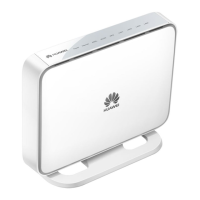
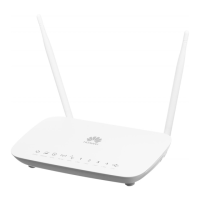
The HG255e Home Gateway is a device designed to connect your home to an Ethernet broadband network, enabling Internet access and supporting various connected devices. This quick start guide outlines the process of setting up and maintaining the HG255e, ensuring a smooth and secure user experience.
The primary function of the HG255e Home Gateway is to provide Internet connectivity to your home network. It acts as a central hub, allowing multiple devices to access the Internet simultaneously. The device is specifically designed for use in communities where network service providers utilize Ethernet interfaces for Internet access. Once connected to an Ethernet interface, the HG255e facilitates Internet access for your personal computer, laptops, set-top boxes, smartphones, and pads.
The HG255e supports automatic connection to the Internet, eliminating the need for manual dial-up software installation or operations on your computer. This simplifies the setup process, guiding users through a wizard page to establish an Internet connection. The device also supports Ethernet compliance uplink mode, meaning it can be used with a network interface on the wall for Internet access.
Beyond basic Internet access, the HG255e offers wireless connectivity, allowing you to create a wireless local area network (WLAN) within your home. This feature enables wireless devices to connect to the Internet without physical cables. The device comes with a default SSID (WLAN name) and WLAN Key (password) printed on its rear panel, ensuring a secure initial setup. Users have the option to change these parameters for enhanced security or ease of remembrance.
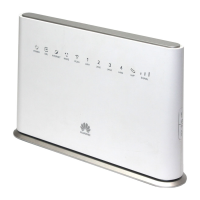
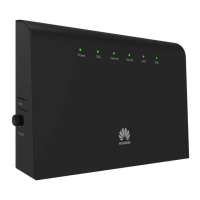
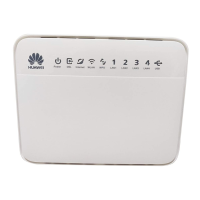
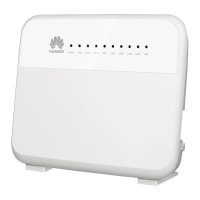
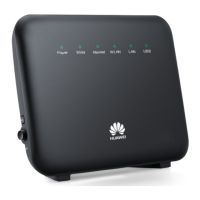
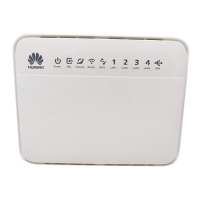
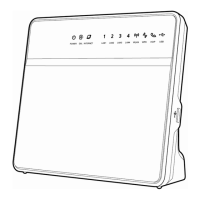
The HG255e also includes multiple LAN ports (LAN1, LAN2, LAN3, LAN4), WAN port, DSL port, and Phone ports (Phone1, Phone2), indicating its capability to support various wired connections and potentially voice services, although the quick start guide primarily focuses on Ethernet broadband setup. The presence of a power button and indicators (DSL, WAN, WLAN, LAN, Phone, Power) provides visual feedback on the device's operational status.
Setting up the HG255e involves a straightforward process of connecting cables and configuring network parameters. The guide emphasizes connecting devices in a specific sequence to ensure proper functionality.
Connecting Cables: To install the HG255e on an Ethernet broadband network, you connect the network interface on the wall to the HG255e. A power adapter is used to supply power to the HG255e. For wired connections, a desktop computer can be connected to one of the LAN ports on the HG255e. Other devices like set-top boxes, telephones, laptops, smartphones, and pads can then connect to the HG255e either wirelessly or through appropriate wired connections (e.g., telephone to Phone port, laptop to LAN port or wirelessly).
Powering On: After connecting the cables, the HG255e is powered on by pressing its power button. The device's indicators will light up, providing visual confirmation of its operational status. The guide advises checking the indicators' behavior to ensure everything is plugged in correctly.
Setting Computer IP Address: Before accessing the HG255e's web management page, the IP address of the computer used for login needs to be configured. The guide provides instructions for both Windows 7 and Windows XP, detailing how to set the computer to "Obtain an IP address automatically" and "Obtain DNS server address automatically." This ensures that the computer can communicate with the HG255e.
Configuring Automatic Internet Connection: Accessing the Internet through the HG255e involves opening a web browser and entering the default IP address (192.168.1.1) to reach the web management page. Users then log in using the default username (!!Huawei) and password (@HuaweiHgw). The guide strongly recommends changing these default credentials immediately after the first login to protect against unauthorized access, which can be done on the "Maintain > Account Management" page. Once logged in, users select "Connect automatically" on the "I want to... Connect to the Internet" page and click "Next." After these settings, the Internet indicator light on the HG255e should turn steady green, signifying successful Internet access. This configuration only needs to be performed once.
Configuring a Wireless Account: For wireless connectivity, after setting up the Internet connection, users can click "Try WLAN" to configure the wireless account. The HG255e's default SSID and WLAN Key are provided on the rear panel. Users can choose to keep these or change them for security or convenience. To change them, users select the 2.4 GHz WLAN network on the "I want to Set Up WLAN" page, enter their desired SSID and WLAN password, and click "Save."
Wireless Connection Setup: Connecting a computer to the HG255e wirelessly is explained using Windows' wireless configuration software as an example. For Windows 7, users navigate to "Network and Sharing Center," select "Change adapter settings," right-click "Wireless Network Connection," and choose "Connect/Disconnect." From the list of wireless networks, they select the HG255e's WLAN, click "Connect," enter the WLAN password, and click "OK." The connection status should then show as "Connected." Similar steps are provided for Windows XP, involving "Network and Internet Connections," "Network Connections," and "View Available Wireless Networks."
The HG255e manual includes comprehensive safety and maintenance guidelines to ensure the device's longevity and safe operation. These guidelines cover electronic device safety, interference with medical equipment, handling in areas with flammables and explosives, operating environment considerations, child's safety, accessories, power adapter safety, and cleaning and maintenance.
Safety Information: Users are advised to avoid using the device where prohibited or where it might cause danger or interference with other electronic devices. Specific warnings are given regarding medical equipment, such as maintaining a minimum distance from pacemakers and consulting service providers for hearing aids. The device should not be used or stored in areas with flammables or explosives to prevent the risk of explosion or fire.
Operating Environment: To ensure optimal performance and prevent damage, the HG255e should be kept in a clean, dry, and stable environment, away from dust, dampness, dirt, and strong magnetic or electric fields (e.g., microwave ovens, refrigerators). It should not be exposed to extreme heat or cold, with an ideal operating temperature range of 0 °C to 40 °C. The device should be placed in a well-ventilated and cool area, away from direct sunlight, and not enclosed or covered. During thunderstorms, it is recommended to power off the device and disconnect all cables to protect against lightning strikes. Users should also avoid placing objects, especially liquids or candles, on the device. If any foreign object or liquid enters the device, it should be immediately powered off, disconnected, and serviced by an authorized center. A minimum clearance of 10 cm around the device is recommended for heat dissipation. The device's antenna should not be touched to maintain communication quality.
Child's Safety: Precautions regarding child safety are highlighted, advising against letting children play with the device or its accessories due to potential choking hazards from detachable parts.
Accessories and Power Adapter Safety: Only accessories approved by the device manufacturer should be used to avoid fire, explosion, or other hazards, and to maintain warranty validity. The power plug is designed as a disconnect device and should be easily accessible. The power adapter should be unplugged when not in use. Users are warned against dropping or impacting the power adapter. If the power cable is damaged or the plug loosens, use should be discontinued immediately to prevent electric shocks or fire. Wet hands should not be used to touch the power cord, device, or power adapter. If the power adapter is exposed to moisture, it should be inspected by an authorized service center. The power adapter must meet specific safety requirements (Clause 2.5 in IEC60950-1/EN60950-1).
Cleaning and Maintenance: The device should be kept dry during storage, transportation, and operation, and protected from collisions. External heat sources like microwave ovens or hair dryers should not be used to dry the device. Before cleaning or maintaining the device, all applications should be stopped, and all cables disconnected. Chemical detergents, powders, or other chemical agents (e.g., alcohol, benzene) should not be used for cleaning, as these can damage parts or pose a fire hazard. Instead, a clean, soft, and dry cloth should be used. Magnetic stripe cards should not be placed near the device for extended periods to prevent damage. Users are explicitly warned against dismantling or remanufacturing the device or its accessories, as this voids the warranty and releases the manufacturer from liability. In case of damage, an authorized service center should be contacted. Cables should not be trampled, pulled, or excessively bent to prevent damage and device malfunction. If any unusual occurrences (smoke, sound, smell) are observed, the device should be immediately powered off, disconnected, and an authorized service center contacted.
 General
| Model | HHG2500 |
|---|---|
| Type | Gateway |
| WAN Ports | 1 |
| LAN Ports | 4 |
| USB | 1 x USB 2.0 |
| POTS ports | 2 |
| Antenna | Internal |
| Wireless Frequency Bands | 2.4 GHz |
| Security | WPA/WPA2 |
| Dimensions | 35 mm |


 To Next Page