USER MANUAL - L6A, L6P, LS18A & LS218A POWERED LINE ARRAY
PAGE 15PAGE 14
TIP: It is recommended to make all input and loop-though connections before
powering up your system and to mute the input signal from the audio source. This
will avoid unexpected “thumps” when powering up your system and prevent abnormal
high input signals that may overload your speaker. Furthermore, it is advisable to
always use balanced line inputs as opposed to unbalanced inputs, ensuring a +6dB
gain structure and noise reduction throughout your system.
PRESET GUIDE
Preset 1 – FLAT; 0dB: flown applications, near field
Preset 3 – CURVED; MID -3dB EQ, BASS and TREBLE 0dB: ground stack, vocals/live/rock
Preset 4 – CURVED; MID -3dB EQ, BASS and TREBLE +3dB: ground stack, club genre
Preset 5 – CURVED; MID -6dB EQ, BASS and TREBLE +3dB: ground stack, club genre
Preset 2 – FLAT; +3dB: flown applications, far field
6:
7:
8:
9:
10:
11:
12:
13:
Repeat step 5 with the second L6P cabinet.
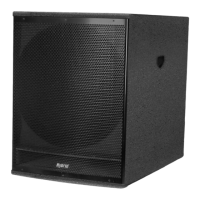
Connect the audio source (mixer or other source) to the LS218A XLR input connector using
a balanced XLR–XLR audio cable (not supplied). Then, using the supplied 2m balanced line
XLR–XLR input cable, connect the LS218A link XLR to the L6A input XLR (#8).
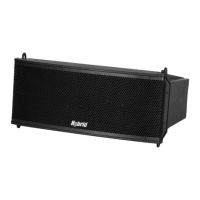
Using the Speakon cable supplied with the L6P, connect the L6A speaker output (#4) to the
L6P speaker input.
Using the Speakon cable supplied with the second L6P, connect the first L6P speaker output
to the second L6P speaker input.
With the 2m Powercon link mains cable supplied with the L6A, connect the LS218A mains
output to the L6A mains input (#1).
Connect the LS218A to the mains outlet using the Powercon mains cable supplied with the
LS218A and then power up the LS218A and L6A powered speakers by switching the power
switches ON (#2).
Test the system by applying an input via the mixer or other music source at a low volume.
Ensure that all speakers are functional before increasing the volume to the desired SPL.
switches ON (#2).
Choose the desired preset for the genre of music/application by pressing the preset selection
switch (#7) located on the rear panel of the L6A.
L6P
L6P
L6P
L6P
L6A
L6A
L6A
L6A
L6F
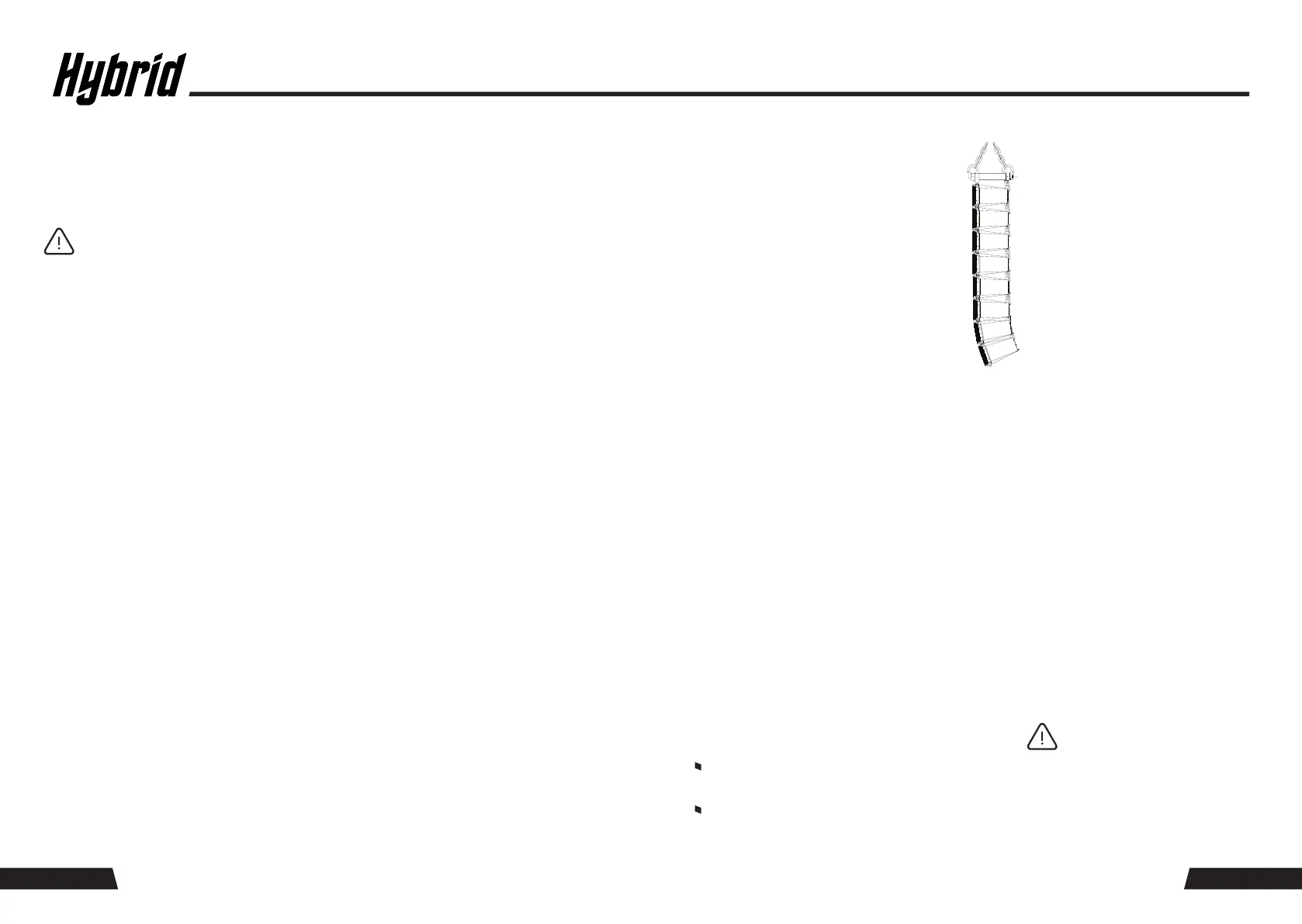
There are many variations of flown configurations to suit most applications, from a standalone
array for speech using a short or long line, depending on venue size, to arrays coupled with
bass bins for live events and DJ performances.
Flown configurations can also be designed using L6P passive cabinets linked to the L6A active
cabinet. Although a maximum of two L6P passive cabinets can be powered by an L6A active
cabinet, it is recommended to design your system with a ratio of 1:1 for best performance
(i.e., one L6A active cabinet powering one L6P passive cabinet).
FLOWN APPLICATION
FLOWNMAX 8 CABINATS/LINE
SAFETY WHEN FLYING THE HYBRID L6A/L6P CABINETS
Ensure the structure from which the line array will be hung is certified by a qualified structural
engineer.
Only use the correct fly frame (Hybrid L6F) when flying the Hybrid L6A and L6P cabinets, and
before use perform a visual check on the fly frame for any damage that may have occurred
in previous usages.
It is recommended that for permanent flown installations the cabinets be opened by a
qualified service centre and the amplifier module/back panel be inverted. The same should
also be done for the logo on the front grille of the speaker.
Flown systems can be designed using only one or two L6A or L6P cabinets per line if the
venue is small, but it is important to note that the true benefits of line array technology only
start to work with longer lines; thus, it is recommended to have 6 cabinets or more per line.
The Hybrid L6A Active Speakers have been designed primarily for ground-stack
configurations, and when they are used as a flown system, the cabinets will be inverted
once attached to the fly frame.
PAGE 15PAGE 14


 To Next Page
 Loading...