1-5
INSTALLATION
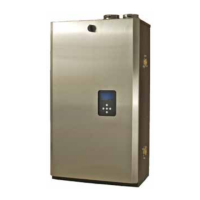
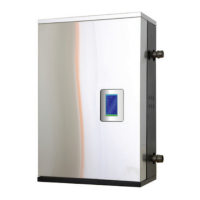
SL 80-399 MODULATING GAS BOILER
• Place in operation the appliance being inspected. Follow the lighting
instructions. Adjust thermostat so appliance will operate continuously.
• After it has been determined that each appliance remaining connected to the
common venting system properly vents when tested as outlined above, return
doors,windows,exhaustfans,replacedampersandanyothergas-burning
appliance to their previous conditions of use.
• Any improper operation of the common venting system should be corrected
so the installation conforms with the National Fuel Gas Code, ANSI Z223.1 -
latest edition. In Canada, all installations must conform with the current CAN/
CGA - B149.1-10 Installation Code and/or local codes.
1.4.1 Applications
All SL series boilers are approved with alternative venting options: either 2-pipe
DirectVentorsinglepipe/IndoorAirventingcanbeusedofferingexibilityto
meetthespecicrequirementsoftheinstallation.WiththeDirectVentcase,
combustion air is piped directly to the boiler’s air intake from outdoors (see
Section 1.4.7 for air intake piping requirements). Using the indoor air alternative,
air for combustion is drawn from the indoor air surrounding the boiler.
Provided the maximum overall vent length limit is not exceeded, the installer may
choose to vent the boiler through the wall, directly through the roof or upward
using an existing - but otherwise unused - chimney as a vent raceway.
1.4.2 Exhaust Vent Material
EXHAUST VENT MATERIAL – CANADA
OnlyCPVCandPVC(withrestricteduetemperature)ventcomponentsystems
approved under ULC-S636 Standard for Type BH Gas Venting Systems, or
stainless steel Type BH venting systems* are to be used. Venting manufacturers,
such as IPEX Inc with their System 636™ line, establish exhaust temperature
limitations for their materials; it is the responsibility of the installer to ensure
that such limitations are taken into account in the selection of PVC vs. CPVC
vs.stainlesssteelsystems.Inthestandardconguration,SLseriesboilerscan
supply water temperatures up to 180°F, leaving stack temperatures above the
65°C (149°F) limit for System 636TM PVC”; use approved CPVC or stainless
steel systems.
For long vent runs with higher initial exhaust temperature, some jurisdictions may
allow the use of mixed materials for economy: CPVC for the initial run followed
by PVC to the termination (It is the responsibility of the Installer to conrm that
local codes will allow this option). Ensure appropriate transition glue is used. The
installerisresponsibletoensurethatsufcienttemperaturelossisallowedforin
the CPVC section to fall below the limit for PVC, taking into account the highest
possible ambient temperature in the area of vent travel (e.g. boiler room, attic
and/or chase).
EXHAUST VENT MATERIAL – USA
IBCstronglyrecommendsthatonlyCPVCandPVC(withrestrictedue
temperature) vent component systems approved under ULC-S636 Standard for
Type BH Gas Venting Systems, or stainless steel Type BH venting systems* are
to be used.
Many local jurisdictions in the USA however, still allow the use of PVC (Sch. 40
ASTMD1785orD2665andttings)orCPVC(Sch.40/ASTMF441withSch.80
ttings);orCSAapproved4"stainlessventsystems.


 To Next Page