Need help?
Do you have a question about the Icom AH-4 and is the answer not in the manual?
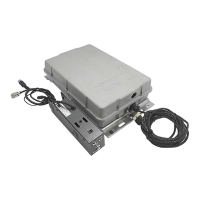
The Icom AH-4 is a wide-range antenna tuner designed to match a 50-ohm feed line to an antenna feed impedance ranging from 10 to 5,000 ohms. It is capable of handling up to 120 watts of power and typically achieves a tune within 1 to 3 seconds. The tuner utilizes 22 relays to switch combinations of inductance and capacitance to achieve optimal matching.
One of the key usage features of the AH-4 is its ability to maintain a low SWR (typically 1.1:1 or less) at the radio during the tuning process. This is accomplished by switching the RF to a 10:1 power divider, where only about 350 milliwatts of power are used for tuning, and 50-ohm resistors swamp the remaining power. This design ensures that the radio never experiences a high SWR during tuning, which is beneficial for radio longevity and performance.
Another significant advantage is that the tuning relays are never switched under power. This design choice contributes to a longer relay life by preventing arcing, a common issue when relays are switched while carrying power. Furthermore, the microprocessor within the AH-4 is shut off except when tuning. This feature eliminates digital noise from the tuner during listening, providing a cleaner audio experience for the user.
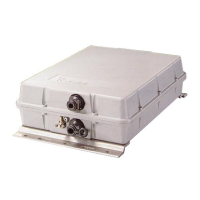
The AH-4 is housed in a weatherproof enclosure, making it suitable for permanent outdoor installation. It interfaces with the radio via a coaxial feed line and a 4-conductor control cable. This control cable carries 12-volt power and ground, along with the KEY and START control lines. The peak current demand for the tuner is less than one amp, but typically, it requires less than 300 mA for operation, making it relatively power-efficient.
Internally, the tuner comprises a microprocessor control system, a power divider, impedance and power measurement circuitry, and the matching network. The RF can be routed in three ways: straight through (when powered off or disengaged), through the power divider network, measurement circuitry, and tuning network (during tuning mode), or just through the tuning network (during normal operation).
The AH-4 is particularly effective when feeding balanced antennas, such as loops or flat tops fed via ladder line. While the RF output is on top and the RF ground is on the bottom, which might suggest a design for unbalanced feeds, the tuner has been shown to work extremely well with balanced configurations. The metal mounting brackets are not grounded, which is an important detail for installation.
The AH-4's interface with the radio involves a two-wire connection for signaling. A START signal from the radio initiates the tuning operation. Once the AH-4 microprocessor resets and begins its program (approximately 300 ms), it asserts the KEY line. This action routes the RF through the power divider, measurement circuitry, and tuning network. The KEY signal prompts the radio to transmit a carrier at about 10 watts. The AH-4 then verifies that the power is between 5 and 15 watts; if not, the tuning operation is aborted. If the power is within the acceptable range, tuning commences. Approximately 250 ms after tuning starts, the radio removes the START signal. Upon successful tuning, the AH-4 removes the KEY signal, switches the RF to pass only through the tuning network, and halts the microprocessor. The radio stops transmitting when the KEY signal is removed.
In cases where tuning fails, the AH-4 removes the KEY signal for 20 ms, re-asserts it, waits 200 ms, and then finally removes the KEY signal. This sequence signals a "not tuned" condition to the radio. If the band is changed on the radio, the tuner is reset, which removes the tuning network from the circuit, ensuring a clean slate for the next tuning attempt.
From an electrical interface perspective, the AH-4 uses 12-volt inverted logic and an "open collector" transistor to ground for signaling. The radio supplies 13.8 volts to the tuner and provides a START line that is pulled up to 13.8 volts internally. The radio asserts the START signal by pulling this line to ground. Similarly, the AH-4 pulls the KEY line to 5 volts through a 22 K ohm resistor/diode combination, and the radio also pulls this line to 13.8 volts through a resistor. The AH-4 asserts the KEY signal (to indicate tuning status) by pulling this line to ground.
While the AH-4 offers many advantages, it does have some limitations. It primarily works with certain Icom radios "out of the box," meaning direct compatibility might be limited with other brands without additional interfacing. The instruction manual has been noted as sparse, providing limited information about the tuner and offering potentially unhelpful suggestions for antenna types. Additionally, the tuner is limited to 120 watts of power. Despite these points, the AH-4 is praised for its robust design, including filters on all control lines, protection circuitry, solid electrical design, and mechanical construction. It has been observed to perform better than Icom's stated capabilities, operating on 160-6 meters with the right antenna.
 Frequency and Impedance
| frequency range with antenna longer than 7 m | 3.5–54 MHz |
|---|---|
| frequency range with AH-2b | 7–54 MHz |
| input impedance | 50 Ω |
 Power
Power| maximum input power | 120 W |
|---|---|
| tuning power required | 10 W (5–15 W) |
| rated voltage | 13.8 V DC ±15% (current drain less than 1 A) |
Operating Environment| usable temperature range | –10°C to +60°C (+14°F to +140°F) |
|---|---|
| VSWR | 2.0 : 1 or less |
| dimensions | 172(W) × 69.5(H) × 230(D) mm; 6[25]⁄32(W) × 6[3]⁄4(H) × 9[1]⁄16(D) in |
 Weight and Dimensions
| weight | 1.2 kg (2.65 lb) |
|---|---|
| dimensions | 172(W) × 69.5(H) × 230(D) mm; 6[25]⁄32(W) × 6[3]⁄4(H) × 9[1]⁄16(D) in |


 To Next Page