Need help?
Do you have a question about the ICP PDX342080K00A1 and is the answer not in the manual?
Provides detailed steps for safely igniting the unit's gas heating system.
Key information for protecting the investment and reducing service calls.
Explanation of thermostat controls and their functions for the dual fuel system.
Details the operational sequence for cooling and heating modes.
Step-by-step guide for initiating the gas heating function.
Guidance for owners on performing basic maintenance tasks.
Instructions for checking, cleaning, or replacing air filters.
Importance of checking and cleaning the heat exchanger annually.
Periodic checks of fan components for optimal performance.
Requirement for qualified personnel to clean coils.
Checking and cleaning the drain pan and line.
Information on compressor oil level and maintenance.
Ensuring the condenser fan remains free of obstructions.
Difficulty in checking controls without proper instruments.
Need for specialized equipment to check for refrigerant leaks.
Visual inspection of combustion area and vent system.
Ensuring panels are securely fastened after maintenance.
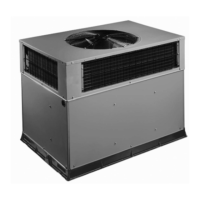
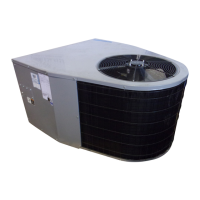
This document serves as an owner's guide for Packaged Dual Fuel Units, providing essential information for operating and maintaining the system. The unit is a combination heating and cooling system designed for residential use, offering both heat pump and gas heating capabilities.
The Packaged Dual Fuel Unit is a comprehensive climate control system that provides both heating and cooling for your home. It integrates a heat pump for energy-efficient heating and cooling, along and a gas furnace for supplementary heating, particularly in colder outdoor temperatures or during defrost cycles. The unit is equipped with an automatic direct spark ignition system for the gas heating section and a power combustion blower to ensure efficient and safe operation.
In cooling mode, the unit operates in two stages, automatically selecting the appropriate stage based on the difference between the actual indoor temperature and the thermostat's set point. The compressor, condenser fan, and evaporator blower motor work together to cool and dehumidify the indoor air. When the cooling set point is satisfied, the compressor and condenser fan de-energize, with the evaporator blower motor continuing for a short delay to maximize efficiency.
In heating mode, the unit intelligently switches between three operational modes based on outdoor temperature, indoor temperature, and the thermostat's set point. For small temperature differences and outdoor temperatures above a user-defined balance point, the unit operates in first-stage heat pump mode. For larger temperature differences under similar outdoor conditions, it switches to second-stage heat pump mode. Gas heat mode is activated under four specific conditions: when the outdoor temperature falls below the balance point, when there's a large difference between actual and desired indoor temperatures (even if above the balance point), when the heat pump system is not operational (e.g., in Emergency Heat mode), or during a defrost cycle to clear frost from the outdoor coil. The system is designed to never operate in heat pump and gas heat modes simultaneously.
The unit also features an automatic defrost cycle for the heat pump, which activates at preset time intervals (30, 60, 90, or 120 minutes) if frost buildup on the outdoor coil is detected. This ensures continuous energy-efficient operation by preventing ice from impeding airflow and reducing heat absorption.
The unit's operation is primarily controlled by a multi-purpose indoor thermostat, which typically includes a temperature control selector, a FAN switch, and a SYSTEM switch (often with an EMERGENCY HEAT or AUXILIARY HEAT option).
To light the unit, a specific sequence of steps must be followed to ensure safety. This involves setting the thermostat to the lowest temperature, closing the external manual gas shutoff valve, turning off electrical supply, accessing the internal gas valve to set it to "OFF" for 5 minutes, then to "ON," replacing the access panel, restoring electrical supply, opening the external manual shutoff valve, and finally setting the thermostat to initiate heating. The unit will then attempt ignition, with a retry mode if the burners don't light within 25 seconds. If ignition fails after four consecutive attempts, the unit will lock out for 3 hours.
To shut the unit off, the thermostat should be set to its lowest temperature and the system switch to "OFF." The external manual gas shutoff valve must be closed, followed by turning off the electrical power supply. The front access panel is then removed to set the internal gas valve selector switch to "OFF," after which the panel is replaced. If shutting down for the end of the heating season, electrical power should be restored and the system switch set to "COOL" to ensure the cooling system remains operational.
The FAN switch offers "AUTO" (blower runs only when the system is operating) and "ON" (blower runs continuously) options. Continuous fan operation can help maintain more consistent indoor temperatures and distribute conditioned air more evenly. The SYSTEM switch typically includes "COOL," "OFF," and "HEAT" selections, with some thermostats also offering an "AUTO" option for automatic changeover between heating and cooling. The "EMERGENCY HEAT" or "AUXILIARY HEAT" setting allows the gas furnace to operate for all heating requirements if the heat pump system is malfunctioning.
The balance point temperature, which determines when gas heat is used instead of heat pump heat, can be adjusted by the homeowner or installer, as detailed in the installation instructions.
Routine maintenance is crucial for ensuring the unit's dependability and peak efficiency. While some basic tasks can be performed by the owner, more complex maintenance and repairs should be handled by trained and qualified service personnel.
Regular dealer maintenance, often available through service contracts, helps ensure the unit's longevity and optimal performance.
 General
| SEER Rating | 16 |
|---|---|
| Voltage | 208/230V |
| Phase | 1 |
| Refrigerant | R-410A |
| Unit Weight | 220 lbs |


 To Next Page